When kidney discomfort strikes, most people immediately think of remedies involving harsh treatments or specific fruits. What many never realize is that a humble, often discarded part of a common tropical fruit holds surprising potential for natural kidney support. While the sweet flesh of papaya gets all the attention, its leaves are what many herbalists keep as a gentle, yet effective, traditional aid for kidney health.
Dealing with kidney discomfort can be a challenging experience, often leading to a search for quick and natural solutions. The good news is that sometimes the most helpful remedies are found in the most unexpected places. This article explores how a simple preparation from papaya leaves might offer the comfort and support your kidneys need.
What It Is
At its core, this remedy is a simple infusion or decoction made from the leaves of the papaya plant (Carica papaya). Often regarded as just foliage or even a ‘weed’ in some contexts, papaya leaves are rich in beneficial compounds. While the fruit is celebrated for its digestive enzymes, the leaves contain a unique profile of alkaloids, papain, and phenolic compounds that have been traditionally utilized for their various supportive properties, including those related to urinary tract health and kidney function.

Ingredients
To prepare this kidney-supporting remedy, you’ll need just two main ingredients:
- Fresh Papaya Leaves: Approximately 7-10 medium-sized leaves, thoroughly washed.
- Water: About 1 liter (approximately 4 cups) of clean, filtered water.
Alternatively, if fresh leaves are not available, you can use dried papaya leaves:
- Dried Papaya Leaves: 2-3 tablespoons of crushed dried leaves.
- Water: About 1 liter (approximately 4 cups) of clean, filtered water.
Formula / Recipe
The basic formula is straightforward: papaya leaves steeped or boiled in water to create a potent tea or decoction.
For Fresh Leaves:
A decoction is usually preferred to extract more compounds from the tougher fresh leaves.
For Dried Leaves:
An infusion (tea) is often sufficient, as the drying process makes the compounds more readily available.
Step-by-step Method
Using Fresh Papaya Leaves:
- Wash the Leaves: Thoroughly rinse 7-10 fresh papaya leaves under cool running water to remove any dirt or residue.
- Chop the Leaves: Roughly chop the washed leaves into smaller pieces. This increases the surface area for extraction.
- Boil Water: Bring 1 liter of clean, filtered water to a rolling boil in a non-reactive pot (stainless steel or glass).
- Add Leaves: Add the chopped papaya leaves to the boiling water.
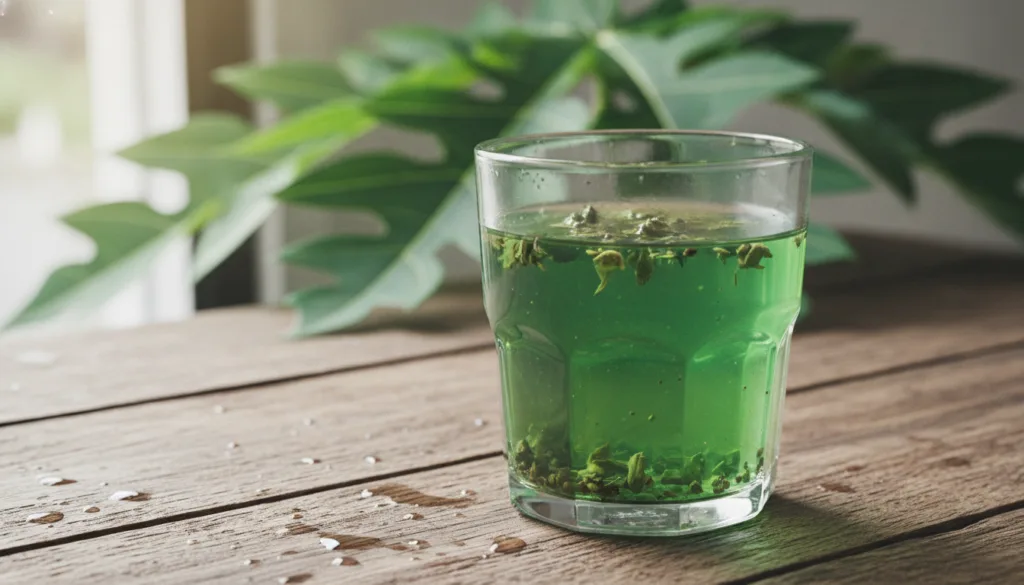
- Simmer: Reduce the heat to low, cover the pot, and let it simmer for about 20-30 minutes. The water should reduce by about half and turn a deep greenish-brown color.
- Cool and Strain: Remove from heat and let the mixture cool to room temperature. Strain the liquid using a fine-mesh sieve or cheesecloth, pressing the leaves to extract all liquid.
- Store: Transfer the liquid into a clean, airtight glass bottle or jar.
Using Dried Papaya Leaves:
- Heat Water: Bring 1 liter of clean, filtered water to a boil.
- Prepare Leaves: Place 2-3 tablespoons of crushed dried papaya leaves into a teapot or heatproof container.
- Pour and Steep: Pour the hot water over the dried leaves.
- Infuse: Cover and let it steep for 10-15 minutes.
- Strain and Serve: Strain the tea to remove the leaf particles.
How to Use
For fresh leaf decoction:
Drink approximately 1/2 to 1 cup (120-240 ml) of the prepared papaya leaf liquid. It can be consumed warm or at room temperature.
For dried leaf infusion:
Drink 1 cup (240 ml) of the prepared tea.
Best Time to Take: Many find it beneficial to consume this remedy on an empty stomach in the morning or about an hour before meals. This allows for optimal absorption without interference from digestion of food.
How Often to Use
For general kidney support or during periods of discomfort, you can consume the papaya leaf preparation once or twice a day. It is generally recommended to use it consistently for a few weeks to assess its effects. If symptoms persist or worsen, always consult a healthcare professional.
Quick Tip
While the taste of papaya leaf tea can be slightly bitter, avoid adding sugar or artificial sweeteners if possible. A small amount of honey or a squeeze of lemon can be added for palatability if needed, but pure is often preferred for maximum benefit.
How to Buy / How to Choose Ingredients
Choosing the right papaya leaves is crucial for an effective remedy:
- Fresh Leaves: Look for vibrant, deep green leaves that are free from yellowing, wilting, or signs of pest damage. Ideally, source them from organic, unsprayed papaya plants. Farmers markets or specialty Asian/tropical grocery stores might carry them.
- Dried Leaves: When buying dried leaves, opt for reputable herbal suppliers. Ensure they are free from mold, dust, or excessive stems. The color should still be a reasonable green, not faded or brown.
Fresh vs. Dried Papaya Leaves
Here’s a quick comparison to help you choose:
| Feature | Fresh Papaya Leaves | Dried Papaya Leaves |
|---|---|---|
| Availability | Seasonal, specialty stores, home gardens | Year-round, herbal shops, online |
| Potency | Potentially higher concentration of certain volatile compounds | Concentrated, easier to store, consistent dosage |
| Preparation | Requires boiling (decoction) | Steeping (infusion) |
| Storage | Perishable, lasts few days refrigerated | Long shelf life (6-12 months) |
| Flavor | Often more bitter, stronger | Milder, earthy |
Storage
- Fresh Leaves: If not using immediately, wrap fresh papaya leaves in a damp paper towel and place them in a plastic bag in the refrigerator’s crisper drawer. They will last for 3-5 days.
- Dried Leaves: Store dried papaya leaves in an airtight container in a cool, dark, and dry place. They can last for up to a year.
- Prepared Liquid: The prepared papaya leaf liquid (decoction or infusion) should be stored in a clean, airtight glass bottle in the refrigerator. It is best consumed within 2-3 days. After this, its potency may diminish, and spoilage can occur.
Practical Tips
- Start Small: If you are new to papaya leaf remedies, start with a smaller dose and gradually increase it as your body adjusts.
- Listen to Your Body: Pay attention to how your body responds. If you experience any adverse reactions, discontinue use.
- Hydration: Continue to drink plenty of plain water throughout the day, as good hydration is essential for kidney health.
- Dietary Adjustments: Support your kidney health by adopting a balanced diet rich in fruits, vegetables, and whole grains, and low in processed foods and excessive sodium.
Common Mistakes
- Using Sprayed Leaves: One of the most critical mistakes is using papaya leaves that have been treated with pesticides or herbicides. Always ensure your leaves are organically grown or from a trusted, unsprayed source.
- Boiling Too Long (for dried leaves): Over-boiling dried leaves can sometimes extract too much bitterness or destroy delicate compounds. An infusion is usually sufficient.
- Skipping Washing: Even if leaves look clean, always wash fresh leaves thoroughly to remove dust, dirt, or tiny insects.
- Ignoring Spoilage: Drinking old, spoiled prepared liquid can cause more harm than good. Always check for signs of spoilage (off-smell, mold) before consuming.
- Exceeding Recommended Dosage: While natural, excessive consumption can sometimes lead to adverse effects. Stick to the suggested amounts.
Cautions / Who Should Avoid It
While generally considered safe for most adults in moderate amounts, there are some important cautions:
- Pregnancy and Breastfeeding: There is insufficient research on the safety of papaya leaf consumption during pregnancy and breastfeeding. It is best to avoid it during these periods.
- Blood Thinners: Papaya leaves may have blood-thinning properties. If you are on anticoagulant medications (blood thinners) or have a bleeding disorder, consult your doctor before using this remedy.
- Allergies: Individuals with allergies to papaya fruit or latex should exercise caution, as they may also be sensitive to the leaves.
- Surgery: Due to potential blood-thinning effects, discontinue use at least two weeks before any scheduled surgery.
- Underlying Medical Conditions: If you have any pre-existing medical conditions, especially kidney disease, or are taking other medications, consult a healthcare provider before incorporating papaya leaf remedies into your routine.
Quick Summary
Papaya leaf remedy, usually prepared as a tea or decoction, offers a traditional approach to kidney comfort. It involves boiling fresh or steeping dried papaya leaves in water. Best used once or twice daily on an empty stomach, the prepared liquid should be consumed within 2-3 days and stored in the refrigerator. Choose organic, unsprayed leaves, and be mindful of potential interactions if you are pregnant, breastfeeding, or on blood-thinning medication.
FAQ
Can I use fresh or dried papaya leaves?
Yes, both fresh and dried leaves can be used. Fresh leaves are typically boiled to make a decoction, while dried leaves are usually steeped to make an infusion.
How long does the prepared liquid last?
The prepared papaya leaf liquid (tea/decoction) should be stored in the refrigerator and consumed within 2-3 days for optimal freshness and potency.
Can I refrigerate the leaves?
Fresh papaya leaves can be wrapped in a damp paper towel and stored in a plastic bag in the refrigerator for 3-5 days. Dried leaves should be stored in an airtight container in a cool, dark place.
How often should I use it for kidney discomfort?
For general support, once or twice a day is common. It’s advisable to use it consistently for a few weeks to observe effects, consulting a professional if discomfort persists.
What part of the papaya plant is best for this remedy?
This particular remedy focuses on the leaves of the papaya plant, as they contain a unique profile of compounds beneficial for kidney support.
Can I reuse the leaves for another batch?
No, it is not recommended to reuse the leaves. Most of their beneficial compounds would have already been extracted in the first preparation, making subsequent batches much weaker.
When should I avoid this remedy?
Avoid if pregnant, breastfeeding, on blood-thinning medication, or allergic to papaya. Always consult a doctor if you have underlying medical conditions or before surgery.
Short Conclusion
The papaya leaf, often overlooked, offers a traditional and accessible natural option for those seeking kidney comfort and support. By understanding how to properly prepare and use this simple remedy, you can tap into the unexpected benefits of this remarkable plant. Remember to source quality ingredients, follow preparation guidelines, and always prioritize your safety by consulting a healthcare professional when in doubt.