Unlock the Secret: Natural Method Rejuvenates Gray Hair with a Beautiful Rich Brown Finish
Many of us reach a point where we notice those first silver strands appearing, a natural part of life’s journey. While some embrace them fully, others seek gentle ways to maintain their hair’s youthful vibrancy without resorting to harsh chemical treatments. If you’ve been searching for a nurturing approach to refresh your hair’s natural beauty, you’re not alone. This age-old method offers an unexpectedly helpful solution, drawing from the wisdom of traditional herbal practices.
Most people never realize this works because they often overlook the potent capabilities of ingredients found right in nature, assuming that only laboratory-derived solutions can offer noticeable results. Yet, the subtle power of plants can provide a beautifully rich brown finish, bringing a renewed luster to your locks.
Ingredients
To embark on this journey of natural hair rejuvenation, gather these carefully selected herbal components. Proportions are key for the desired rich brown hue:
- Pure Henna Powder: 50 grams (body art quality, for red-orange tones)
- Pure Indigo Powder: 50 grams (finely sifted, for blue tones)
- Amla (Indian Gooseberry) Powder: 2 tablespoons (for conditioning and boosting brown tones)
- Black Tea or Coffee Brew: Approximately 250ml (strong, cooled, unsweetened, for richer color and acidic environment)
- Warm Water: As needed for consistency
- Optional: 1 tablespoon of Shikakai powder for added conditioning.
How to Prepare
Preparation is a simple, mindful process that allows the natural dyes to fully release their potential.
- First Henna Layer (Dye Release): In a non-metallic bowl, mix the henna powder and amla powder with enough strong, cooled black tea or coffee brew to form a thick, lump-free paste, similar to yogurt. Cover the bowl with plastic wrap and let it sit at room temperature for 6-12 hours. This step allows the lawsone dye in henna to release.
- Indigo Preparation: Just before you are ready to apply, in a separate non-metallic bowl, mix the indigo powder with warm water (not hot) until you achieve a smooth, creamy paste. Indigo releases its dye quickly, so it should not sit for long.
- Combine (Optional for one-step brown): If you are applying as a one-step process for brown, gently fold the indigo paste into the henna-amla paste. Stir just enough to combine thoroughly. Do not overmix or let it sit for too long after mixing indigo, as its dye demises quickly.
How to Use + Best Time to Take
Applying this herbal paste is a moment of self-care. For best results, it’s often applied to clean, damp hair, allowing the mixture to adhere well.
Application:
- Protect your clothing and surrounding surfaces. Wear gloves to prevent staining your hands.
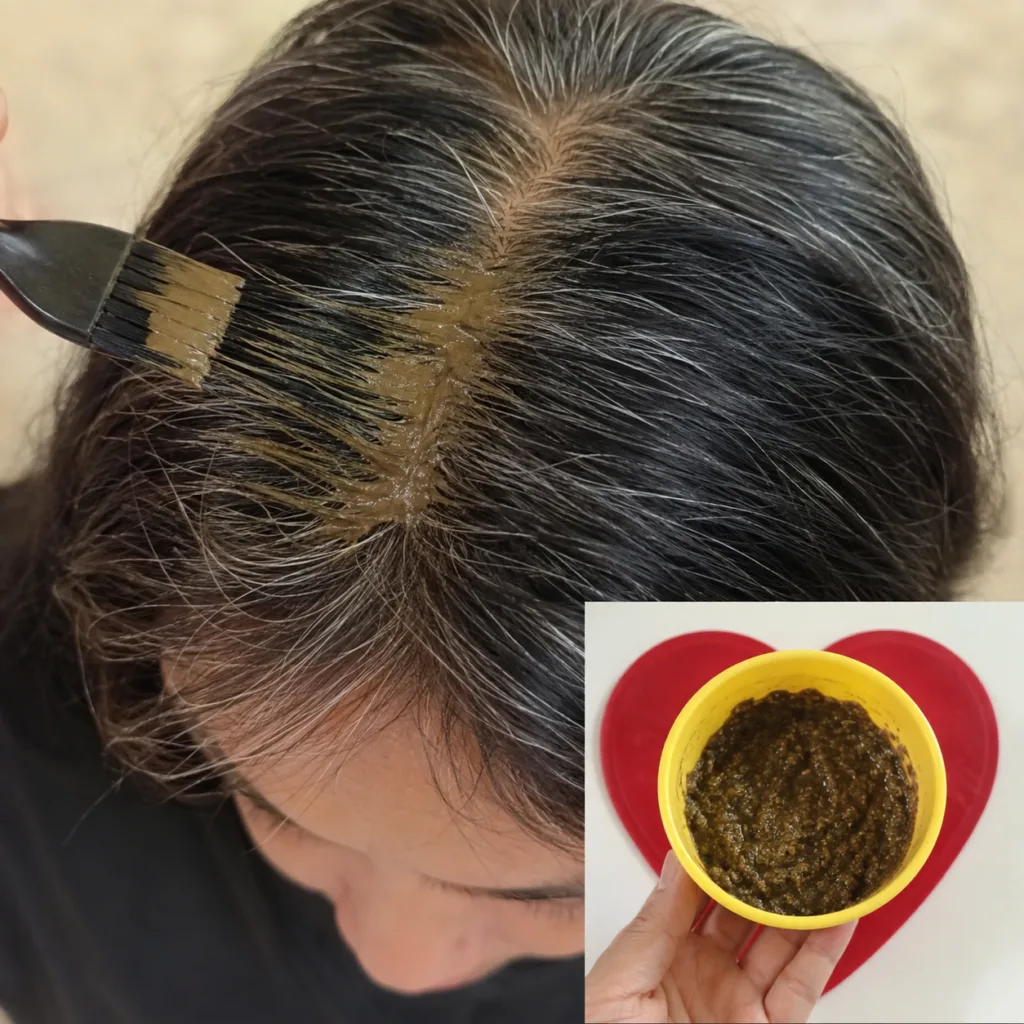
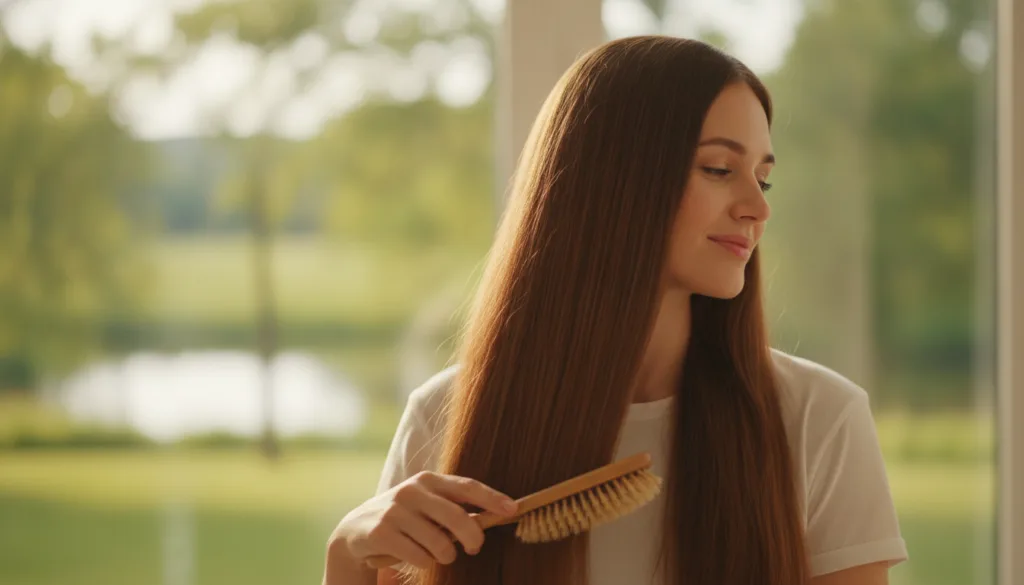
- Section your hair, starting from the roots, similar to how the image illustrates.
- Using a brush or your gloved fingers, generously apply the prepared paste to your gray or silver strands first, ensuring thorough coverage.
- Work your way through all sections of your hair, applying the paste from root to tip if you desire an all-over conditioning and color boost, or focus primarily on the roots for gray coverage as seen in the visual.
- Once applied, cover your hair with a shower cap or plastic wrap to keep the paste moist and warm, which aids in dye uptake.
Best Time to Take/Apply: The best time for application is during a period when you can allow the paste to sit on your hair for a sufficient duration, typically 2-4 hours for a rich brown. Many find a relaxed evening or a weekend afternoon ideal.
Why It Works (Science Insight)
The magic behind this natural method lies in the unique compounds present in henna and indigo, complemented by the benefits of amla.
- Henna (Lawsonia inermis): The primary active component in henna is lawsone, a red-orange dye molecule. When mixed with an acidic liquid and allowed to sit, lawsone binds to the keratin in your hair, creating a permanent, vibrant stain. It also adds a protective layer, enhancing shine and strength.
- Indigo (Indigofera tinctoria): Indigo contains indigotin, a natural blue dye. Unlike henna, indigo does not permanently stain keratin on its own in the same way; instead, it adheres to the outer layers of the hair shaft. When indigo is applied over henna or mixed with it, the blue tones combine with henna’s red-orange to create various shades of brown, from light chestnut to deep black.
- Amla (Phyllanthus emblica): This superfruit powder is rich in tannins and vitamin C, which not only condition the hair but also help to deepen and enhance the brown tones produced by henna and indigo. Amla is known for its antioxidant properties and its traditional use in promoting scalp health and strengthening hair follicles, contributing to overall hair vitality.
Together, these ingredients work synergistically. Henna provides the foundational red-orange pigment and structural benefits, while indigo shifts the color spectrum towards brown. Amla ensures a richer, more lasting color and provides nourishment, making this more than just a dye – it’s a holistic hair treatment.
Who Benefits Most
This natural hair rejuvenation method is particularly beneficial for:
- Individuals seeking a gentle, chemical-free alternative to synthetic hair dyes for covering gray hair.
- Those experiencing dull, lackluster hair who desire enhanced shine and strength from natural conditioning.
- People with sensitivities to conventional hair dye chemicals.
- Anyone interested in traditional hair care practices and harnessing the power of botanicals for beauty.
- Those who appreciate a gradual, more natural-looking color transition rather than an abrupt change.
Quick Notes / Safety / Simple Adjustments
- Patch Test: Always perform a patch test on a small, inconspicuous area of skin 48 hours before full application to check for any allergic reactions. Even natural ingredients can cause sensitivities.
- Strand Test: For predictable color results, always do a strand test on a small section of hair (preferably hair collected from your brush) before applying to your entire head. Natural dye results can vary depending on your original hair color and texture.
- Consistency: The paste should be thick enough to cling to your hair without dripping, but not so thick that it’s difficult to apply. Adjust with more liquid or powder as needed.
- Color Variation: The final color can range from a light reddish-brown to a deep dark brown, influenced by the proportions of henna and indigo, the duration of application, and your natural hair color.
- Patience is Key: Unlike chemical dyes that offer immediate, often dramatic, results, natural dyes work more gently. Be patient and allow the natural process to unfold.
- Storage: Henna paste can be frozen for later use. Indigo paste, once mixed, should be used immediately as its dye quickly oxidizes and loses potency.
- Avoid Metallic Bowls/Utensils: Always use glass, ceramic, or plastic bowls and utensils when mixing herbal hair dyes, as metal can react with the powders.
Embracing natural methods for hair care can be a rewarding experience, connecting us to age-old traditions and the nourishing essence of the earth. Approach with care, and enjoy the journey of discovering your hair’s rejuvenated beauty.