Do you look at that narrow strip alongside your home—your side yard—and see nothing but a neglected, muddy mess? Many gardeners do! Often overlooked, these spaces are frequently prone to poor drainage, compacted soil, and a general lack of purpose. But imagine stepping out into a serene, private garden lounge, a place where you can relax, entertain, and connect with nature, right in that very spot. It might seem like a dream, but with smart planning and practical gardening techniques, transforming even the most challenging side yard into a beautiful, functional outdoor retreat is entirely within reach. It’s about seeing potential where others see problems and applying thoughtful design to create a vibrant, usable extension of your home.
This guide will walk you through the essential steps, from tackling drainage issues to embracing vertical gardening and selecting the right plants and amenities, ensuring your once-ignored side yard becomes your new favorite outdoor sanctuary. Let’s dig in and turn that wasted space into a verdant haven!
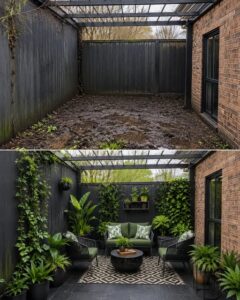
Reclaiming Your Space: Addressing Drainage and Soil
The first and most critical step in transforming a muddy side yard is to address its fundamental issues: drainage and soil health. Mud often indicates poor water percolation, which can stem from heavy clay soil, compacted ground, or an inadequate slope. Fixing these problems sets the foundation for a thriving garden.
Diagnosing and Solving Drainage Problems
Before planting anything, observe your side yard during and after a rain event. Where does the water collect? How long does it take to drain? These observations will help you determine the best drainage solutions.
- Improve Soil Structure: Often, muddy areas are due to compacted, clay-rich soil. Amend your soil generously with organic matter like compost, aged manure, or finely shredded leaves. This improves aeration and drainage by creating larger pore spaces for water to move through. Aim to mix in 4-6 inches of organic material into the top 8-12 inches of soil.
- Create a Swale or French Drain: For persistent water accumulation, consider a shallow swale (a gently sloped, broad ditch) to redirect water to a more suitable area, or install a French drain. A French drain is a trench filled with gravel and a perforated pipe, designed to collect and channel water away from the problem area. Ensure any water is directed away from your home’s foundation and towards a storm drain or a rain garden.
- Install Permeable Pathways: Replace solid concrete or paved paths with permeable options like gravel, stepping stones set in sand, or pavers with wide gaps filled with grass or groundcover. These allow water to infiltrate the soil rather than running off and contributing to puddles.
Building Healthy Soil for Your Side Yard Oasis
Once drainage is managed, focus on building fertile soil. Side yards often receive uneven sunlight and can be neglected, leading to poor soil quality. A soil test from your local extension office can provide precise recommendations, but generally, enriching the soil with organic matter is paramount.
Practical Tip: Incorporate raised beds. These are excellent for side yards because they offer immediate drainage improvement, allow you to control soil composition, and create defined planting areas without extensive ground-level excavation. Fill them with a mix of good quality topsoil and plenty of compost.
Maximizing Space with Vertical Greenery
Side yards are typically narrow, making vertical gardening an indispensable technique for adding lushness, privacy, and visual interest without taking up precious ground space. Vertical elements can transform a bland wall or fence into a living tapestry.
Choosing Your Vertical System
- Trellises and Arbors: Perfect for climbing plants like clematis, climbing roses, jasmine, or edible vines such as cucumbers or pole beans. Attach sturdy trellises to fences or walls, or use freestanding arbors to define entrances.
- Living Walls or Vertical Planters: These systems use pockets or modular panels to grow plants directly on a wall. They are ideal for creating a dramatic green backdrop and can support a wide variety of plants, from herbs and small edibles to ornamental annuals and succulents.
- Espalier: For a more formal look, espalier fruit trees (like apple or pear) or ornamental shrubs (such as pyracantha) can be trained flat against a wall, offering both beauty and harvest in a compact form.
Plant Selection for Vertical Gardens
When selecting plants for vertical structures, consider the light conditions of your side yard and the mature size and weight of the plant. Many side yards receive partial sun or dappled shade due to proximity to buildings or fences.
Shade/Partial Shade Tolerant Vertical Plants
- Vining Hydrangea (Hydrangea anomala petiolaris):
Hardiness: USDA Zones 4-8
Plant type: Deciduous woody vine
Exposure: Partial shade to full shade
Height: Up to 30-50 feet
Spread: Up to 6-10 feet (can be pruned to stay narrower)
Practical Tip: Clings to surfaces with aerial rootlets; provide strong support as it matures. Its white lacecap flowers add elegance in early summer. - English Ivy (Hedera helix):
Hardiness: USDA Zones 4-9
Plant type: Evergreen perennial vine
Exposure: Full shade to partial sun
Height: Up to 80 feet (can be kept shorter with pruning)
Spread: Up to 15 feet
Practical Tip: Fast-growing and excellent for coverage, but can be aggressive. Choose non-invasive cultivars or manage rigorously to prevent unwanted spread. - Climbing Fig (Ficus pumila):
Hardiness: USDA Zones 8-11 (grown as annual or houseplant elsewhere)
Plant type: Evergreen perennial vine
Exposure: Partial shade to full sun
Height: Up to 20-30 feet
Spread: Up to 10 feet
Practical Tip: Adheres strongly to surfaces. Use it to create a fine-textured green wall. Requires consistent moisture in well-drained soil.
Sun/Partial Sun Tolerant Vertical Plants
- Clematis (Clematis spp.):
Hardiness: USDA Zones 3-9 (varies by species/cultivar)
Plant type: Deciduous or evergreen perennial vine
Exposure: Full sun to partial shade (prefers ‘feet in shade, head in sun’)
Height: 6-20 feet depending on variety
Spread: 3-6 feet
Practical Tip: Offer a wide range of flower colors and bloom times. Provide a strong trellis for its twining stems to climb. - Climbing Rose (Rosa spp.):
Hardiness: USDA Zones 4-9 (varies by cultivar)
Plant type: Deciduous woody vine (canes)
Exposure: Full sun (at least 6 hours direct)
Height: 6-20 feet depending on variety
Spread: 3-10 feet
Practical Tip: Requires sturdy support and regular pruning to encourage blooms. Choose varieties known for disease resistance in your climate. - Jasmine (Jasminum officinale):
Hardiness: USDA Zones 7-10
Plant type: Deciduous or semi-evergreen perennial vine
Exposure: Full sun to partial shade
Height: 10-15 feet
Spread: 3-6 feet
Practical Tip: Known for its intoxicating fragrance. Provide a trellis or arbor for support. Requires well-drained soil.
Creating a Private Garden Lounge Atmosphere
The