Hey, beauty besties! 👋 Have you ever scrolled through your feed and seen those intriguing beauty hacks that make you stop and wonder, “Could that actually work?” Today, we’re diving into one of those fascinating combos that’s been making waves: Vaseline and baking soda! These two everyday items are usually found in our medicine cabinets or kitchens, but can they truly unlock hidden uses for smoother, glowing skin?
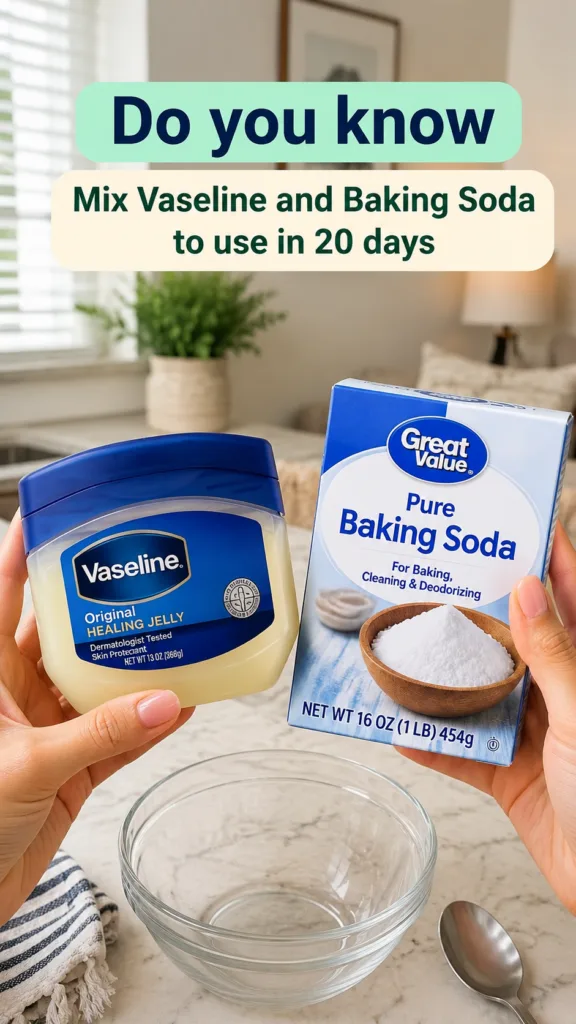
It’s all about finding those affordable, practical tips that fit into our busy lives, right? So let’s explore the buzz around mixing Vaseline and baking soda, how it *might* be used, and most importantly, how to keep your skin happy and healthy!
The Buzz: Vaseline & Baking Soda for Skincare
You might have heard whispers about using a mixture of Vaseline (petroleum jelly) and baking soda (sodium bicarbonate) as a DIY scrub. The idea is that baking soda’s fine, gritty texture can provide exfoliation, while Vaseline offers deep moisture and helps bind the scrub together.
What Each Ingredient Brings to the Table:
- Vaseline (Petroleum Jelly): Known as an occlusive, Vaseline creates a protective barrier on the skin, locking in moisture and helping to heal dry or chapped areas. It’s fantastic for hydration!
- Baking Soda (Sodium Bicarbonate): A mild abrasive, baking soda is often used for gentle scrubbing in household cleaning. In skincare, its fine particles are sometimes considered for physical exfoliation.
Crafting Your Own DIY Vaseline & Baking Soda Scrub (with caution!)
If you’re curious to try a homemade scrub, the general idea is to combine a small amount of Vaseline with an even smaller amount of baking soda to create a paste. However, before we go into the *how*, let’s talk about the *why* and the *what to watch out for*!
How It’s Often Suggested:
- Mix: Take a small dollop of Vaseline (about a pea-sized amount) and mix it with a tiny pinch of baking soda in your palm or a small dish.
- Apply Gently: If you choose to try it (after a patch test, of course!), very gently massage the mixture onto specific areas you want to exfoliate, such as rough elbows or knees.
- Rinse Thoroughly: Rinse off completely with lukewarm water.
- Moisturize: Follow up with your regular moisturizer.
Beauty Bestie Tip: Think of this as a very occasional, targeted treatment, not a daily facial scrub! Less is definitely more when it comes to exfoliating.
Important Considerations & Safety First!
As your beauty bestie, I have to be honest: while DIY remedies are fun and can be effective, some combinations require extra care. Baking soda, despite being natural, has a high pH level (it’s alkaline), which can be quite harsh and disruptive to your skin’s natural acid mantle. Your skin prefers a slightly acidic environment to stay healthy and protect itself from bacteria.
Before You Try This (Or Any New DIY):
- Patch Test is a MUST: Always, always, ALWAYS do a patch test on a small, inconspicuous area of your skin (like behind your ear or on your inner arm) 24 hours before applying it to your face or larger areas. Watch for any redness, irritation, or discomfort.
- Know Your Skin Type: If you have sensitive, dry, or acne-prone skin, baking soda can be particularly irritating. It’s generally not recommended for facial use due to its pH.
- Be Gentle: If you do use it, the key is extreme gentleness. Scrubbing too hard can cause micro-tears in your skin, leading to more irritation.
- Frequency Matters: Limit use to no more than once a week, if at all, and listen to your skin! If it feels at all uncomfortable, rinse immediately.
Safer & Gentler Exfoliation Alternatives
If the idea of baking soda makes you a little nervous (and rightfully so!), there are plenty of other wonderful, gentler ways to achieve smooth, glowing skin with DIY methods:
- Oatmeal Scrub: Finely ground oatmeal mixed with water or milk creates a soothing, gentle physical exfoliant perfect for sensitive skin.
- Sugar Scrub: Brown sugar mixed with honey or coconut oil provides a lovely scrub for the body, and can be used very gently on the face. The sugar granules are less harsh than salt or baking soda.
- Honey & Lemon Mask: (Use lemon juice sparingly as it can also be photosensitizing) Honey is a natural humectant and antibacterial, great for a hydrating mask.
- Aloe Vera Gel: A fantastic natural soother and hydrator for all skin types.
Final Thoughts from Your Beauty Bestie
It’s exciting to explore new beauty hacks, and sometimes, the simplest ingredients hold amazing potential! However, when it comes to our skin, gentle care and understanding what works best for *your unique skin* are always key. While Vaseline is a wonderful moisturizer, baking soda needs to be approached with caution due to its alkalinity.
Always prioritize your skin’s health and comfort. If a DIY remedy feels too harsh, there are always gentler alternatives waiting for you!
Have you tried any Vaseline or baking soda hacks? Share your experiences and tips in the comments below! We love hearing from you!