Most people see Tribulus Terrestris as nothing more than a stubborn garden weed, often stepping around its distinctive spiky fruits. But what if those very spikes guard powerful wellness secrets that traditional practices have cherished for centuries? You might be overlooking a potent natural ally right under your nose. It’s time to stop ignoring this unassuming plant and learn how to harness its benefits safely and effectively.
This article dives deep into the practical application of Tribulus Terrestris, particularly focusing on its fruit, to show you how to prepare and use it for your wellness routine. We’ll skip the vague theories and get straight to the methods, measurements, and important considerations.
What is Tribulus Terrestris?
Tribulus Terrestris is a flowering plant native to warm temperate and tropical regions across the Old World. Known colloquially as ‘puncture vine’ or ‘goat’s head’ due to its sharp, spiky fruits, it’s often dismissed as a nuisance. However, its small, potent fruits have a long history of use in Ayurvedic and Traditional Chinese Medicine, valued for their adaptogenic and supportive properties. While the plant itself might seem unassuming, it’s the fruit that holds the key to its traditional applications.

Key Ingredients for Preparation
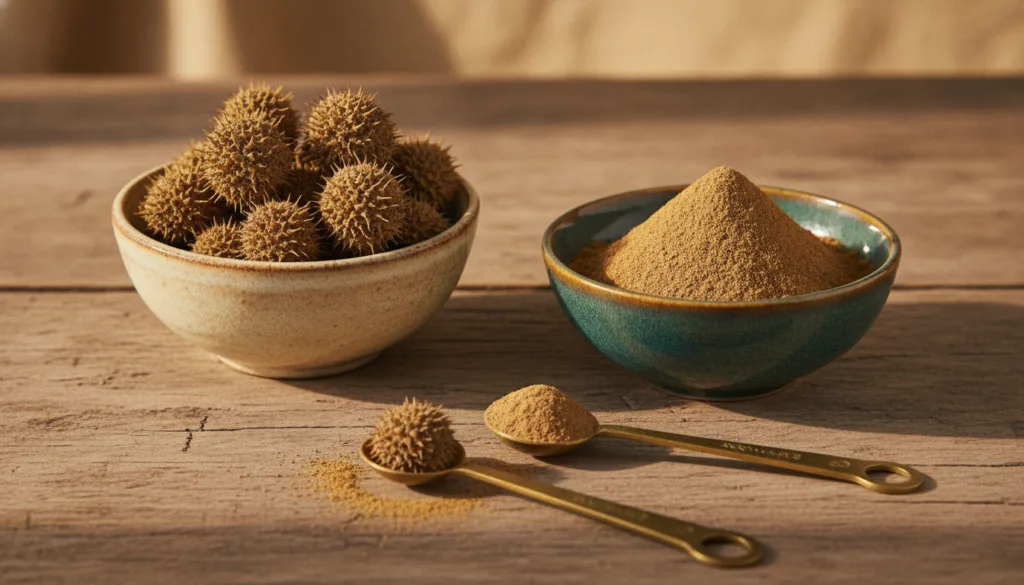
When preparing Tribulus Terrestris, the focus is almost exclusively on the fruit. You’ll primarily be working with either dried whole fruits or a powdered form.
- Dried Tribulus Terrestris Fruits: These are the whole, spiky fruits, usually sold dried. They are excellent for making teas, decoctions, and tinctures.
- Tribulus Terrestris Powder: This is the finely ground powder of the dried fruits. It’s convenient for mixing into drinks or creating capsules.
- Optional Additions: For teas, you might consider honey, lemon, or other complementary herbs for flavor and synergistic effects.
Quick Tip: Always source your Tribulus Terrestris from reputable suppliers to ensure it’s free from pesticides and contaminants. Organic is always the best choice for any herbal remedy.
Approximate Measurements
For a Standard Tea (Decoction):
- Dried Tribulus Terrestris Fruits: 1-2 teaspoons (approximately 2-4 grams)
- Water: 1 cup (240ml)
For a Tincture (Alcohol Extraction):
- Dried Tribulus Terrestris Fruits: 1 part (e.g., 100g)
- High-Proof Alcohol (e.g., 80-100 proof vodka): 5 parts (e.g., 500ml)
Formula / Recipe: Tribulus Decoction Tea
A decoction is a method of extraction where the herb is simmered in water, ideal for harder plant materials like fruits, roots, and bark, ensuring maximum benefit.
Step-by-Step Method for Tribulus Decoction Tea
- Gather Ingredients: You’ll need 1-2 teaspoons of dried Tribulus Terrestris fruits and 1 cup of filtered water.
- Prepare the Fruits: Lightly crush the dried fruits if they are very large. This helps release their compounds. A mortar and pestle works well, or a clean coffee grinder used only for herbs.
- Combine: Place the crushed Tribulus fruits in a small saucepan. Add 1 cup of cold water.
- Simmer: Bring the water to a gentle boil, then reduce the heat immediately to a simmer. Cover the saucepan to prevent evaporation.
- Decoct: Let it simmer for 15-20 minutes. The water will likely reduce slightly and change color.
- Strain: Remove from heat and let it cool slightly. Strain the liquid using a fine-mesh sieve or cheesecloth into a mug. Discard the spent fruits.
- Serve: Enjoy warm. You can add honey or lemon to taste, though the natural flavor is earthy and slightly bitter.
How to Use Your Tribulus Decoction
This decoction is typically consumed as a warm beverage. It’s best taken on an empty stomach or between meals to maximize absorption, though some prefer it with food to avoid any potential stomach upset.
How Often to Use
For general wellness support, a common recommendation is to drink 1 cup of Tribulus decoction 1-2 times daily. It’s often advised to take breaks from regular use, such as using it for 6-8 weeks, then taking a 1-2 week break before resuming. Listen to your body and consult with a qualified herbalist or healthcare professional for personalized guidance, especially for specific conditions.
How to Buy / How to Choose Ingredients
Quality is paramount when it comes to herbal remedies. Here’s what to look for:
- Reputable Suppliers: Purchase from trusted herbal stores, online retailers specializing in herbs, or health food stores that verify product purity.
- Organic Certification: Opt for organic Tribulus Terrestris to avoid pesticides and herbicides.
- Origin: While not always specified, some regions are known for higher quality harvests.
- Appearance: Dried fruits should look relatively intact, free from mold, and have a natural, earthy aroma. Powder should be finely ground and consistently colored.
- Fresh vs. Dried: For most preparations, dried fruits are preferred for their stability and ease of storage. Fresh Tribulus is rarely available commercially for home use and can be difficult to process due to its spines.
Did You Know? The active compounds in Tribulus are thought to be concentrated in its fruit, making it the most potent part for traditional remedies.
Storage
Proper storage ensures the potency and longevity of your Tribulus Terrestris:
- Dried Fruits/Powder: Store in an airtight container in a cool, dark, dry place, away from direct sunlight and humidity. A dark glass jar or a sealed opaque bag is ideal.
- Prepared Decoction: Store any leftover tea in an airtight container in the refrigerator for up to 24-48 hours. It’s generally best to prepare fresh daily for optimal potency.
- Tinctures: Keep in dark glass dropper bottles in a cool, dark place. Tinctures can last for several years due to the alcohol content.
Practical Tips
- Start Low, Go Slow: Begin with a smaller dose to assess your body’s reaction before increasing to the recommended amount.
- Consistency is Key: For best results, consistent daily use (with breaks) is more effective than sporadic intake.
- Combine with Healthy Habits: Herbal remedies work best when integrated into a holistic healthy lifestyle that includes a balanced diet, regular exercise, and adequate sleep.
- Flavor Adjustment: If the earthy taste is too strong, consider blending your decoction with a milder herbal tea (like peppermint or ginger) or adding a slice of orange.

Common Mistakes to Avoid
- Using Sprayed Plants: Harvesting Tribulus from unknown or roadside locations can expose you to pesticides and pollutants. Always ensure your source is clean.
- Boiling Too Aggressively: A gentle simmer for decoctions is key. Rapid boiling can destroy delicate compounds.
- Improper Storage: Leaving dried herbs exposed to air, light, or moisture quickly degrades their potency and can lead to mold.
- Overdosing: While generally considered safe, excessive amounts can lead to side effects. Stick to recommended dosages.
- Ignoring Your Body: If you experience any adverse reactions, discontinue use and consult a healthcare professional.
| Preparation Type | Potency | Preparation Time | Shelf Life |
|---|---|---|---|
| Decoction (Tea) | Moderate | 20-30 minutes | 24-48 hours (refrigerated) |
| Tincture | High | 4-6 weeks (steeping) | 2-5 years (cool, dark place) |
| Powder (raw) | Moderate | Instant (mix in liquid) | 6-12 months (airtight, cool, dark) |
Cautions / Who Should Avoid It
While Tribulus Terrestris is generally well-tolerated, certain groups should exercise caution or avoid it:
- Pregnant and Breastfeeding Women: Insufficient research exists on its safety during pregnancy and lactation. It’s best to avoid.
- Individuals on Medications: Tribulus may interact with certain medications, including those for blood pressure, blood sugar, and diuretics. Consult your doctor before use.
- Individuals with Hormone-Sensitive Conditions: Due to its potential influence on hormone levels, individuals with hormone-sensitive conditions (e.g., prostate cancer, breast cancer) should avoid it.
- Those with Liver or Kidney Conditions: Use with caution and under medical supervision.
- Children: Not recommended for children due to lack of safety data.
Always consult with a healthcare professional before starting any new herbal remedy, especially if you have existing health conditions or are taking medications.
Quick Summary
- Best Preparation: Decoction (tea) for daily use, tincture for concentrated effects.
- Best Use-Case: General wellness support, historically for vitality and balance.
- Storage: Airtight, cool, dark place for dried fruits/powder; refrigerated for fresh decoction.
- When to Use: 1-2 times daily, with planned breaks.
- What to Avoid: Unverified sources, aggressive boiling, ignoring medical advice, use during pregnancy/lactation.
Frequently Asked Questions (FAQ)
Can I use fresh Tribulus fruits?
Fresh Tribulus fruits are rarely used for home remedies due to their sharp spines and the difficulty in processing. Dried fruits are the standard.
How long does Tribulus tea last in the refrigerator?
A freshly made decoction can be stored in the refrigerator for up to 24-48 hours, but it’s most potent when made fresh.
What part of the Tribulus plant is best for remedies?
The fruit is considered the most potent part of the plant for traditional wellness applications.
Can I reuse the spent Tribulus fruits for another batch of tea?
No, once steeped, the active compounds have largely been extracted. Reusing them will result in a much weaker tea.
Are there any immediate side effects?
Some people may experience mild stomach upset. If this occurs, try taking it with food or reducing the dosage.
Can Tribulus Terrestris be taken long-term?
Long-term use is generally recommended with periodic breaks (e.g., 6-8 weeks on, 1-2 weeks off) to prevent the body from adapting and to maintain efficacy.
Where can I find high-quality Tribulus Terrestris?
Look for reputable herbal suppliers, organic health food stores, or online retailers specializing in verified botanical ingredients.
Read more: Crafting Your Own Herbal Tinctures: A Beginner’s Guide
Conclusion
The humble Tribulus Terrestris, with its much-maligned spiky fruits, holds a treasure trove of wellness potential that’s often overlooked. By understanding its proper preparation, usage, and storage, you can safely integrate this traditional herb into your daily routine. Remember, while natural remedies offer incredible support, they are most effective when used mindfully and in conjunction with professional advice. Don’t let this ‘ignored weed’ remain a secret any longer – unlock its practical power for your well-being.
You may also like: Understanding Adaptogenic Herbs for Daily Balance