Struggling to meet your daily protein goals? You’re not alone! Protein is a vital macronutrient, essential for everything from building and repairing tissues to making enzymes and hormones. It plays a key role in keeping you feeling full, supporting muscle growth, and maintaining overall health.
This guide makes it simple to hit around 30 grams of protein per meal, ensuring your body gets the fuel it needs without the hassle of constantly counting. We’ll explore a variety of delicious, protein-rich foods and easy ways to incorporate them into your daily diet.
The Power of Protein
Protein is often called the building block of life, and for good reason. It’s composed of amino acids, which our bodies use to construct and repair muscles, bones, skin, and organs. Beyond structural support, protein is crucial for immune function, satiety, and hormone production.
Eating enough protein can help you:
- Support muscle growth and repair, especially after exercise.
- Feel fuller for longer, which can aid in weight management.
- Maintain strong bones as you age.
- Boost your metabolism slightly.
- Stabilize blood sugar levels.
Why Aim for 30g of Protein Per Meal?
While individual protein needs vary based on age, activity level, and health goals, aiming for approximately 20-30 grams of protein per meal is a widely supported strategy. This amount is generally considered effective for maximizing muscle protein synthesis – the process by which your body builds new muscle and repairs existing muscle fibers – and for promoting satiety.
Distributing your protein intake throughout the day, rather than consuming most of it in one meal, can also optimize these benefits.
Your Guide to 30g Protein Meals
Hitting your protein target doesn’t have to be complicated. Here’s a look at common foods that can easily provide around 30 grams of protein per serving:
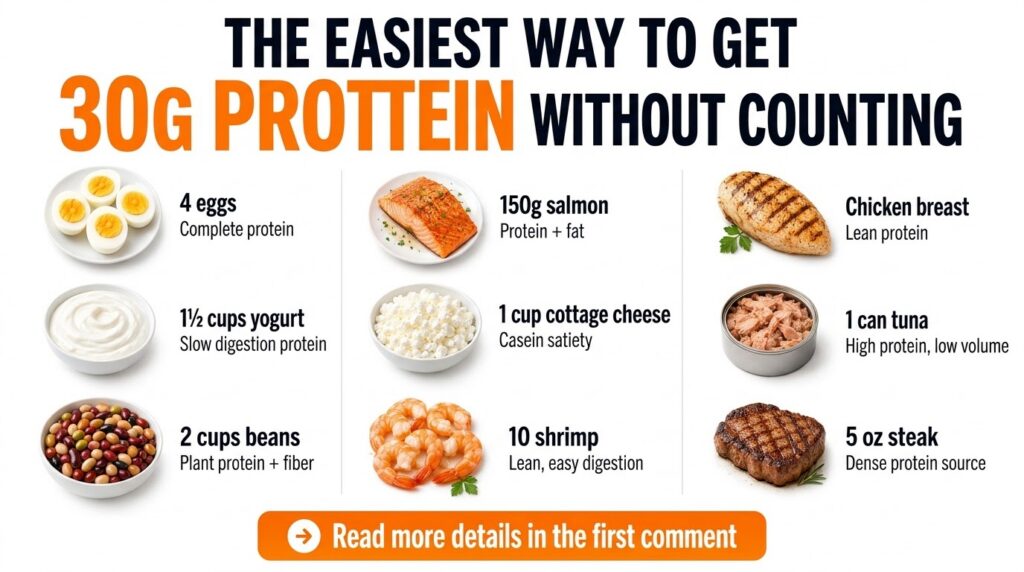
- Eggs: About 4-5 large eggs can provide roughly 24-30g of protein. They’re also packed with vitamins D, B12, and choline.
- Salmon: A 4-ounce (approx. 113g) cooked salmon fillet delivers around 28-30g of protein, plus beneficial omega-3 fatty acids.
- Chicken Breast: A 3.5-4 ounce (approx. 100-113g) cooked boneless, skinless chicken breast offers about 30-35g of lean protein.
- Greek Yogurt: One cup (approx. 227g) of plain, non-fat Greek yogurt can provide 20-25g of protein, with some high-protein brands offering more.
- Cottage Cheese: About 1 to 1.25 cups (approx. 226-280g) of 4% fat cottage cheese provides around 25-30g of protein, along with calcium.
- Canned Tuna: A 4-5 ounce (approx. 113-140g) can of drained tuna in water can easily provide 30-40g of protein.
- Mixed Beans/Legumes: While a single serving of plain beans might not hit 30g, a generous serving (e.g., 2 cups of lentils or a hearty bean chili) or combining legumes with other plant-based proteins can contribute significantly to this goal.
- Shrimp: A 4-5 ounce (approx. 113-140g) serving of cooked shrimp offers approximately 25-30g of lean protein.
- Steak: A 3-4 ounce (approx. 85-113g) cooked lean steak provides about 25-35g of protein, along with iron and zinc.
Best Ways to Incorporate 30g Protein into Meals
Making protein a priority in your meals can be simple and delicious. Here are some practical ways to do it:
- Breakfast Boost: Scrambled eggs with cottage cheese, Greek yogurt with a scoop of protein powder and berries, or a breakfast burrito with lean sausage and beans.
- Lunch Power-Up: A large salad with grilled chicken or salmon, tuna salad on whole-wheat bread, or a hearty lentil soup with a side of hard-boiled eggs.
- Dinner Delight: A lean steak with roasted vegetables, shrimp stir-fry with brown rice, or chicken breast with a side of quinoa and a bean salad.
- Smart Snacking: Hard-boiled eggs, a small container of cottage cheese, or a protein shake can help bridge gaps between meals.

Practical Tips for Boosting Protein Intake
- Plan Ahead: Meal prepping protein sources like grilled chicken or hard-boiled eggs for the week makes healthy eating easier.
- Combine Sources: Mix plant-based proteins (like beans or lentils) with smaller amounts of animal protein, or combine different plant proteins to ensure a complete amino acid profile.
- Start Strong: Prioritize protein at breakfast to kickstart your day with sustained energy and satiety.
- Read Labels: When buying packaged foods, check the nutrition facts to choose options with higher protein content.
- Hydrate: Drink plenty of water, especially when increasing protein intake, to support kidney function.
FAQs About Protein Intake
Is 30g of protein per meal necessary for everyone?
Not necessarily. While 20-30g per meal is a good general guideline, individual needs vary. Active individuals, athletes, and older adults may benefit from higher amounts, while less active individuals might require slightly less. Consult a healthcare professional for personalized advice.
Can I get too much protein?
For most healthy individuals, high protein intake is generally safe. However, extremely high protein diets without sufficient hydration can put a strain on the kidneys. A balanced approach with variety is key.
Are plant-based sources as good as animal sources?
Both plant and animal proteins offer valuable nutrients. Animal proteins are considered