Tired of the same old tomatoes and lettuce in your garden? Do you dream of surprising your dinner guests with exotic flavors and vibrant colors straight from your backyard? You’re in luck! Expanding your home garden to include uncommon vegetables isn’t just a trend; it’s a journey into new culinary experiences and a way to boost the biodiversity of your garden space.
Many gardeners stick to the tried and true, fearing that less common vegetables might be difficult or demanding. While it’s true some unusual plants require specific conditions, many are surprisingly resilient, productive, and just as easy to grow as their mainstream cousins, often with fewer pest and disease issues. This guide is for any gardener, from curious beginners to seasoned green thumbs, who wants to break free from the conventional and cultivate a truly unique harvest.
In this comprehensive guide, we’ll explore nine fantastic, yet often overlooked, vegetables that deserve a spot in your garden. We’ll cover why they’re worth growing, what makes them unique, and how to successfully incorporate them into your planting plans. Get ready to discover new favorites, enhance your garden’s aesthetic, and enjoy a bountiful harvest that stands out from the crowd!
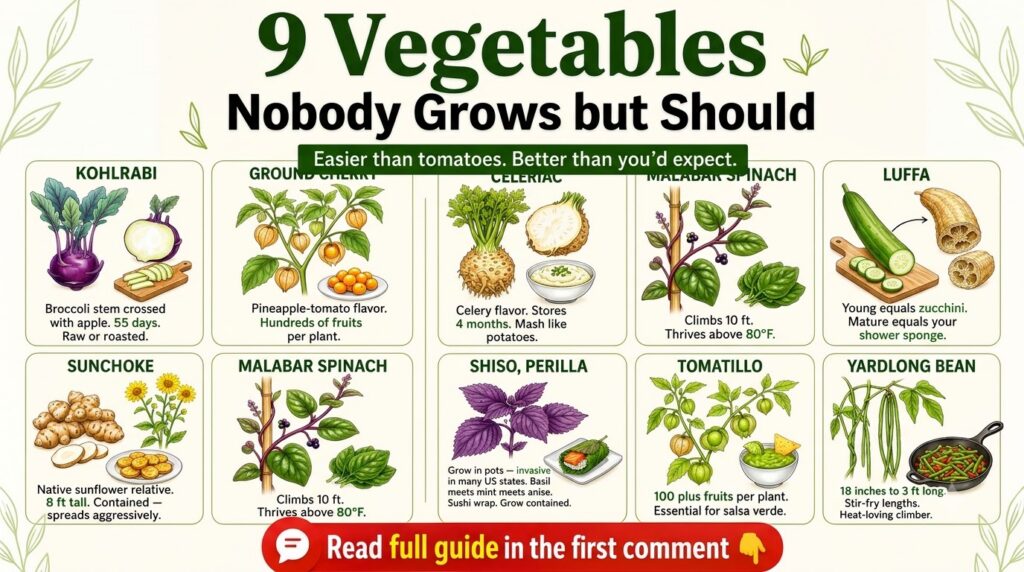
Why This Guide Matters
Venturing into the world of uncommon vegetables offers a myriad of benefits beyond just novelty. Here’s why this guide is essential for any gardener:
- Expands Culinary Horizons: Introduce exciting new flavors, textures, and nutrients to your diet.
- Boosts Garden Biodiversity: Growing a wider variety of plants can attract beneficial insects and improve soil health.
- Often More Resilient: Many uncommon varieties are heirloom plants that have adapted to specific conditions, making them surprisingly hardy.
- Conversation Starters: Your garden will be the talk of the neighborhood with unique plants and produce.
- Reduced Pest Pressure: Pests often target common crops, leaving your unusual plants relatively untouched.
- Learning Opportunity: Discover new growing techniques and deepen your understanding of plant science.
- Sustainable Gardening: Promoting genetic diversity helps preserve unique plant species.
Tools & Materials Needed
While growing uncommon vegetables doesn’t require a specialized toolkit, having these basic gardening essentials on hand will make the process much smoother:
- High-Quality Seeds or Transplants: Source from reputable suppliers specializing in heirloom or unusual varieties.
- Gardening Gloves: Protect your hands while working.
- Trowel and Spade: For digging, planting, and amending soil.
- Watering Can or Hose with Sprayer: For consistent and appropriate watering.
- Well-Draining Potting Mix or Garden Soil: Essential for healthy root development.
- Compost or Organic Matter: To enrich your soil and provide nutrients.
- Mulch (Straw, Wood Chips, or Leaves): To conserve moisture, suppress weeds, and regulate soil temperature.
- Fertilizer (Optional): A balanced organic fertilizer for a boost, if needed.
- Pruning Shears: For occasional trimming and harvesting.
- Stakes or Trellis: For vining or tall plants, providing support.
Step-by-Step Guide: Cultivating Your Unique Harvest
Growing uncommon vegetables follows many of the same principles as common ones, but attention to specific needs can make all the difference. Here’s a general guide:
Step 1: Research and Select Your Uncommon Vegetables
What to do: Before you even think about planting, research. Look into the specific growing requirements of the uncommon vegetables that pique your interest. Consider your climate zone, available sunlight, and soil type. For this guide, we’ll focus on:
- Romanesco Broccoli: A stunning fractal-patterned cauliflower relative with a delicate, nutty flavor.
- Kohlrabi: A crisp, sweet, and slightly peppery brassica that looks like a Sputnik.
- Sunchokes (Jerusalem Artichokes): A tuberous perennial with a nutty, slightly sweet flavor.
- Ground Cherries: Small, sweet, tart fruits encased in a papery husk, related to tomatillos.
- Malabar Spinach: A heat-loving, vining leafy green with thick, succulent leaves.
- Okinawan Spinach: A perennial leafy green with a beautiful purple underside, known for its health benefits.
- Cucamelons: Tiny, grape-sized cucumbers that look like miniature watermelons and taste like a citrusy cucumber.
- Asparagus Pea: A compact plant producing small, winged pods that taste like asparagus when young.
- Yardlong Beans (Snake Beans): Extremely long, tender green beans that thrive in heat.
Why it matters: Understanding a plant’s needs upfront prevents frustration and ensures you choose varieties that are likely to thrive in your garden. Different plants have different demands for sun, water, and soil.
Common mistakes to avoid: Buying seeds impulsively without checking if the plant is suitable for your climate or growing conditions. Assuming all