There’s a special kind of joy that comes from stepping into your garden, basket in hand, and gathering fresh, vibrant produce. It’s the reward for your hard work, the taste of sunshine, and the essence of home-grown goodness. But what if you could multiply that joy, making your garden produce even more abundantly? The secret, my fellow green thumbs, often lies in a simple yet powerful practice: consistent picking.
Many beginner gardeners, and even some experienced ones, might not realize the profound impact that regular harvesting has on a plant’s overall productivity. It’s not just about taking what’s ready; it’s about signaling to the plant that it needs to keep producing. Think of it as a gentle nudge, encouraging a continuous cycle of growth rather than a one-time flush of produce.
This comprehensive guide is for anyone who dreams of a more prolific garden, from those just starting their first veggie patch to seasoned cultivators looking to refine their techniques. If you’ve ever wondered why your zucchini plant suddenly stops producing, or how to get more beans from your vines, you’re in the right place. We’ll dive deep into the ‘why’ and ‘how’ of consistent picking, equipping you with the knowledge to transform your garden into a perpetual harvest machine.
Get ready to unlock your garden’s true potential. By the end of this article, you’ll understand not just which vegetables benefit most, but the fundamental principles that drive plant growth and how you can harness them for your most bountiful harvest yet!
Why This Guide Matters
Understanding and implementing consistent picking techniques offers a wealth of benefits that extend far beyond simply getting more food. Here’s why this guide is essential for every gardener:
- Maximizes Yield: The most obvious benefit – regular picking signals plants to produce more flowers and fruits, ensuring a larger overall harvest throughout the season.
- Extends Harvest Season: By preventing plants from going to seed prematurely, you can keep them producing fresh edibles for weeks or even months longer.
- Improves Flavor and Quality: Many vegetables taste best when harvested at their peak, before they become tough, seedy, or overly mature. Consistent picking ensures you get the best tasting produce.
- Promotes Plant Health: Removing mature or diseased parts encourages new, healthy growth and reduces the strain on the plant, making it more resilient.
- Deters Pests and Diseases: Regular inspection during picking helps you spot and address pest infestations or disease symptoms early, preventing wider spread.
- Reduces Waste: By harvesting at the right time and frequently, you avoid losing produce to over-ripening, rotting on the vine, or becoming unpalatable.
- Saves Money: A more productive garden means fewer trips to the grocery store for fresh produce, leading to significant savings over time.
- Beginner-Friendly: While seemingly a small tweak, consistent picking is a fundamental, easy-to-learn practice that yields impressive results even for new gardeners.
Tools & Materials Needed
You don’t need a lot of fancy equipment to become a consistent picker. Most of what you need you likely already have or can acquire easily:
- Garden Gloves: Essential for protecting your hands from thorns, rough leaves, or irritating sap.
- Harvesting Basket or Tote: A lightweight container to collect your bounty. A wide, shallow basket is often ideal to prevent delicate produce from getting crushed.
- Pruning Shears or Scissors: For clean cuts on stubborn stems (e.g., peppers, eggplant, squash) or for harvesting herbs and leafy greens without damaging the parent plant.
- Watering Can or Hose: Keeping plants well-hydrated is crucial for continuous production.
- Compost Bin (Optional): For disposing of any spent plant material or parts you don’t harvest, returning nutrients to the earth.
Step-by-Step Guide: Mastering the Art of Consistent Picking
Consistent picking is more than just grabbing ripe produce; it’s a strategic interaction with your plants. Here’s how to integrate it into your gardening routine:
Step 1: Understand the ‘Why’ Behind Continuous Production
What to do: Grasp the biological principle that drives plants to produce more when harvested frequently.
Why it matters: Most annual vegetables and many herbs have one primary goal: to produce seeds and reproduce. Once a plant successfully sets seeds (i.e., its fruits mature), its biological imperative to produce more fruits often diminishes significantly. By picking young fruits or leaves before they fully mature or go to seed, you trick the plant into thinking it hasn’t completed its mission, compelling it to flower and fruit more.
Common mistakes to avoid: Believing that leaving a few fruits on the plant will encourage more. This often does the opposite, signaling the plant to slow down production.
Helpful tips: Think of it as pruning for productivity. You’re encouraging vegetative growth and fruit set rather than allowing the plant to focus solely on seed maturation.
Step 2: Know Your Crops and Their Harvest Cues
What to do: Learn the specific readiness signs for each vegetable and herb you grow, and how frequently they need picking.
Why it matters: Different plants have different optimal harvest times and frequencies. Picking too early means smaller yields; picking too late often results in tough, bitter, or seedy produce. The infographic below highlights some common vegetables that thrive with daily or very frequent picking.
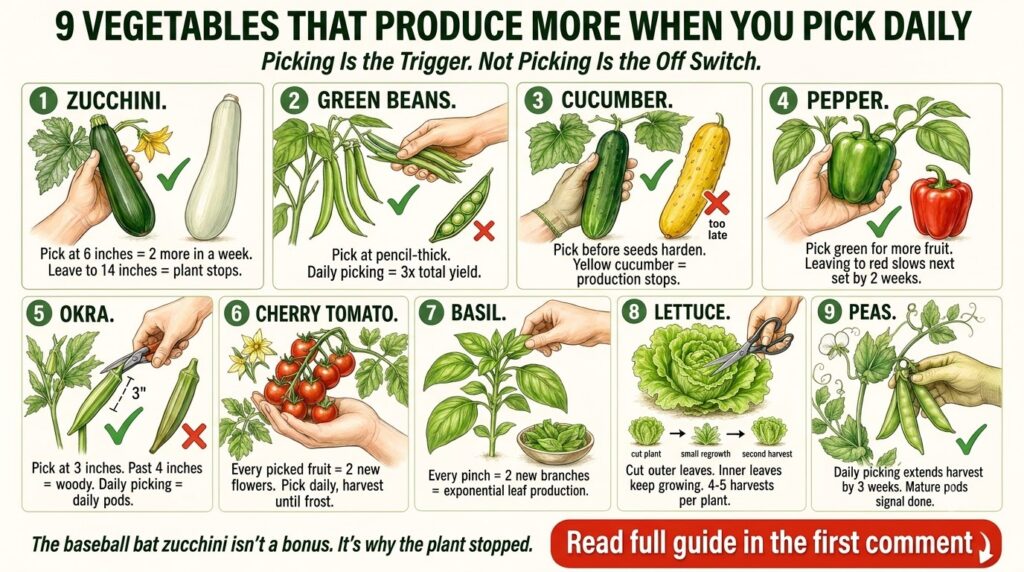
- Fruiting Vegetables (Zucchini, Cucumbers, Beans, Peppers, Okra, Cherry Tomatoes): These need frequent checks, often daily during peak season. Pick when they reach a desirable, but not overly large, size. For example, zucchini and cucumbers are best when young and tender. Beans should be snapped before the pods swell too much.
- Leafy Greens (Lettuce, Spinach, Kale): Harvest outer leaves as needed using a ‘cut-and-come-again’ method. This allows the inner leaves to continue growing.
- Herbs (Basil, Mint, Cilantro): Pinch off sprigs and leaves regularly. For basil, pruning the top sets of leaves and flowers encourages bushier growth.
- Peas: Pick when pods are plump and green, but before the peas inside become starchy.
Common mistakes to avoid: Waiting for vegetables to become