Are you looking for natural ways to boost your energy, support a healthy metabolism, and promote overall well-being? Look no further than Vitamin B3, also known as Niacin! This essential nutrient plays a crucial role in many bodily functions, and incorporating niacin-rich foods into your diet is a delicious way to harness its power.
In this article, we’ll explore the incredible benefits of Vitamin B3, identify the top food sources that pack a punch, and share practical tips on how to easily include them in your daily meals. Get ready to discover how these nutritional powerhouses can make a real difference in your health journey!
The Amazing Benefits of Vitamin B3 (Niacin)
Vitamin B3, or Niacin, is more than just an energy booster. It’s a powerhouse nutrient involved in over 400 enzymatic reactions in your body. Here’s a closer look at what it does:
- Energy Production: Niacin is vital for converting food into energy. It helps your body break down carbohydrates, fats, and proteins into usable fuel, keeping you feeling energized throughout the day.
- Digestive Health: It supports the healthy functioning of your digestive system, which is essential for nutrient absorption and overall gut health.
- Nervous System Function: Niacin plays a role in nerve signaling and maintaining a healthy nervous system, contributing to better brain function and mood regulation.
- Skin Health: It’s crucial for maintaining healthy skin, protecting it from sun damage, and supporting its natural repair processes.
- Cholesterol Management: Research suggests that Niacin can help improve cholesterol levels by increasing ‘good’ HDL cholesterol and lowering ‘bad’ LDL cholesterol and triglycerides. However, high doses for this purpose should only be taken under medical supervision.
- Antioxidant Properties: Niacin acts as an antioxidant, helping to protect your cells from damage caused by free radicals.
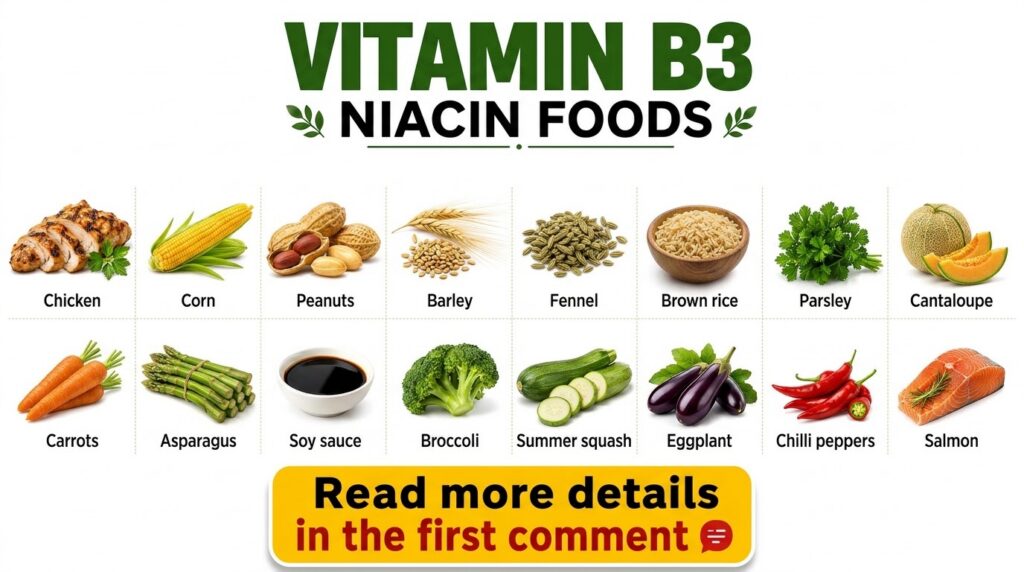
Top Vitamin B3 Food Sources
Ready to load up on Niacin? Here are some of the best dietary sources to include in your meals:
Lean Meats and Poultry
- Chicken Breast: A fantastic source, especially if you remove the skin.
- Turkey: Another excellent poultry option for a Niacin boost.
- Lean Beef: Offers a good amount of Vitamin B3 along with iron and other essential nutrients.
Fish and Seafood
- Tuna: Especially canned tuna (light or white) is exceptionally high in Niacin.
- Salmon: Provides Niacin along with beneficial omega-3 fatty acids.
- Swordfish: A great option for a significant Niacin intake.
Nuts and Seeds
- Peanuts: A convenient snack that’s rich in Niacin and healthy fats.
- Sunflower Seeds: Add them to salads or yogurt for an extra boost.
Legumes and Grains
- Lentils: A plant-based source of Niacin, fiber, and protein.
- Brown Rice: A whole grain that contributes to your daily Niacin intake.
- Whole Wheat Products: Including whole wheat bread and pasta.
Vegetables
- Mushrooms: Especially crimini mushrooms, offer a good amount of Niacin.
- Avocado: A versatile fruit that also provides healthy fats and Niacin.
- Potatoes: Another common vegetable contributing to Niacin intake.
How Much Vitamin B3 Do You Need?
The recommended dietary allowance (RDA) for Niacin varies slightly based on age and sex:
- Adult men: 16 mg NE (Niacin Equivalents) per day
- Adult women: 14 mg NE per day (18 mg NE during pregnancy, 17 mg NE during lactation)
Most people can meet their Niacin needs by consuming a balanced diet rich in the foods listed above. It’s rare for individuals in developed countries to experience a severe Niacin deficiency.
Best Ways to Incorporate Niacin-Rich Foods
Adding more Niacin to your diet can be simple and enjoyable!
- Start Your Day Strong: Add sunflower seeds to your oatmeal or incorporate lean turkey sausage into your breakfast scramble.
- Lunchtime Boost: Make tuna or salmon salads. Add mushrooms to your wraps or sandwiches.
- Dinner Delights: Grill chicken or fish, serve with a side of brown rice and sautéed mushrooms. Add lentils to soups or stews for a hearty, nutritious meal.
- Smart Snacking: Grab a handful of peanuts or a slice of avocado toast.
- Get Creative: Experiment with different Niacin-rich ingredients in your favorite recipes.
Potential Risks and Considerations
While Niacin is essential, it’s good to be aware of potential risks:
- Deficiency: Severe Niacin deficiency, known as pellagra, is rare today but can lead to digestive issues, skin inflammation, and neurological problems.
- Excess Niacin (from supplements): Taking very high doses of Niacin, especially in supplement form, can lead to side effects like flushing (red, warm, itchy skin), nausea, vomiting, liver damage, and impaired glucose tolerance. Always consult a healthcare professional before taking Niacin supplements, especially at high doses. Dietary Niacin from food sources is generally safe and doesn’t pose these risks.
This content is for educational purposes only and should not be considered medical advice. Consult a qualified healthcare professional for personalized dietary recommendations.
Practical Tips for a Niacin-Rich Diet
- Vary Your Protein Sources: Don’t just stick to one type of meat or fish. Rotate through chicken, turkey, salmon, and tuna.
- Embrace Plant-Based: Include lentils, peanuts, and mushrooms regularly in your meals.
- Choose Whole Grains: Opt for brown rice and whole wheat products over refined grains.
- Healthy Snacking: Keep Niacin-rich snacks like peanuts or sunflower seeds on hand.
- Meal Prep: Prepare larger batches of Niacin-rich ingredients like grilled chicken or cooked lentils to easily add to meals throughout the week.

FAQs About Vitamin B3 (Niacin)
What is the main role of Vitamin B3?
Vitamin B3 (Niacin) is crucial for converting food into energy, supporting a healthy nervous system, promoting good digestion, and maintaining healthy skin.
Can I get enough Niacin from food alone?
Yes, most healthy individuals can easily meet their daily Niacin requirements by consuming a balanced diet rich in foods like lean meats, fish, legumes, nuts, and whole grains.
Are there any side effects of too much Niacin?
While Niacin from food sources is generally safe, high doses from supplements can cause side effects such as skin flushing, nausea, and in severe cases, liver damage. Always consult a doctor before taking Niacin supplements.
Which foods are highest in Niacin?
Excellent sources of Niacin include tuna, salmon, chicken breast, turkey, beef, peanuts, mushrooms, and liver.
Is Niacin good for cholesterol?
Niacin, particularly in prescribed high doses, has been shown to improve cholesterol levels by lowering ‘bad’ LDL and increasing ‘good’ HDL. However, this treatment should only be managed by a healthcare professional due to potential side effects.
Does cooking destroy Niacin?
Niacin is relatively stable compared to other B vitamins. While some loss can occur with prolonged cooking or leaching into cooking water, significant amounts are retained in most common cooking methods.
What are the signs of Niacin deficiency?
Severe Niacin deficiency (pellagra) is characterized by symptoms often referred to as ‘the 3 Ds’: dermatitis (skin rash), diarrhea, and dementia. Milder deficiencies might present with fatigue, indigestion, and depression.
Conclusion
Incorporating Vitamin B3 (Niacin) rich foods into your diet is a simple yet powerful way to support your energy levels, digestion, nervous system, and skin health. From delicious fish and lean meats to wholesome nuts and vegetables, there are plenty of options to keep your meals exciting and nutritious.
By making conscious choices and embracing variety, you can easily fuel your body with this essential vitamin and move towards a healthier, more vibrant you. Explore our other articles for more healthy food content and recipe ideas to continue your wellness journey!