When it comes to healthy snacking, nuts and seeds are often at the top of the list. They’re packed with essential nutrients, including the powerful antioxidant Vitamin E. But have you ever wondered which ones give you the most bang for your buck?
Vitamin E is a fat-soluble vitamin crucial for immune function, healthy skin, and protecting your cells from damage. Getting enough of it through your diet is a simple way to support your overall well-being. This article dives into a friendly competition between three popular choices: peanuts, almonds, and sunflower seeds. We’ll compare their Vitamin E content and other key nutrients so you can make informed choices for your snacking habits.
The Vitamin E Showdown: Nutritional Comparison
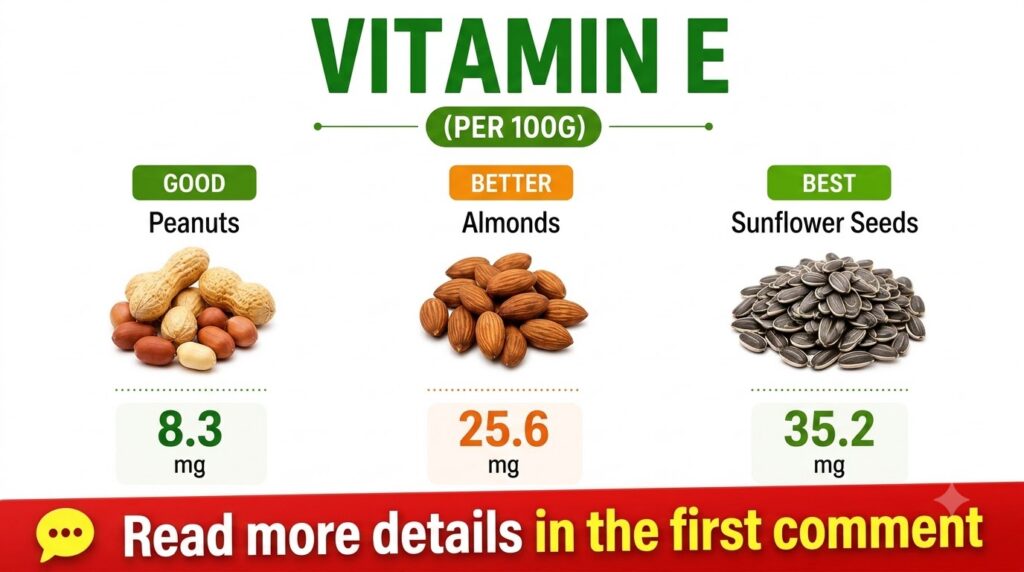
Let’s break down how these three nutritious powerhouses compare, focusing on a typical 100-gram serving.
| Food | Calories | Protein (g) | Carbs (g) | Fat (g) | Fiber (g) | Vitamin E (mg) | Main Nutrients | Best Benefit |
|---|---|---|---|---|---|---|---|---|
| Peanuts | ~567 | ~25.8 | ~16.1 | ~49.2 | ~8.5 | ~8.3 | B Vitamins, Magnesium | Affordable protein source |
| Almonds | ~579 | ~21.2 | ~21.7 | ~49.9 | ~12.2 | ~25.6 | Magnesium, Calcium, Fiber | Heart health, bone strength |
| Sunflower Seeds | ~582 | ~20.7 | ~20 | ~51.5 | ~8.6 | ~35.2 | Selenium, Copper, Magnesium | Antioxidant powerhouse |
Calories
All three are calorie-dense foods, meaning they provide a significant amount of energy in a small serving. This is largely due to their healthy fat content. While the calorie counts are similar per 100g, portion control is key when incorporating them into your diet, especially if you’re managing your weight.
Protein
Peanuts lead the pack slightly in protein content, making them an excellent plant-based protein source. Almonds and sunflower seeds also offer a good amount, contributing to muscle repair, satiety, and overall body function.
Fat
These foods are rich in healthy fats, predominantly monounsaturated and polyunsaturated fats. These fats are beneficial for heart health and can help absorb fat-soluble vitamins like Vitamin E. Sunflower seeds have a slightly higher fat content, followed closely by almonds and then peanuts.
Carbs
While all three contain carbohydrates, a good portion of these are fiber. Peanuts and sunflower seeds have comparable carb content, with almonds having a slightly higher amount. They are generally considered low-glycemic foods, making them suitable for blood sugar management in moderation.
Fiber
Almonds stand out with the highest fiber content. Fiber is essential for digestive health, helps regulate blood sugar, and promotes a feeling of fullness. Peanuts and sunflower seeds also provide a respectable amount of fiber, contributing to gut health.
Vitamins and Minerals
Beyond Vitamin E, each of these snacks brings a unique array of other micronutrients.
- Peanuts: Good source of B vitamins (especially niacin and folate), magnesium, phosphorus, and potassium.
- Almonds: Rich in magnesium, calcium, potassium, and vitamin B2 (riboflavin). They are excellent for bone health and nerve function.
- Sunflower Seeds: Exceptional source of selenium, copper, and magnesium. They also provide B vitamins and phosphorus. Selenium is particularly important for thyroid function and antioxidant defense.
Taste and Texture
- Peanuts: Earthy, slightly sweet, and crunchy, often with a savory roasted flavor.
- Almonds: Mildly sweet, nutty, and firm with a satisfying crunch.
- Sunflower Seeds: Mild, slightly buttery, and distinctly nutty with a tender-crisp texture.
Best For
- Peanuts: Budget-friendly snacking, classic peanut butter, stir-fries, and savory dishes.
- Almonds: Baking, healthy salads, almond butter, and a versatile snack.
- Sunflower Seeds: Sprinkling on salads, yogurt, oatmeal, in trail mixes, or as a standalone snack.
The Winner for Vitamin E: Sunflower Seeds!
Based purely on Vitamin E content per 100g, sunflower seeds take the crown! They offer a significantly higher amount of this vital antioxidant compared to both almonds and peanuts.
However, it’s important to remember that all three are incredibly nutritious. While sunflower seeds are a Vitamin E powerhouse, almonds offer more fiber and calcium, and peanuts provide more protein and B vitamins. The best choice often depends on your specific nutritional needs and taste preferences.
Practical Tips for Enjoying These Healthy Snacks
Here are some easy ways to incorporate more peanuts, almonds, and sunflower seeds into your diet:
- Snack Smart: Keep a small portion of raw or dry-roasted nuts/seeds handy for a quick energy boost.
- Smoothie Boost: Add a tablespoon of nut butter or a sprinkle of seeds to your morning smoothie for extra creaminess and nutrients.
- Salad Toppers: Sprinkle sunflower seeds or chopped almonds over your salads for added crunch and healthy fats.
- Oatmeal & Yogurt: Mix them into your breakfast oatmeal or yogurt for a nutritious start to your day.
- Homemade Trail Mix: Combine with dried fruit and other seeds for a custom, healthy snack.
- Baking: Use ground almonds in baking or add chopped peanuts to cookies and bars.
Remember to choose unsalted and unsweetened varieties whenever possible to avoid excess sodium and added sugars.
FAQs About Vitamin E and Healthy Seeds
What are the main benefits of Vitamin E?
Vitamin E is a powerful antioxidant that helps protect your cells from damage, supports immune function, and is essential for healthy skin and eyes.
How much Vitamin E do I need daily?
The recommended daily allowance (RDA) for adults is 15 mg (or 22.4 IU) of Vitamin E. Many people can meet this through a balanced diet.
Can I get too much Vitamin E?
While Vitamin E from food sources is generally safe, high doses from supplements can potentially pose risks. It’s best to consult a healthcare professional before taking high-dose supplements.
Are roasted nuts and seeds less healthy?
Dry roasting generally retains most nutrients. However, oil roasting can add extra fats and calories. Opt for raw or dry-roasted varieties when possible.
Are peanuts truly nuts?
Botanically, peanuts are legumes, growing underground, unlike tree nuts like almonds and walnuts. However, nutritionally, they are often grouped with nuts due to their similar nutrient profile.
What’s the best way to store nuts and seeds?
Store nuts and seeds in an airtight container in a cool, dark place. For longer freshness, especially for larger quantities, store them in the refrigerator or freezer to prevent them from going rancid.
Can these foods cause allergies?
Yes, peanuts and tree nuts (like almonds) are common allergens. Sunflower seeds are less common allergens but can still cause reactions in some individuals.
Conclusion
Whether you reach for peanuts, almonds, or sunflower seeds, you’re making a great choice for a healthy snack. While sunflower seeds shine brightest for their Vitamin E content, each offers a unique blend of essential nutrients that support various aspects of your health.
Variety is key! Incorporating a mix of these delicious options into your diet will provide a broad spectrum of vitamins, minerals, and healthy fats. So go ahead, experiment with different ways to enjoy these fantastic foods and boost your daily nutrition!
This content is for educational purposes only and should not be considered medical advice. Consult a qualified healthcare professional for personalized dietary recommendations.