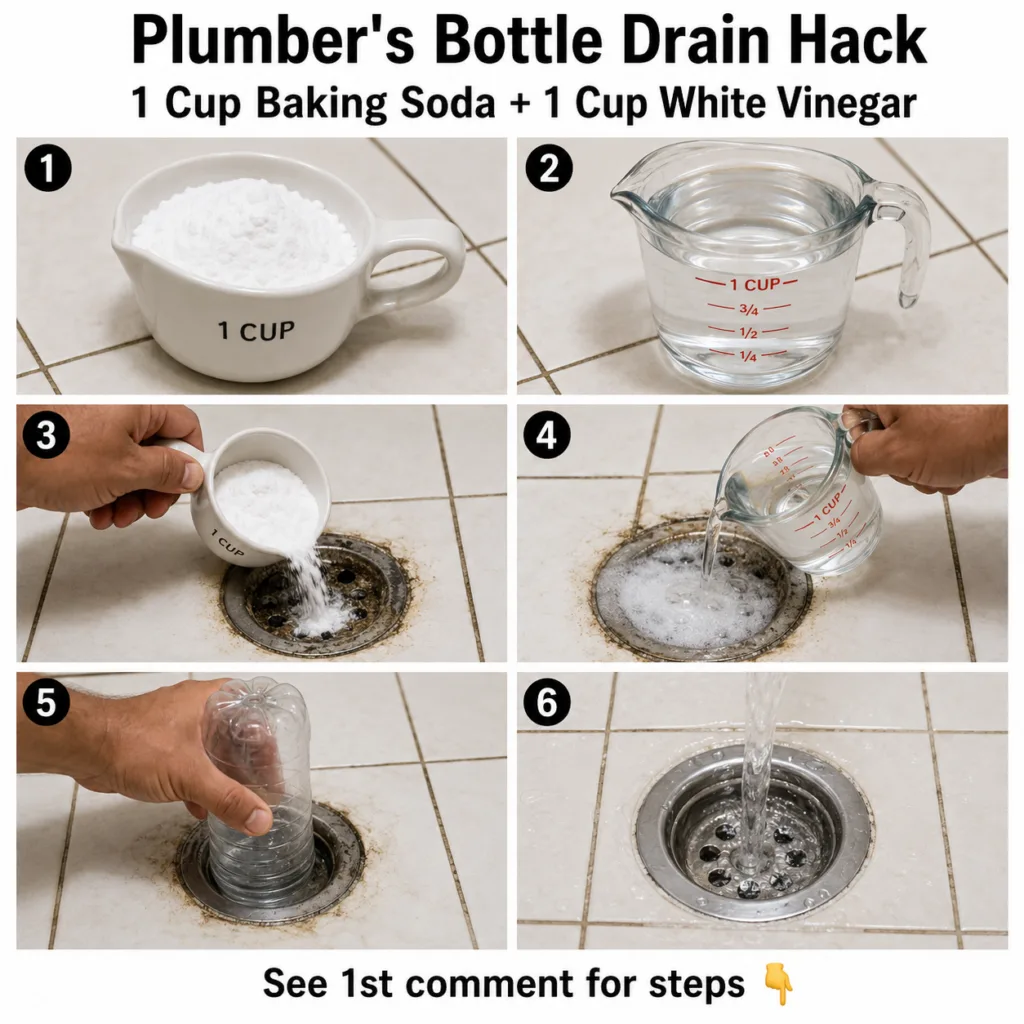
Dealing with a slow or clogged drain can be incredibly frustrating. Before you reach for harsh chemical drain cleaners or call a plumber, there’s a surprisingly effective and simple DIY trick you can try using just an empty plastic bottle. This method can save you money, is environmentally friendly, and helps you avoid corrosive chemicals in your plumbing.
This clever hack works by creating a makeshift plunger, using air pressure to dislodge minor to moderate clogs. It’s especially useful for kitchen sinks, bathroom sinks, and even bathtubs.
What You’ll Need
- An empty plastic bottle (a 1.5 to 2-liter soda or water bottle works best)
- Scissors or a utility knife
- Gloves (optional, for hygiene)
Why This DIY Can Be Useful
This DIY method leverages the principle of hydraulic plunging. By placing the cut end of the bottle over the drain and rapidly pushing down, you create a sudden burst of air pressure and suction. This force helps to dislodge hair, grease, food particles, and other common culprits that cause blockages, pushing them down the pipe.
It’s a great first line of defense because it avoids the potential damage that harsh chemicals can inflict on pipes and is much safer for your home and the environment.
How to Make It
Preparing your bottle plunger is quick and easy:
- Clean the Bottle: Make sure your plastic bottle is empty and rinsed out thoroughly.
- Cut the Bottom: Carefully use scissors or a utility knife to cut off the entire bottom of the plastic bottle. You want to create an open cylinder. Be precise to ensure the cut edge is as even as possible, as this will help create a better seal over your drain.
- Inspect the Edge: Ensure there are no sharp burrs that could scratch your sink surface. If needed, you can lightly sand or trim any rough edges.
How to Use It
Once your bottle is ready, here’s how to tackle that clog:
- Remove Drain Stopper: If your sink has a stopper, remove it completely to allow full access to the drain opening.
- Add Water: If there isn’t already standing water in the sink, fill the basin with about 1-2 inches of water. This water helps create a seal around the bottle and transmit the plunging force more effectively.
- Position the Bottle: Place the cut, open end of the plastic bottle directly over the drain opening. Press down firmly to create as tight a seal as possible against the sink surface.
- Plunge Vigorously: With the bottle firmly sealed over the drain, rapidly push down and pull up on the bottle, similar to how you would use a traditional plunger. Maintain the seal as much as possible during this action.
- Repeat and Check: Continue plunging for 15-30 seconds, then lift the bottle and check if the water is draining.
- Flush with Hot Water: Once the clog seems to be clearing, run hot water down the drain for a few minutes to help flush away any remaining debris and grease.
What to Expect
This method is highly effective for many common clogs caused by hair, soap scum, or minor food buildup. You might need to repeat the plunging action several times to fully dislodge the blockage. For very severe or deep-seated clogs, this DIY method may not be sufficient, and you might need to try other approaches or call a professional.
Helpful Tips
- Choose the Right Bottle Size: A bottle with a diameter slightly larger than your drain opening will provide a better seal and more effective plunging action.
- Ensure a Tight Seal: The success of this method largely depends on creating a good seal between the bottle and the sink surface. Press down firmly.
- Wear Gloves: If you’re dealing with a particularly dirty or smelly drain, wearing gloves can make the process more hygienic.
- Pre-treat with Hot Water: For grease clogs, pouring a kettle of hot (but not boiling) water down the drain a few minutes before plunging can sometimes help soften the blockage.
Important Notes / Safety
- Caution with Cutting: Always exercise extreme caution when cutting the plastic bottle with scissors or a utility knife to avoid injury.
- Avoid Mixing Chemicals: If you’ve already poured chemical drain cleaners down the drain, do NOT attempt this method. Mixing certain chemicals with standing water can create dangerous fumes or splashes.
- Gentle on Surfaces: While generally safe, be mindful not to use excessive force that could damage delicate sink surfaces or old plumbing fixtures.