Imagine stepping onto your patio or balcony and plucking fresh, fragrant herbs for your dinner, directly from vibrant, healthy containers. It’s a gardener’s dream, and with the right knowledge, it’s easily achievable! Many aspiring gardeners face challenges with limited space, pest problems, or simply knowing which plants thrive together. That’s where the magic of companion planting in container gardens comes in.
Today, we’re diving deep into the art of pairing herbs in your containers to create a harmonious, productive, and beautiful mini-garden. Say goodbye to struggling plants and hello to a bounty of fresh flavors!
Why Companion Planting for Herbs Matters
Companion planting isn’t just an old gardening wives’ tale; it’s a time-tested technique that leverages the natural benefits plants can offer each other. When it comes to container herb gardens, thoughtful pairings can lead to:
- Enhanced Growth and Flavor: Some herbs can improve the growth and even intensify the flavor of their neighbors.
- Natural Pest Deterrence: Certain herbs release compounds that repel common garden pests, protecting their companions.
- Attracting Beneficial Insects: Flowers and specific herbs can draw in pollinators and predatory insects that keep harmful pests in check.
- Optimized Space: By understanding how plants grow together, you can maximize your container space for a lush yield.
- Better Soil Health: Diverse root systems can contribute to a healthier soil microbiome, even in a confined container environment.
Key Considerations for Perfect Herb Pairings
Before you start mixing and matching, it’s crucial to consider the fundamental needs of each herb. Grouping plants with similar requirements is the golden rule for container gardening success.
Sunlight Requirements
- Full Sun (6+ hours): Most Mediterranean herbs like Rosemary, Thyme, Oregano, Lavender, and Sage thrive in abundant sunshine.
- Partial Sun (4-6 hours): Herbs like Mint, Parsley, Cilantro, and Chives prefer a little afternoon shade, especially in hot climates.
- Shade Tolerant (2-4 hours): Lemon Balm and some varieties of Mint can tolerate more shade.
Watering Needs
- Drought-Tolerant: Mediterranean herbs typically prefer drier soil and can suffer from too much moisture.
- Moisture-Loving: Herbs like Mint, Basil, and Parsley prefer consistently moist (but not waterlogged) soil.
Soil Preferences
- Well-Draining: Nearly all herbs appreciate well-draining soil to prevent root rot. A good quality potting mix with perlite or sand is ideal.
- Nutrient Needs: Some herbs are heavier feeders than others, but generally, herbs don’t require overly rich soil.
Growth Habits
- Sprawling/Spreading: Mint can be invasive; if paired, it’s best to keep it in its own pot or a dedicated section within a larger container with a barrier. Thyme also spreads.
- Upright/Bushy: Basil, Rosemary, and Sage tend to grow upwards or into a compact bush.
- Trailing: Some herbs like Creeping Thyme or Oregano can beautifully trail over the edges of a container.
Best Herb Pairings for Thriving Container Gardens
Let’s get to the fun part! Here are some tried-and-true herb combinations that will flourish together in your containers:
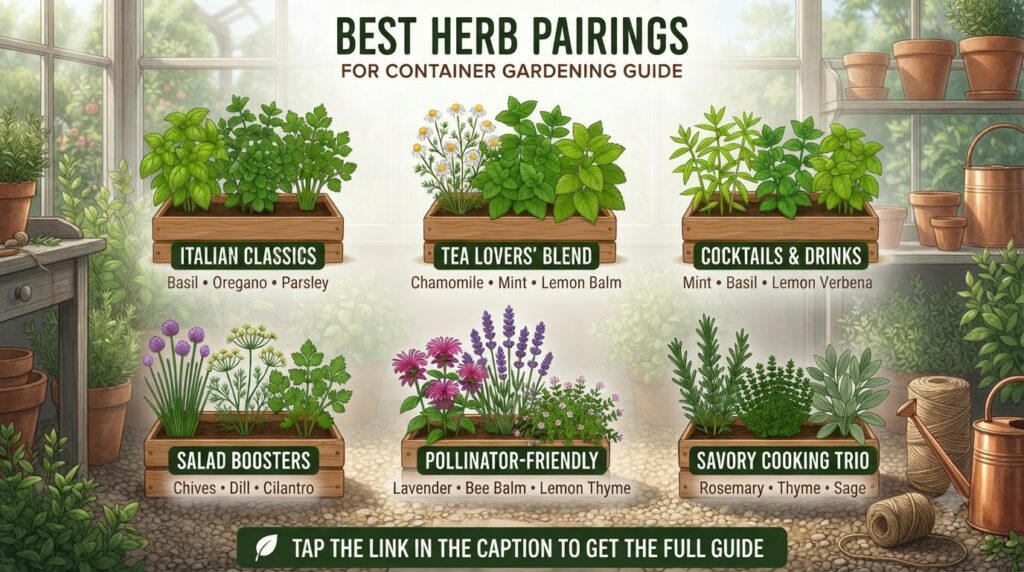
1. The Italian Trio: Basil, Oregano & Parsley
- Why they work: All three are culinary staples that appreciate similar growing conditions—ample sunlight, consistently moist soil, and good drainage. Basil benefits from oregano’s presence, reportedly enhancing its flavor.
- Tip: Ensure your container is large enough to accommodate basil, which can grow quite bushy.
2. Mediterranean Medley: Rosemary, Thyme & Sage
- Why they work: These aromatic herbs are sun-lovers and thrive in drier conditions. They all prefer well-draining soil and don’t mind a little neglect when it comes to watering. Their woody stems and earthy flavors complement each other in the kitchen and the garden.
- Tip: Avoid overwatering; let the soil dry out between waterings.
3. Calming & Refreshing: Chamomile, Mint & Lemon Balm
- Why they work: Perfect for teas! While mint can be invasive, if grown in a very large container or with a root barrier, it can coexist with lemon balm and chamomile. All three enjoy partial sun and consistently moist soil.
- Tip: Consider planting mint in a smaller, separate pot within a larger decorative container to manage its spread.
4. Pollinator Paradise: Lavender & Bee Balm (Monarda)
- Why they work: While not strictly herbs for culinary use (though lavender is edible), these two are fantastic for attracting beneficial pollinators like bees and butterflies. Both love full sun and well-draining soil. Their beautiful blooms also add aesthetic appeal.
- Tip: Ensure good air circulation to prevent powdery mildew, especially on bee balm.
5. Pest-Deterring Duo: Basil & Marigolds
- Why they work: Marigolds are famous for deterring nematodes and other pests in the soil, while basil can help repel flies and mosquitoes. This combo keeps your edible herbs safer and adds a splash of color.
- Tip: Choose dwarf marigold varieties so they don’t overshadow your basil.
Tips for Container Gardening Success
- Choose the Right Container: Opt for pots with drainage holes. Terra cotta pots are great for drought-tolerant herbs as they allow soil to breathe, while plastic or glazed pots retain moisture longer.
- Quality Potting Mix: Don’t skimp on good potting mix. A lightweight, well-draining mix designed for containers is essential.
- Water Wisely: Check soil moisture regularly. Stick your finger about an inch into the soil. Water when it feels dry to the touch for moisture-loving herbs, and let it dry out a bit more for drought-tolerant varieties.
- Fertilize Sparingly: Most herbs don’t need heavy fertilization. A balanced, all-purpose liquid fertilizer diluted to half strength once a month during the growing season is usually sufficient.
- Regular Harvesting: Pinching back and harvesting frequently encourages bushier growth and prevents herbs from flowering too soon (which can make some herbs like basil taste bitter).
By understanding the unique needs of your favorite herbs and strategically pairing them, you can transform your outdoor space into a thriving, aromatic, and incredibly useful herb garden. Get ready to enjoy the freshest flavors right from your home!