Are you searching for a natural and affordable way to support your hair’s health and encourage a beautiful, healthy glow? You’re in luck! Many people are discovering the wonders of DIY onion oil, a time-honored remedy celebrated for its potential to nourish the scalp and hair.
This incredible homemade solution uses simple ingredients you might already have in your kitchen, offering a gentle approach to hair care without harsh chemicals. Let’s dive into the world of onion oil and learn how you can make this natural elixir at home!
Why Onion Oil for Hair? The Natural Benefits
Onions might make your eyes water, but they are packed with amazing nutrients that are commonly believed to be beneficial for hair. Here’s why this humble vegetable has become a favorite in DIY beauty:
- Rich in Sulfur: Onions are high in dietary sulfur, a component of keratin, the protein that makes up your hair. While we can’t make medical claims, many believe sulfur can contribute to stronger-looking hair.
- Antioxidant Power: They contain powerful antioxidants that may help protect hair and scalp from environmental damage.
- Supports Scalp Circulation: Massaging onion oil into the scalp is thought by many to promote better blood circulation, which in turn can help deliver nutrients to the hair follicles.
- Potential for Healthier Scalp: With its natural properties, onion oil is often used in traditional remedies to support a healthy scalp environment.
Your Easy DIY Onion Hair Oil Recipe
Making your own onion oil is simpler than you might think! This recipe focuses on extracting the beneficial compounds from onions into a carrier oil.
What You’ll Need:
- 1-2 medium-sized red onions
- 1 cup (approx. 240ml) of a carrier oil (coconut oil, olive oil, or almond oil are great choices)
- Small pot or saucepan
- Strainer or cheesecloth
- Clean, airtight glass jar or bottle for storage
Step-by-Step Instructions:
- Prepare the Onions: Peel the onions and chop them into small pieces. The smaller the pieces, the more surface area for nutrient extraction.
- Combine with Oil: Pour your chosen carrier oil into the pot. Add the chopped onions to the oil.
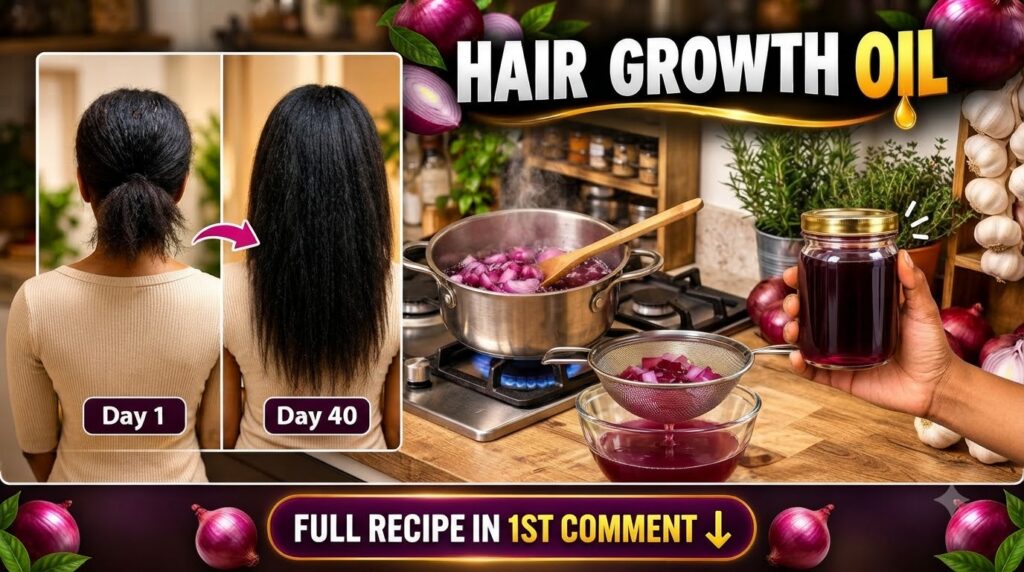
- Gentle Heat Infusion: Place the pot on low heat. Allow the mixture to simmer gently for about 15-20 minutes. You want the onions to soften and release their compounds into the oil, but avoid frying them. You might see gentle steam rising, as shown in popular visual guides.
- Cool and Strain: Remove the pot from the heat and let the mixture cool completely. Once cool, strain the oil through a fine-mesh strainer or cheesecloth into your clean glass jar. Make sure to press the onion pieces to extract as much oil as possible. Discard the onion solids.
- Store and Use: Cap the jar tightly. Your homemade onion hair oil is ready to use!
How to Use Your DIY Onion Oil for Best Results
Once your oil is ready, incorporating it into your routine is easy:
- Application: Gently warm a small amount of oil (optional). Apply it directly to your scalp using your fingertips.
- Massage: Massage your scalp in circular motions for 5-10 minutes. This helps the oil penetrate and is believed to stimulate blood flow.
- Hair Length: You can also apply a small amount to the lengths of your hair to help condition and add shine.
- Leave-In Time: Leave the oil on for at least 30 minutes, or even overnight for a deeper treatment.
- Rinse: Wash your hair thoroughly with a mild shampoo. You might need to shampoo twice to ensure all the oil is removed.
- Frequency: For optimal results, people commonly use onion oil 1-2 times a week. Consistent use is often highlighted in anecdotal reports of those seeing positive changes in hair appearance, like the ‘Day 1’ to ‘Day 40’ transformations sometimes shared.
Important Tips Before You Try This
- Patch Test: Always perform a patch test on a small area of skin (like behind your ear) 24 hours before full application to check for any allergic reactions or sensitivities.
- Scent: Onion oil does have a distinct smell. If you find it too strong, you can add a few drops of essential oils like lavender or rosemary to the cooled, strained oil.
- Consistency is Key: Like with any natural remedy, patience and consistent application are often associated with noticeable changes in hair health and appearance.
- Storage: Store your homemade onion oil in a cool, dark place. It should last for several weeks.
Embracing natural beauty solutions like DIY onion oil can be a rewarding journey. While individual results can vary, many people find that incorporating this natural remedy into their hair care routine contributes to a healthier-looking scalp and the appearance of stronger, more vibrant hair. Give it a try and see if this nature’s secret works for you!