Pruning can transform an overgrown tree or shrub into a healthier, better-shaped plant—but only when you use the right tool and make the right cut.
A branch that is cut cleanly can recover more efficiently, while rough cuts, long stubs, or aggressive topping may create unnecessary stress and encourage weak new growth.
Here’s a simple guide to choosing the right pruning tool and avoiding some of the most common pruning mistakes.
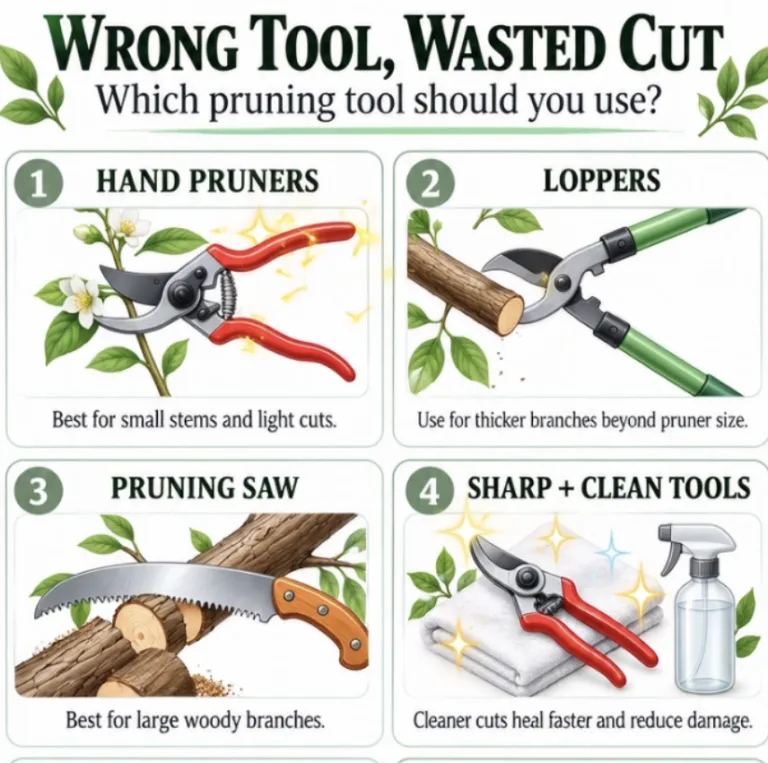
1. Hand Pruners — Best for Small Stems
Hand pruners are the tool you’ll probably use most often in the garden.
They’re ideal for:
- Small stems and twigs
- Flowers and herbs
- Young shoots
- Light corrective pruning
- Removing small dead or damaged branches
For the cleanest cut, keep the blades sharp and place them close to the branch collar without cutting into the trunk or main stem.
Quick Tip
If you have to squeeze extremely hard to cut a branch, it may be too large for hand pruners. Switch to a stronger tool instead of forcing the cut.
2. Loppers — Best for Thicker Branches
Loppers look like oversized pruning shears with long handles.
Those longer handles provide extra leverage, making them useful for branches that are too thick for ordinary hand pruners.
They’re great for:
- Medium-sized branches
- Small fruit-tree limbs
- Dense shrubs
- Branches slightly out of comfortable hand-pruner reach
Avoid twisting the loppers while cutting. Position the blade correctly and make one controlled cut whenever possible.
3. Pruning Saw — Best for Large Woody Branches
When a branch becomes too thick for loppers, a pruning saw is usually the better choice.
A pruning saw is designed to cut through mature woody branches without requiring excessive force.
Use it for:
- Large tree limbs
- Older woody branches
- Dead branches
- Structural pruning
For heavy branches, don’t simply saw straight through from the top. The weight of the branch can cause bark to tear.
A safer approach is to remove the branch in stages and finish with a clean cut near the branch collar.
4. Keep Your Tools Sharp and Clean
One of the easiest ways to improve your pruning is simply to maintain your tools.
Sharp blades produce smoother cuts.
Dull blades can:
- Crush stems
- Tear bark
- Leave ragged wounds
- Make pruning harder than necessary
After pruning, remove plant residue from the blades and keep them dry before storage.
When working with diseased plants, cleaning tools between plants can also help reduce the chance of transferring contaminated plant material.
5. Don’t Leave Long Stubs
A common pruning mistake is cutting a branch but leaving several inches of dead wood attached to the trunk.
These leftover stubs usually don’t help the tree.
Instead, make your final cut just outside the branch collar, the slightly swollen area where the branch joins the trunk or larger limb.
Remember:
Too far out: leaves an unnecessary stub.
Too close: may damage trunk tissue.
Better: cut just outside the branch collar.
6. Avoid Topping Trees and Shrubs
“Topping” means cutting off large portions of the upper canopy simply to reduce height.
While the plant may survive, severe topping can create problems.
It may:
- Destroy the plant’s natural structure
- Trigger rapid, weak shoot growth
- Create poorly attached new branches
- Leave large wounds
- Make future maintenance more difficult
Instead of cutting everything to the same height, selectively remove or shorten individual branches while maintaining the natural form of the plant.
🌿 A Simple Pruning Order to Follow
Not sure where to start?
Use this basic sequence:
First: Remove dead branches.
Second: Remove damaged or clearly diseased growth.
Third: Remove branches that rub or cross each other.
Fourth: Thin overly crowded areas to improve light and airflow.
Finally: Make small shaping cuts if needed.
This approach helps prevent over-pruning.
How Much Should You Remove?
Avoid removing too much healthy growth at once.
The appropriate amount depends on the plant species, age, season, and reason for pruning.
Young trees often need light structural pruning, while mature trees may require a much more conservative approach.
If a large tree needs major limb removal, consider using a qualified arborist rather than attempting dangerous cuts yourself.
✂️ Choosing the Right Tool at a Glance
Small stems → Hand pruners
Medium branches → Loppers
Large woody branches → Pruning saw
The simplest rule is this:
Never force a small tool to do a large tool’s job.
A cleaner cut is easier on both the plant and the gardener.
🌱 Final Thoughts
Good pruning isn’t about cutting as much as possible. It’s about removing the right growth, using the right tool, and preserving the plant’s natural structure.
Keep your tools sharp and clean, avoid long stubs and harsh topping, and focus on making deliberate, well-positioned cuts.
🌳 Healthy pruning today can mean stronger plants and better growth for seasons to come.
📌 Save this guide for your next pruning day, and share it with a gardener who always reaches for the wrong pair of shears!