When your heels feel more like sandpaper than skin, it’s easy to reach for expensive creams and complicated gadgets. But what if the solution to those stubborn cracked heels was already sitting in your kitchen? Most people ignore the simple, potent power of everyday ingredients like ginger and lemon, which can offer remarkable relief and visible improvements.
Cracked heels aren’t just a cosmetic concern; they can be uncomfortable, painful, and even lead to deeper issues if left untreated. Instead of just masking the problem, this natural remedy focuses on gently exfoliating, moisturizing, and revitalizing the skin. Ready to transform your feet with ingredients you already trust?
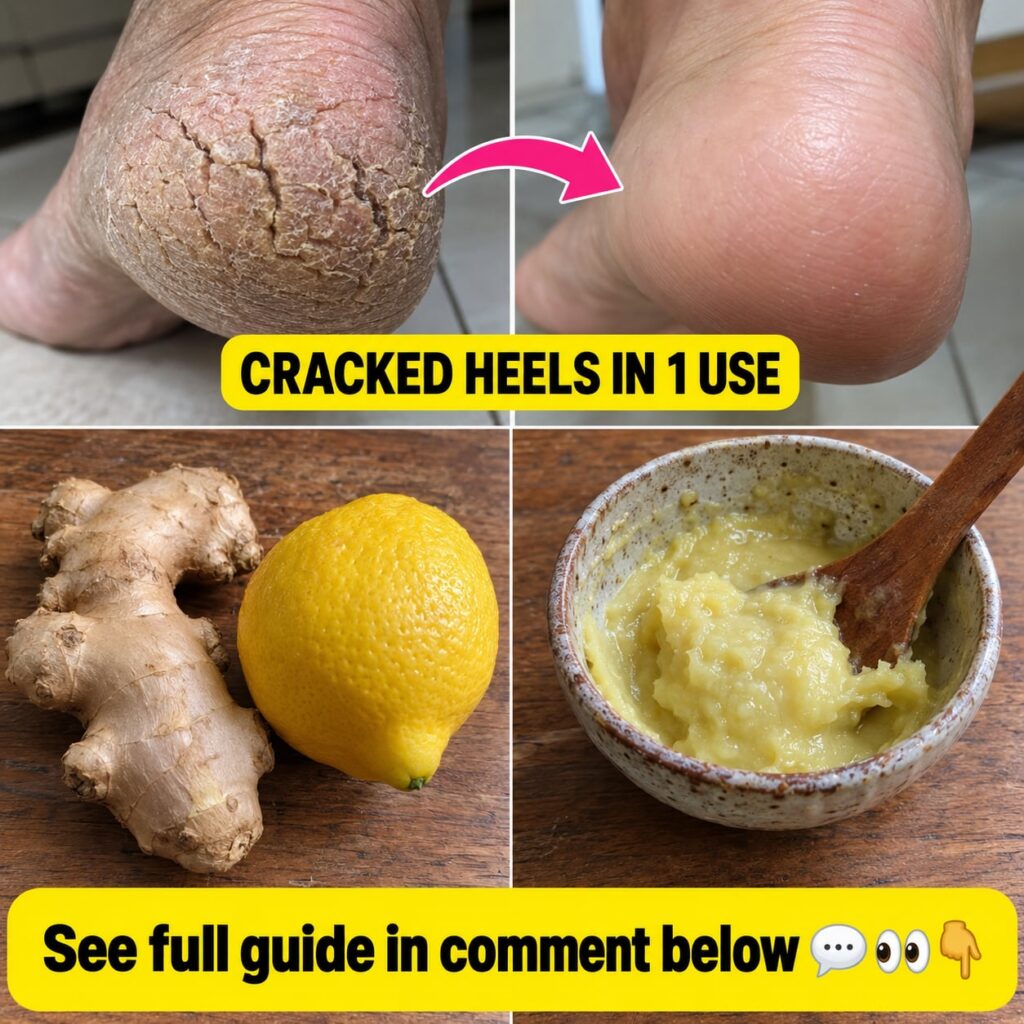 See the incredible difference ginger and lemon can make for cracked heels.
What This Remedy Is
This remedy is a simple, homemade paste made from fresh ginger, lemon juice, and a hydrating carrier oil. It’s designed to be applied directly to cracked heels to help soften hardened skin, exfoliate dead cells, and promote healing. The combination of ingredients works synergistically to tackle the dryness and roughness that characterize cracked heels, offering a soothing and effective treatment.
Ingredients You’ll Need
The beauty of this remedy lies in its accessibility. You only need a few common items:
- Fresh Ginger Root: Choose a firm, smooth piece without any mold or soft spots.
- Fresh Lemon: A ripe, juicy lemon is key.
- Carrier Oil: Coconut oil or olive oil work best for their moisturizing properties. Avoid highly refined oils that may lack beneficial compounds.
- Optional: A small amount of coarse salt or sugar for extra exfoliation (use with caution).
Approximate Measurements
- 1 inch (approx. 2.5 cm) piece of fresh ginger root
- 1/2 lemon (yielding about 1-2 tablespoons of juice)
- 1-2 tablespoons of carrier oil (coconut or olive oil)
- 1 teaspoon coarse salt or sugar (optional)
Formula / Recipe
The core of this remedy is a gentle abrasive and moisturizing paste. The ginger acts as an anti-inflammatory and antiseptic, the lemon juice provides natural alpha hydroxy acids (AHAs) for exfoliation, and the carrier oil deeply nourishes the skin, helping to restore its natural barrier.
Quick Tip
Always opt for organic ginger and lemons if possible, especially since you’re applying these directly to your skin. This minimizes exposure to pesticides and waxes.
Step-by-Step Method
Preparing this paste is straightforward and takes just a few minutes.
Prepare the Ginger
- Wash the ginger root thoroughly. You can peel it or leave the skin on, as many beneficial compounds are just beneath the skin. Grate the ginger finely using a microplane or a fine grater. You should aim for about 1-2 tablespoons of grated ginger pulp.
Extract Ginger Juice (Optional, but recommended)
- Place the grated ginger into a small piece of cheesecloth or a clean, thin cloth. Squeeze firmly to extract the juice into a small bowl. You can also press it through a fine-mesh sieve with the back of a spoon. Discard the pulp or save it for another use (like tea).
Juice the Lemon
- Cut the lemon in half and squeeze out about 1-2 tablespoons of fresh lemon juice into the same bowl as the ginger juice (or grated ginger).
Combine with Carrier Oil
- Add 1-2 tablespoons of your chosen carrier oil (coconut or olive oil) to the mixture. If using coconut oil, gently warm it slightly if it’s solid, but ensure it’s not hot when mixing.
Add Exfoliant (Optional)
- If you desire extra exfoliation, stir in 1 teaspoon of coarse salt or sugar. Mix all ingredients thoroughly until you have a consistent, spreadable paste. Adjust oil quantity to achieve desired consistency.
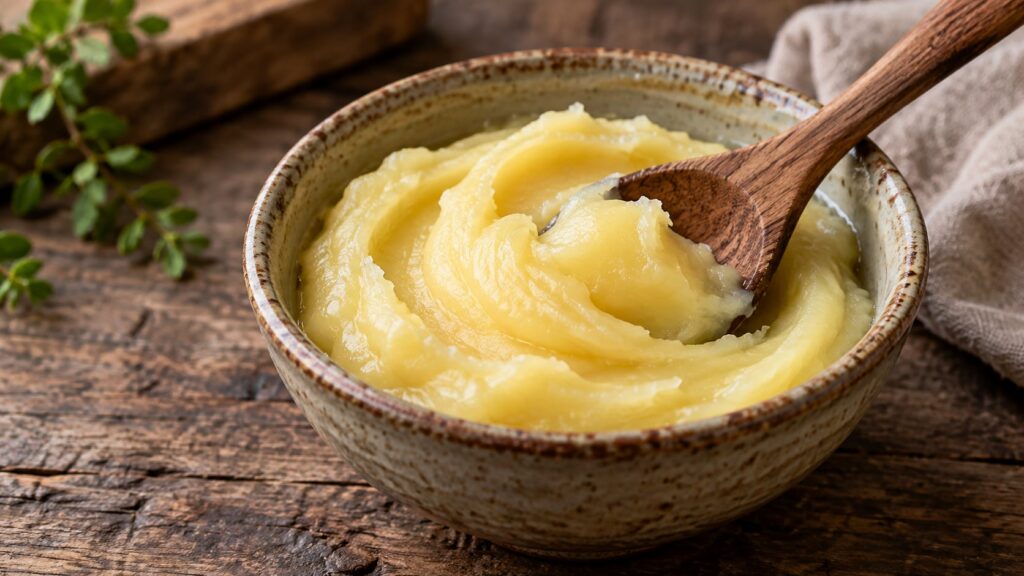 The ready-to-use ginger and lemon paste.
How to Use This Remedy
Proper application is key for maximum benefit.
- Clean Your Feet: Start by washing your feet thoroughly with warm water and mild soap. Pat them dry completely with a clean towel.
- Soak (Optional but Recommended): For best results, soak your feet in warm water for 10-15 minutes before application. This helps soften the skin, making it more receptive to the paste.
- Apply the Paste: Take a generous amount of the ginger-lemon paste and apply it directly to your cracked heels and any other rough areas on your feet. Massage it in gently using circular motions for 2-3 minutes. If you added an exfoliant, be gentle to avoid irritation.
- Cover and Rest: For deeper penetration, cover your feet with plastic wrap (like cling film) and then put on a pair of old socks. Leave the paste on for at least 30 minutes, or even overnight for intensive treatment.
- Rinse Off: After the treatment time, remove the coverings and rinse your feet with warm water. Gently scrub off any remaining paste.
- Moisturize: Finish by applying a thick, rich moisturizer or natural oil (like shea butter or pure coconut oil) to lock in the moisture.
How Often to Use
For initial treatment of severely cracked heels, you can use this remedy 2-3 times a week. Once your heels start to show improvement, reduce the frequency to once a week for maintenance. Consistency is more important than intensity.
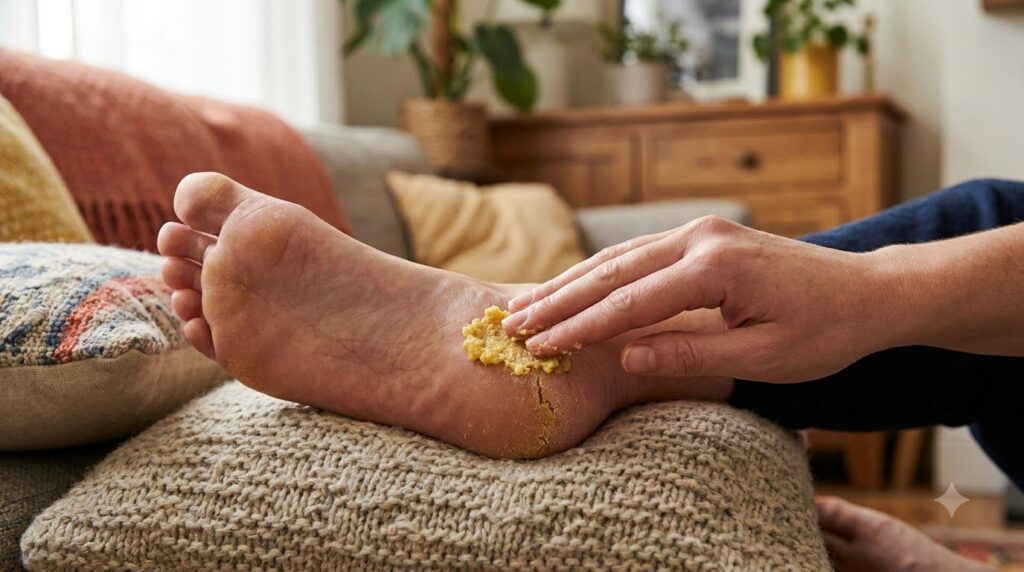 Gently massage the paste into affected areas for best results.
How to Buy / How to Choose Ingredients
Selecting quality ingredients makes a difference:
- Ginger: Look for firm, smooth skin without wrinkles. A good ginger root will feel heavy for its size and have a fresh, spicy aroma when scratched slightly.
- Lemons: Choose firm, bright yellow lemons that feel heavy and yield slightly when gently squeezed. This indicates juiciness.
- Coconut Oil: Opt for virgin, unrefined coconut oil. It retains more of its natural nutrients and beneficial compounds.
- Olive Oil: Extra virgin olive oil is preferred for its purity and rich antioxidant content.
Storage
Because this is a fresh, natural preparation without preservatives, it has a limited shelf life.
- Store any unused paste in an airtight container in the refrigerator.
- It will typically last for 3-5 days.
- Discard if you notice any discoloration, odd smell, or mold.
- It’s best to make a fresh batch for each application or every few days to ensure potency and prevent bacterial growth.
Did You Know?
Lemon juice contains citric acid, a natural AHA that helps break down dead skin cells. Ginger has potent anti-inflammatory compounds like gingerol, which can soothe irritated skin.
Practical Tips
- Patch Test: Before full application, always perform a patch test on a small area of your skin to check for any allergic reactions or sensitivities.
- Exfoliate Regularly: Beyond this paste, regular gentle exfoliation (e.g., with a pumice stone or foot file) can help maintain smooth feet.
- Stay Hydrated: Drink plenty of water to hydrate your skin from within.
- Wear Proper Footwear: Avoid open-backed shoes or ill-fitting footwear that can exacerbate cracked heels.
- Bedtime Routine: Apply a thick layer of moisturizer to your feet every night and wear cotton socks to enhance absorption.
Common Mistakes
Even with simple remedies, small errors can hinder results or cause irritation:
- Using too much lemon: While lemon is beneficial, excessive amounts can be too acidic and irritate sensitive skin, especially on open cracks.
- Skipping the patch test: Neglecting this step can lead to unexpected skin reactions.
- Applying to open wounds: Never apply this remedy to bleeding or deeply open cracks, as the lemon juice can sting and cause further irritation or infection.
- Not moisturizing afterward: The paste helps exfoliate and soften, but a good moisturizer “seals the deal” by locking in moisture.
- Inconsistency: Expecting “one-and-done” results. While improvements can be seen quickly, consistent application over time yields the best and most lasting results.
- Using old or spoiled ingredients: Freshness matters for both efficacy and safety.
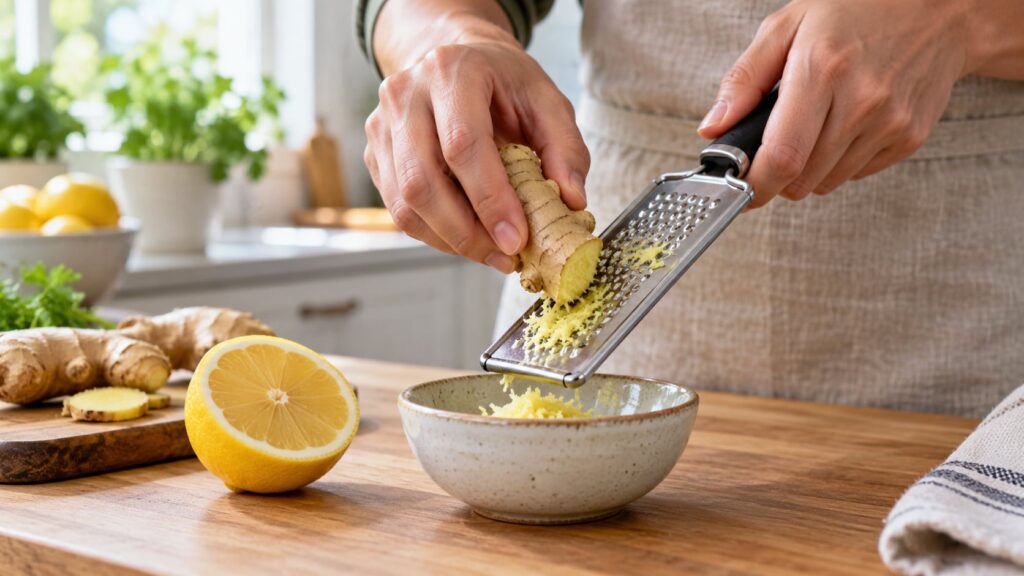 Fresh ingredients ensure the potency of your homemade remedy.
Cautions / Who Should Avoid It
- Sensitive Skin: Individuals with very sensitive skin should use this remedy with extreme caution or dilute the lemon juice further.
- Open Wounds/Infections: Do NOT apply this paste to open, bleeding cracks, cuts, or any signs of infection. The acidity of lemon can be painful and potentially worsen the condition.
- Allergies: If you have known allergies to ginger, lemon, or any carrier oils, avoid using this remedy.
- Diabetics: People with diabetes should consult their doctor before using any foot remedies, especially if they have neuropathy or poor circulation, as foot care is critical for them.
- Sun Sensitivity: Lemon juice can increase skin’s photosensitivity. Avoid direct sun exposure on treated areas immediately after rinsing, or use sunscreen.
Quick Summary
AspectGuidanceBest PreparationFresh ginger & lemon juice + carrier oil (coconut/olive)Best Use-CaseSoftening and exfoliating cracked/rough heelsStorageAirtight, refrigerated; lasts 3-5 daysWhen to Use2-3 times/week for treatment, then 1 time/week for maintenanceWhat to AvoidOpen wounds, severe allergies, excessive lemon, inconsistency
FAQ
- Can I use dried ginger instead of fresh?
- It’s highly recommended to use fresh ginger for its juice and potent compounds. Dried ginger may not provide the same benefits or consistency.
- How long until I see results?
- Many people notice significant softening after just one or two uses, but consistent application over several weeks will yield the best long-term results.
- Can I use other essential oils?
- While some essential oils (like tea tree or peppermint) are beneficial for feet, stick to the main recipe first. If adding, use only a drop or two and dilute properly.
- Is it safe to leave on overnight?
- For most people without sensitive skin or open wounds, leaving it overnight with socks can be an intensive treatment. Always patch test first.
- What if my skin feels irritated?
- If you experience stinging, redness, or irritation, rinse immediately with cool water and discontinue use. You might be sensitive to lemon, or the cracks might be too deep.
- Can I use this on other parts of my body?
- This remedy is specifically formulated for the thick skin on heels. Use caution if applying to other, more sensitive areas of the body.
- Do I need to soak my feet beforehand?
- Soaking helps soften the skin, making the paste more effective, but it’s not strictly mandatory.
Conclusion
Don’t let cracked heels keep you from feeling confident and comfortable. This simple ginger and lemon paste offers a practical, natural, and effective way to revive your feet. By dedicating a little time and using readily available ingredients, you can say goodbye to rough, uncomfortable heels and welcome back softer, smoother skin. Give your feet the natural care they deserve — you might be surprised by the transformation.