Chia seeds have earned their reputation as a powerhouse superfood, packed with fiber, omega-3 fatty acids, protein, and essential minerals. But with all the buzz, a common question often arises: how much chia seed is truly enough to feel its full benefits? Understanding optimal portion sizes, especially when hydrated, is key to maximizing this superfood’s potential for your health journey.
Many people toss a spoonful into their smoothies or overnight oats, but the exact amount can significantly impact the nutritional boost you receive. Let’s delve into what an optimal portion looks like and how to incorporate these tiny titans into your diet effectively.
The Magic of Chia: A Nutritional Powerhouse
Before we explore portion sizes, it’s worth a quick refresher on why chia seeds are so beneficial. These tiny seeds are:
- Rich in Fiber: A single serving provides a substantial amount of dietary fiber, crucial for digestive health, satiety, and blood sugar regulation.
- Packed with Omega-3s: They are an excellent plant-based source of alpha-linolenic acid (ALA), an essential omega-3 fatty acid known for its anti-inflammatory properties and heart health benefits.
- Good Source of Protein: While not a complete protein, chia seeds offer a decent amount of plant-based protein, making them a great addition for vegetarians and vegans.
- Loaded with Micronutrients: They contain calcium, magnesium, phosphorus, and manganese, all vital for bone health, energy production, and various bodily functions.
Dry vs. Hydrated: Understanding Chia Seed Volume
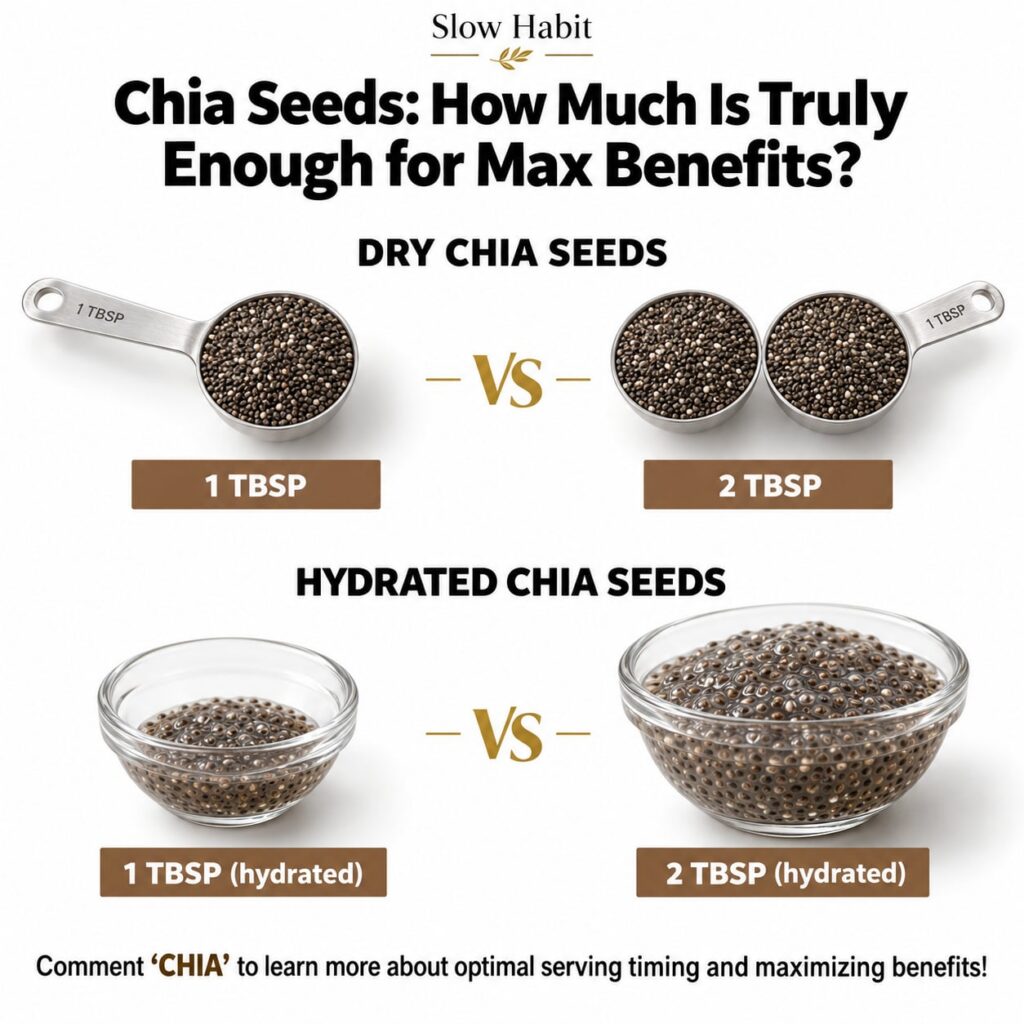
One of the most remarkable properties of chia seeds is their ability to absorb liquid and form a gel-like consistency. This happens because of their soluble fiber content. When dry, chia seeds are tiny and unassuming, but when soaked in liquid (like water, milk, or plant-based milk), they can swell up to 10-12 times their original weight.
This hydration is not just about texture; it’s also about how your body processes them. Hydrated chia seeds are easier to digest and can contribute more effectively to feelings of fullness, helping with satiety. When consuming them dry, always ensure you drink plenty of water, as they will absorb fluid in your digestive system.
1 Tablespoon vs. 2 Tablespoons: What’s the Difference?
The image highlights the visual difference between 1 and 2 tablespoons of chia seeds, both dry and hydrated. But what does this mean for your health goals?
The 1-Tablespoon Boost: For Everyday Wellness
A single tablespoon of chia seeds (approximately 15 grams) typically offers:
- About 60-70 calories
- Around 5-6 grams of fiber
- Approximately 2.5-3 grams of protein
- A good dose of healthy fats, including ALA omega-3s
Ideal for:
- Gentle Fiber Increase: If you’re new to chia seeds or want a modest fiber boost without overwhelming your system, one tablespoon is a great starting point.
- Daily Nutritional Support: Perfect for general wellness, adding a nutrient-dense kick to your breakfast, or a light snack.
- Balancing Meals: A subtle way to enhance the nutritional profile of smoothies, yogurt, or oatmeal without significantly altering texture or calorie count.
The 2-Tablespoon Power-Up: For Enhanced Benefits
Doubling your intake to two tablespoons (approximately 30 grams) provides:
- About 120-140 calories
- Around 10-12 grams of fiber (about 30-40% of the recommended daily intake)
- Approximately 5-6 grams of protein
- A more substantial amount of ALA omega-3s
Ideal for:
- Enhanced Satiety: The higher fiber content, especially when hydrated, can significantly contribute to feeling fuller for longer, which may be beneficial for weight management goals.
- Optimized Omega-3 Intake: Provides a more significant amount of ALA, supporting heart health, brain function, and anti-inflammatory processes.
- Digestive Regularity: The increased fiber can be particularly effective in promoting bowel regularity and maintaining a healthy gut microbiome.
- Post-Workout Recovery: The combination of protein and healthy fats can support muscle recovery and sustained energy.
Finding Your Optimal Chia Seed Portion
While the general recommendation often hovers around 1 to 2 tablespoons daily, your ideal portion may vary based on several factors:
- Your Current Fiber Intake: If your diet is already high in fiber, you might start with a smaller amount. If you need to increase your fiber, gradually increase your chia seed intake to avoid digestive discomfort.
- Your Health Goals: Are you aiming for weight management, improved digestion, or boosting omega-3s? Higher doses may align with more specific goals.
- How You Consume Them: When hydrated, chia seeds expand, offering greater satiety. If consuming them dry, ensure adequate fluid intake throughout the day.
- Individual Sensitivity: Some individuals may be sensitive to high fiber intake, experiencing bloating or gas. Start low and go slow.
Always listen to your body and adjust accordingly. Introducing chia seeds gradually into your diet allows your digestive system to adapt.
Creative Ways to Incorporate Chia Seeds
- Chia Pudding: The classic. Mix chia seeds with milk (dairy or plant-based) and let it sit overnight for a delicious, healthy breakfast or snack. Add fruits, nuts, or a drizzle of honey.
- Smoothie Booster: Blend 1-2 tablespoons into your favorite smoothie for added thickness and nutrients.
- Oatmeal Topping: Sprinkle dry or hydrated chia seeds over your morning oatmeal or yogurt.
- Baked Goods: Add to muffins, breads, or energy bars for a nutritional boost and interesting texture.
- Egg Substitute: For vegan baking, 1 tablespoon of ground chia seeds mixed with 3 tablespoons of water can replace one egg.
- Salad Dressing Thickener: Whisk into homemade salad dressings for a thicker, nutrient-rich consistency.
Potential Side Effects and Considerations
While chia seeds are generally safe for most people, some considerations include:
- Digestive Issues: Rapidly increasing fiber intake can lead to bloating, gas, or constipation. Always increase gradually and drink plenty of water.
- Choking Hazard: If consumed dry without adequate fluid, chia seeds can absorb moisture and expand in the esophagus, potentially causing a choking risk. Always mix them with liquid or ensure you drink water immediately after consuming them dry.
- Blood Thinners: Due to their omega-3 content, chia seeds may have a mild blood-thinning effect. If you are on blood-thinning medication, consult your doctor.
Final Thoughts
Chia seeds are undoubtedly a nutritional powerhouse, and understanding the optimal portion size is key to unlocking their full potential. Whether you opt for one tablespoon for a gentle daily boost or two for enhanced satiety and omega-3s, consistency is what truly makes a difference. Remember to hydrate them well and listen to your body’s signals to find what works best for you. Incorporate them wisely, and these tiny seeds can become a powerful ally in your wellness journey.
Ready to optimize your chia intake? Experiment with these guidelines and discover the maximum benefits for your health!