Most people marvel at nasturtium’s vibrant blooms and unique lily pad-like leaves in a garden, often seeing them as mere ornamental additions or a peppery garnish for salads. Yet, this unassuming plant holds a surprising wealth of traditional wisdom and practical uses that extend far beyond aesthetics. The entire plant – from its cheerful flowers to its distinctive leaves and even its peppery seeds – is edible and boasts properties that can be harnessed for various home remedies and culinary delights. One small preparation mistake, however, can diminish its potency or flavor, making it essential to know the right way to unlock its full potential.
Forget thinking of nasturtium solely as a pretty face; it’s a powerhouse. For centuries, various cultures have valued nasturtium not just for its beauty but for its pungent, mustard-like flavor and its historical use in wellness practices. It’s a versatile plant that can be incorporated into your routine in many ways, from a vibrant culinary ingredient to a simple, effective home preparation. This guide will walk you through transforming nasturtium into a practical infused vinegar, a fantastic way to capture its essence and keep it on hand for extended use.
What it is
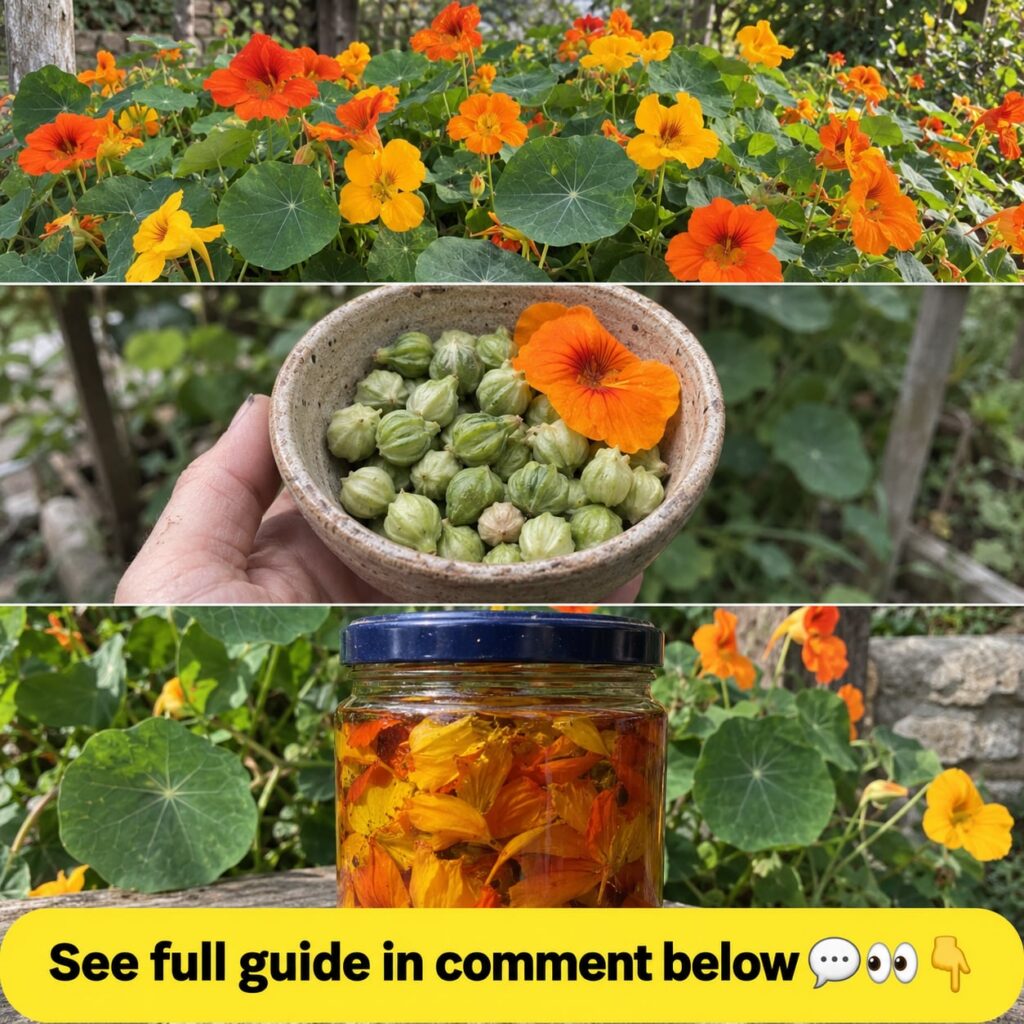
Nasturtium (scientific name: Tropaeolum majus) is an annual flowering plant native to South America, now cultivated worldwide. It’s easily recognizable by its bright, often orange, yellow, or red flowers and round, disc-shaped leaves. What many don’t realize is that all parts of the plant are edible and offer a distinct peppery, slightly spicy flavor, akin to watercress or mustard greens. This zesty kick comes from glucosinolates, compounds also found in broccoli and cabbage, which contribute to its unique taste and its historical use in folk remedies for various minor ailments.
Historically, nasturtium has been used as a natural addition to diets, valued for its distinctive taste and perceived benefits. Its leaves and flowers are often added fresh to salads, sandwiches, and as garnishes, while the green seed pods can be pickled and used as a substitute for capers. For a more lasting application, creating an infused vinegar is an excellent method to preserve its flavor and properties, making it readily available for culinary uses or as a topical rinse.
Ingredients for Nasturtium Infused Vinegar
- Fresh Nasturtium leaves and flowers (avoid any with signs of pests or disease)
- High-quality white wine vinegar or apple cider vinegar
- Clean, sterilized glass jar with a tight-fitting lid
Approximate Measurements
- Nasturtium leaves and flowers: Approximately 1-2 cups, loosely packed, for every 2 cups of vinegar. Adjust based on desired potency; a higher ratio will result in a stronger flavor.
- Vinegar: Enough to fully submerge the nasturtium plant material.
Formula / Recipe: Nasturtium Infused Vinegar
This simple formula creates a zesty, flavorful vinegar that can be used in salad dressings, marinades, or as a hair rinse. The key is allowing enough time for the infusion process to fully extract the nasturtium’s essence.
Step-by-Step Method
- Harvesting: Choose healthy, vibrant nasturtium leaves and flowers. The best time to harvest is in the morning after the dew has dried but before the heat of the day. Avoid any plants that have been sprayed with pesticides or are near busy roads.
- Cleaning: Gently rinse the nasturtium leaves and flowers under cool running water. Pat them thoroughly dry with a clean cloth or paper towel. Excess moisture can dilute your vinegar and potentially cause spoilage.
- Preparation: Roughly chop the leaves and flowers. This helps to break down the plant cell walls, allowing for better infusion.
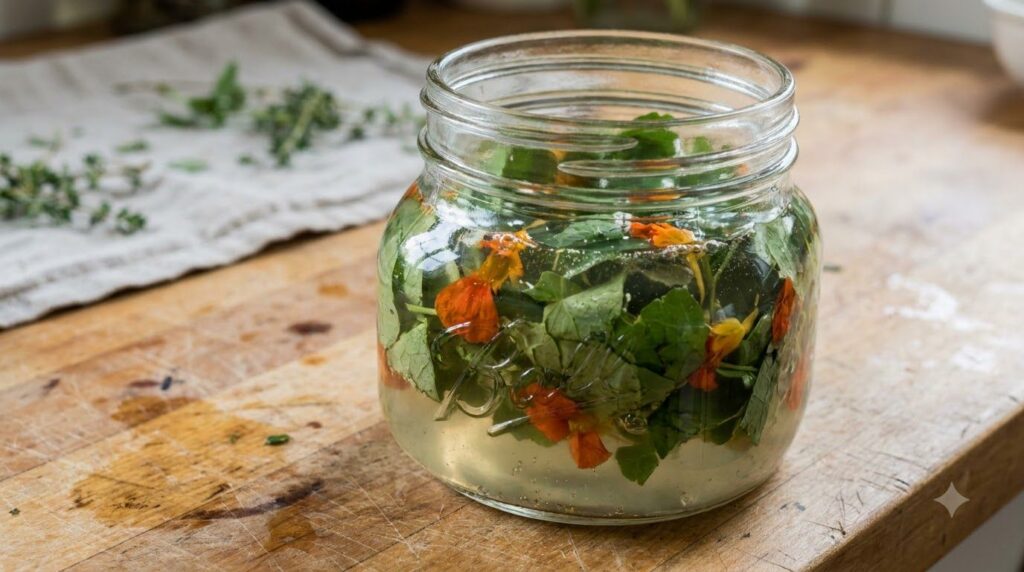
- Filling the Jar: Loosely pack the chopped nasturtium into your clean, sterilized glass jar. Do not pack too tightly, as the plant material needs space to infuse properly.
- Adding Vinegar: Pour the white wine vinegar or apple cider vinegar over the nasturtium, ensuring all plant material is completely submerged. If any plant parts are exposed to air, they could mold.
- Sealing: Seal the jar tightly with its lid. If using a metal lid, place a piece of wax paper or plastic wrap between the lid and the jar to prevent the vinegar from corroding the metal.
- Infusion: Place the sealed jar in a cool, dark place, such as a pantry or cupboard. Allow it to infuse for 2-4 weeks. Shake the jar gently every few days to redistribute the nasturtium and aid in the infusion process.
- Straining: After 2-4 weeks, strain the infused vinegar through a fine-mesh sieve lined with cheesecloth into a clean bottle or jar. Press down on the solids to extract as much liquid as possible. Discard the spent plant material.
- Final Storage: Cap the strained nasturtium-infused vinegar tightly and store it in a cool, dark place.
Quick Tip: Fresh vs. Dried
While fresh nasturtium yields the best flavor and potency for infused vinegar, you can technically use dried leaves and flowers. However, the flavor will be less vibrant, and you might need a higher quantity of dried material to achieve the same strength. Always prioritize fresh when possible for remedies and culinary preparations where flavor is key.
How to Use Nasturtium Infused Vinegar
- Culinary: Use it as a zesty dressing for salads, especially those with bitter greens. It also makes an excellent marinade for vegetables or white meats, adding a peppery kick.
- Topical Rinse: Historically, nasturtium preparations were sometimes used topically. You can dilute the vinegar (e.g., 1 part vinegar to 3 parts water) and use it as a scalp rinse. Always do a patch test first to ensure no irritation.
How Often to Use
For culinary purposes, use the infused vinegar as you would any other flavored vinegar – whenever a peppery, tangy flavor is desired. For topical applications, a diluted rinse might be used 1-2 times a week, but discontinue use if any irritation occurs.
How to Buy / How to Choose Ingredients
The best way to obtain nasturtium for your remedies is to grow it yourself organically. It’s an easy plant to cultivate from seed in most climates. If purchasing, look for fresh, vibrant leaves and flowers free from wilting, discoloration, or pest damage. Inquire about cultivation methods to ensure they are pesticide-free. For vinegar, choose a high-quality organic white wine vinegar or apple cider vinegar, as their flavors will blend well with the nasturtium.
Storage
Once strained, your nasturtium infused vinegar should be stored in a cool, dark pantry. It can last for 6 months to 1 year, similar to other herb-infused vinegars. Over time, the flavor may mellow slightly. Always check for any signs of spoilage, such as cloudiness, mold, or an off-smell, before use.
Practical Tips
- Experiment with Strength: Adjust the amount of nasturtium to your preference. Start with the suggested ratio, and for your next batch, increase or decrease the plant material to find your ideal potency.
- Consider Other Infusions: Nasturtium pairs well with garlic or chili peppers for a spicier, more complex vinegar. Add these alongside the nasturtium during the infusion process.
- Gift Idea: Bottled nasturtium-infused vinegar makes a thoughtful and unique homemade gift for foodies and garden enthusiasts alike.
Common Mistakes
- Not Drying Thoroughly: Any residual water on the nasturtium leaves and flowers can introduce bacteria and lead to mold or spoilage in your vinegar. Ensure they are completely dry before infusing.
- Not Submerging Plant Material: If nasturtium parts are exposed to air above the vinegar line, they will likely mold. Always ensure everything is fully covered by the vinegar.
- Using Sprayed Plants: Harvesting nasturtium from an unknown source or a plant treated with pesticides can introduce harmful chemicals into your remedy. Only use organically grown or wild-harvested nasturtium.
- Rushing the Infusion: While some flavor will develop quickly, a full 2-4 weeks allows for proper extraction of the plant’s compounds and a more robust flavor.
- Using Reactive Lids: Metal lids can corrode when in direct contact with vinegar. Always use a barrier like wax paper or plastic wrap if your lid is metal.
Cautions / Who Should Avoid It
While nasturtium is generally considered safe for culinary use, some individuals may be sensitive to its peppery compounds. People with sensitive stomachs might find large quantities irritating. Pregnant or breastfeeding women, or those with underlying health conditions, should consult a healthcare professional before using nasturtium medicinally. Always perform a patch test when using topically.
Quick Summary
Nasturtium offers a peppery kick for culinary and potential topical uses. An infused vinegar is a practical way to preserve its flavor and properties. Best prepared with fresh leaves and flowers, thoroughly dried and fully submerged in high-quality vinegar for 2-4 weeks. Store in a cool, dark place. Avoid using undried, un-submerged, or pesticide-treated plant material. Always patch test for topical applications.
FAQ
- Can I use fresh or dried nasturtium? Fresh nasturtium is highly recommended for its vibrant flavor and potency in infused vinegar. Dried can be used but will yield a less robust result.
- How long does nasturtium infused vinegar last? Stored properly in a cool, dark place, it can last for 6 months to 1 year.
- Can I refrigerate it? Refrigeration is not strictly necessary but can extend its shelf life slightly. A cool, dark pantry is usually sufficient.
- How often should I use it? For culinary use, as desired. For topical applications, 1-2 times a week with dilution, or as recommended by a professional, with a prior patch test.
- What part of the nasturtium plant is best for vinegar? Both the leaves and flowers are excellent for infusing vinegar, providing a balanced peppery flavor.
- Can I reuse the nasturtium leaves after straining? No, once the nasturtium has infused the vinegar, its beneficial compounds and flavor will have largely been extracted. Discard the spent plant material.
- When should I avoid nasturtium? Individuals with sensitive stomachs should be cautious. Pregnant or breastfeeding women, or those with specific medical conditions, should consult a doctor before using medicinally.
- Will the vinegar lose its potency over time? Yes, like most infused products, the flavor and potency may gradually diminish over many months.
Conclusion
Nasturtium is far more than just a garden ornament. By taking the time to prepare a simple infused vinegar, you can harness its unique peppery flavor and traditional properties, bringing a touch of natural remedy and gourmet flair into your home. It’s an accessible and rewarding DIY project that connects you to the natural world and offers a versatile staple for your kitchen and self-care routine. Give this vibrant plant a chance to truly shine beyond its visual appeal.