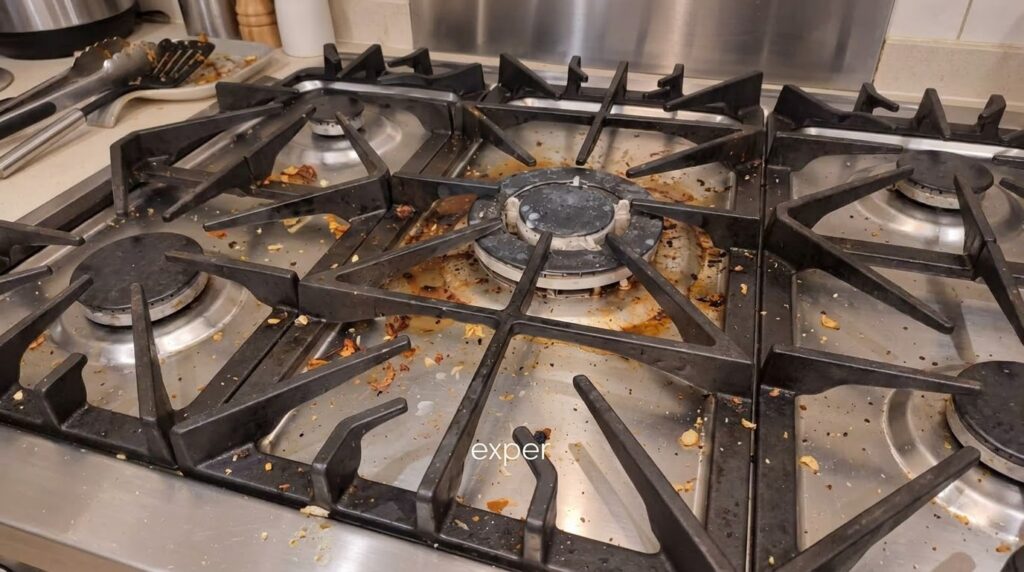
After a busy cooking session, a gas stovetop can often look like a battlefield of splatters, burnt-on food, and grease. While it’s a sign of delicious meals created and a passion for cooking, the cleanup can feel daunting. But don’t let that lingering mess discourage you! This DIY cleaning method is designed to tackle even the most stubborn stovetop grime, bringing back its shine using simple, common household ingredients. It’s an effective way to restore your kitchen’s centerpiece without harsh chemicals, making cleanup less of a chore and more of a satisfying transformation.
What You’ll Need
To get your stovetop sparkling again, gather these materials:
- 1/2 cup baking soda
- 1-2 tablespoons liquid dish soap (grease-cutting type)
- Hot water
- 1/2 cup white vinegar (optional, for extra shine)
- Non-abrasive sponge or microfiber cloths
- Sturdy scrub brush or old toothbrush (for stubborn spots and crevices)
- Plastic scraper (optional, for very stuck-on bits)
- Large basin or sink (for soaking grates)
- Rubber gloves (to protect your hands)
- Spray bottle (if using vinegar)
Why This DIY Can Be Useful
This cleaning method leverages the power of everyday ingredients:
- Baking Soda: A mild abrasive that helps scrub away cooked-on food and grease without scratching surfaces. It’s also excellent at absorbing odors.
- Dish Soap: Specifically designed to cut through grease and grime, making it easier to lift and wipe away sticky residue.
- Hot Water: Helps to loosen tough, baked-on food particles and grease, making the cleaning agents more effective.
- White Vinegar: An excellent natural degreaser and deodorizer that leaves surfaces streak-free and shiny, effectively neutralizing any remaining residue.
How to Make It (Your Cleaning Paste)
- First, ensure your stovetop is completely cool before you begin.
- Remove all grates and burner caps from the stovetop. Set them aside for separate cleaning.
- In a small bowl, combine the 1/2 cup of baking soda with 1-2 tablespoons of liquid dish soap.
- Gradually add small amounts of hot water, stirring until you form a thick paste. The consistency should be like pancake batter, thick enough to cling to the surface but spreadable.
How to Use It
For the Stovetop Surface:
- Spread the baking soda and dish soap paste generously over the entire dirty stovetop surface, focusing on areas with heavy grease and burnt residue.
- Allow the paste to sit for at least 15-30 minutes. For heavily soiled areas, you can let it sit for an hour or even overnight to really penetrate and loosen the grime.
- After soaking, use a non-abrasive sponge or a sturdy scrub brush to gently scrub the paste into the stovetop surface. For tough spots, use a plastic scraper if needed, being careful not to scratch the stainless steel. An old toothbrush works wonders for cleaning around the burners and in crevices.
- Once scrubbing is complete, use a clean, damp microfiber cloth to wipe away the paste and loosened grime. Rinse the cloth frequently to avoid spreading dirt.
- For an extra streak-free shine, lightly spray the surface with white vinegar (if using) and wipe immediately with a fresh, clean microfiber cloth.
For the Cast Iron Grates and Burner Caps:
- Place the grates and burner caps in a large basin or sink.
- Liberally apply the baking soda and dish soap paste to these parts. For very stubborn grime, you can soak them in a mixture of hot water and a few drops of dish soap for 15-30 minutes before applying the paste.
- Let the paste sit for 15-30 minutes.
- Scrub thoroughly with a sturdy scrub brush or an old toothbrush to remove all burnt-on food and grease.
- Rinse them completely under hot running water until all residue is gone.
- Dry them thoroughly before placing them back on the stovetop. This is especially important for cast iron to prevent rust.
What to Expect
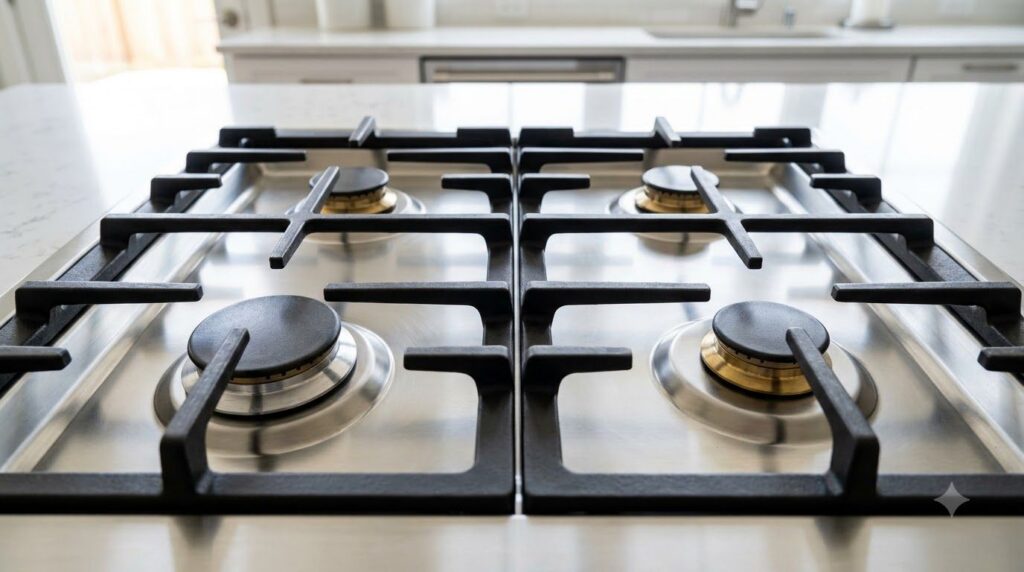
You can expect a significantly cleaner stovetop, with most grease and burnt-on food residue removed. Stainless steel surfaces should regain much of their shine, and cast iron grates will look refreshed. While deeply etched stains or long-neglected grime might require a second treatment or more vigorous scrubbing, this method will provide a dramatic improvement.
Helpful Tips
- Clean Regularly: The best way to prevent tough buildup is to wipe down your stovetop after each use or at least once a day.
- Spot Clean Spills Immediately: Addressing spills as they happen (once the surface is cool enough) can save you a lot of effort later.
- Avoid Abrasive Cleaners: For stainless steel, always use non-abrasive cloths and sponges to prevent scratching.
- Dry Cast Iron Thoroughly: Ensure cast iron grates are completely dry before reassembling them to prevent rust.
Important Notes / Safety
- Always ensure your stovetop is cool before applying any cleaning solutions or beginning to clean.
- Test any new cleaning solution on an inconspicuous area first, especially on stainless steel or painted surfaces, to ensure it doesn’t cause discoloration or damage.
- When using white vinegar, avoid letting it sit for too long on stainless steel, as prolonged exposure can sometimes cause minor etching. Wipe it off immediately after applying.
- Wear rubber gloves to protect your hands from the cleaning mixture and any residue.
- Ensure good ventilation in your kitchen while cleaning.
- Never mix vinegar with bleach, as this creates dangerous chlorine gas.