Mullein has been used in traditional herbal medicine for generations.
Most people recognize the plant for its:
- soft fuzzy leaves
- tall flower stalk
- respiratory support uses
But the root of the mullein plant is also widely used in herbal wellness traditions.
A homemade mullein root tincture is often prepared by herbalists who want a concentrated herbal extract that can be stored long term and used in small amounts.
This guide covers:
- mullein plant identification
- how to harvest mullein root
- how to make mullein tincture
- traditional mullein root uses
- important safety considerations
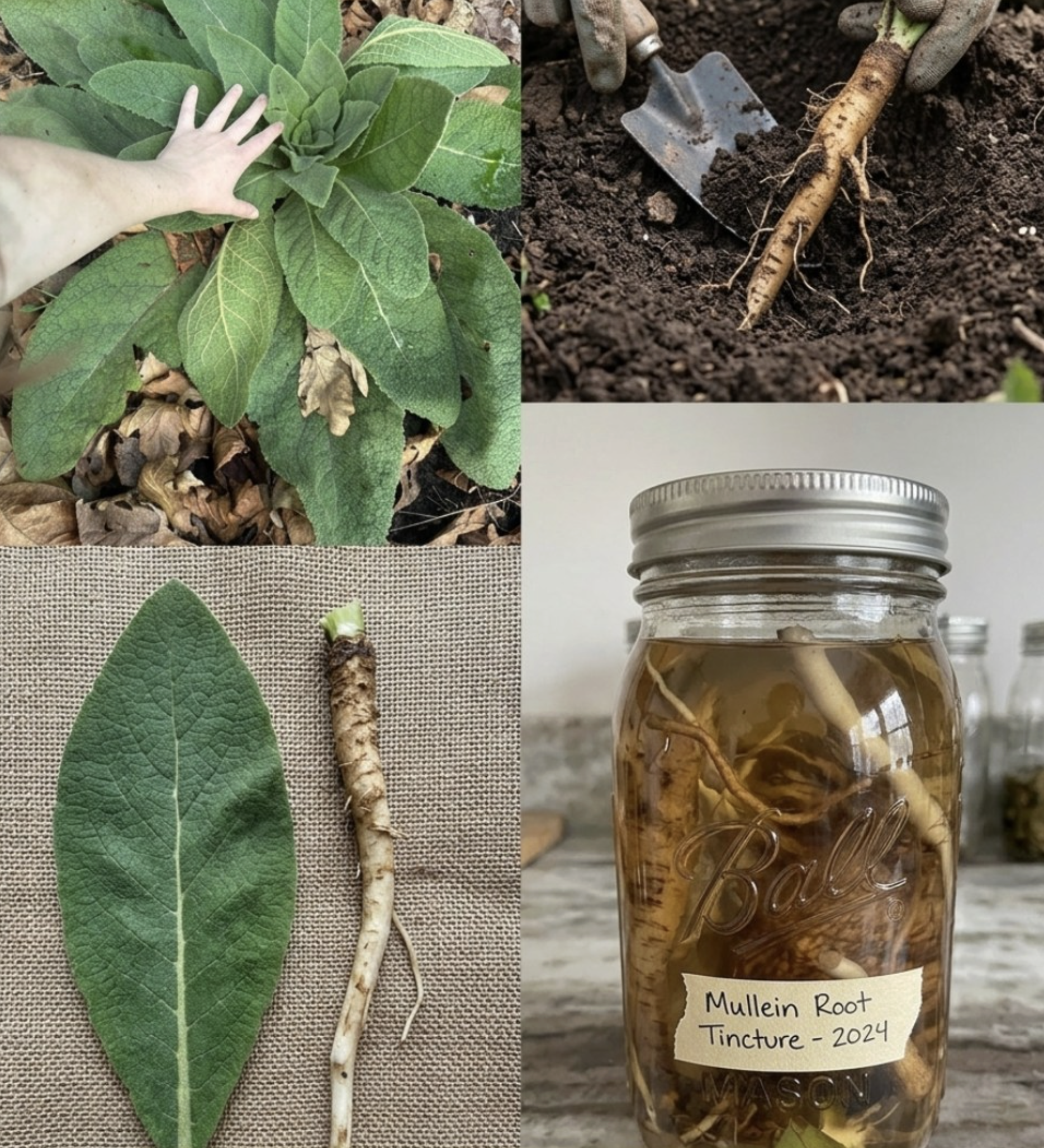
What Is Mullein Root?
Mullein (Verbascum thapsus) is a biennial plant known for:
- large velvety leaves
- yellow flower spikes
- deep taproots
The root is typically harvested during the plant’s first year before the tall flower stalk develops.
Many herbalists prefer first-year roots because they are:
- younger
- denser
- easier to work with
People searching for mullein root tincture benefits are usually interested in traditional herbal wellness practices related to:
- respiratory support
- circulation
- joint comfort
- general herbal tonics
How To Identify Mullein
Correct mullein plant identification is extremely important before harvesting any wild herb.
Key Features
- large soft fuzzy leaves
- pale green or silvery texture
- thick central taproot
- tall yellow flowers in second year
The leaves often feel:
- velvety
- wool-like
- soft to the touch
Mullein commonly grows in:
- dry soil
- roadsides
- open fields
- disturbed ground
Never harvest plants from:
- sprayed areas
- roads with heavy traffic
- contaminated soil
When To Harvest Mullein Root
The best time to harvest mullein root is:
- late fall
- early spring
This is when the plant’s energy is still concentrated in the root.
Harvesting Tips
- use a garden fork or shovel
- loosen soil carefully
- pull slowly to protect the taproot
- wash immediately after harvesting
Fresh roots are commonly used in herbal tincture recipes because they contain more moisture and plant compounds.
How To Make Mullein Root Tincture
This homemade herbal tincture recipe is one of the most common traditional methods.
Ingredients
- 1 cup chopped fresh mullein root
- 2 cups vodka or alcohol (at least 80 proof)
- glass jar with lid
Optional:
- dried mullein root
- vegetable glycerin alternative
Instructions
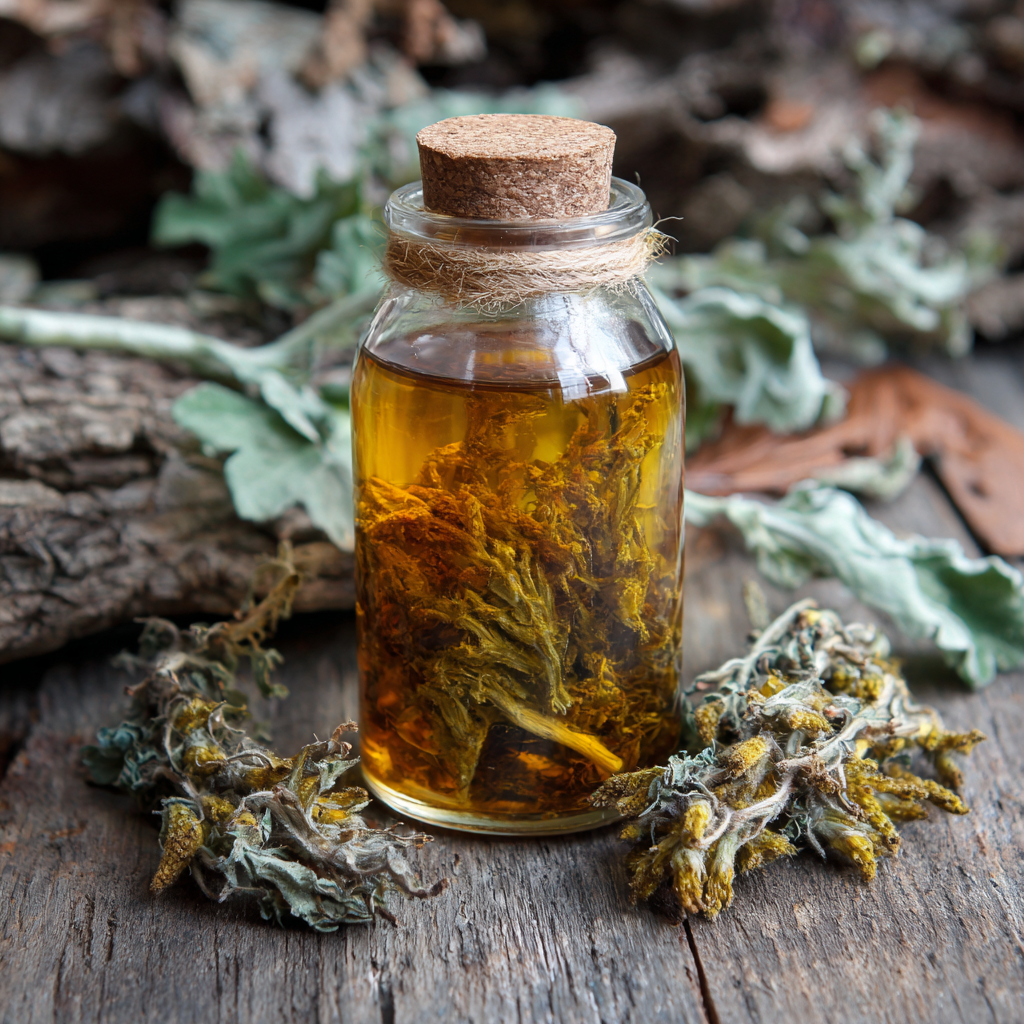
Step 1 — Clean The Root
Rinse thoroughly to remove:
- dirt
- debris
- damaged pieces
Pat dry before chopping.
Step 2 — Chop Into Small Pieces
Cut root into:
- thin slices
- small chunks
Smaller pieces help improve extraction.
Step 3 — Fill The Jar
Place chopped root into a clean glass jar until about halfway full.
Step 4 — Add Alcohol
Pour alcohol over the root until fully covered by at least 1 inch.
Seal tightly.
Step 5 — Store & Shake
Store in:
- cool place
- dark cabinet
Shake lightly once daily.
Many people researching how to make mullein tincture follow a soaking period of:
- 4–6 weeks
Step 6 — Strain
After soaking:
- strain through cheesecloth
- remove root pieces
- transfer liquid into dropper bottles
Store away from direct sunlight.
Traditional Mullein Root Uses
Historically, mullein root has been used in traditional herbal practices related to:
- respiratory wellness
- body comfort
- herbal tonics
- seasonal support
Some herbal traditions also associate mullein with:
- relaxation
- circulation
- general recovery support
However, scientific research on mullein root uses remains limited compared to conventional medical treatments.
How People Traditionally Use Mullein Tincture
Typical herbal use methods may include:
- diluted drops in water
- herbal wellness routines
- seasonal herbal protocols
Because herbal tinctures are concentrated, they are usually consumed in very small amounts.
Never exceed product directions or professional guidance.
Important Safety Notes
Natural does not automatically mean safe.
Before using any herbal preparation:
- consult a healthcare professional
- especially if pregnant or breastfeeding
- avoid use with unknown allergies
- use caution with medications
Wildcrafted herbs should always be:
- properly identified
- carefully cleaned
- responsibly sourced
If symptoms persist or worsen, seek medical attention.
Tips For Storing Herbal Tinctures
A properly stored herbal tincture can last a long time.
Storage Tips
- use dark glass bottles
- keep away from heat
- avoid direct sunlight
- label jars with dates
Many homemade tincture recipes stay usable for 1–3 years when stored correctly.
Final Thoughts
Mullein has a long history in traditional herbal wellness practices, and mullein root tincture remains popular among people interested in homemade herbal remedies.
Learning:
- mullein plant identification
- safe harvesting methods
- how to make mullein tincture
can help beginners better understand traditional herbal preparation techniques.
As with any natural remedy, education and safety matter most.
Use herbs responsibly, research carefully, and always seek professional medical advice for serious health concerns.
Sources
- American Botanical Council
- National Center for Complementary and Integrative Health (NCCIH)
- Herbal Academy
- Mount Sinai Integrative Medicine Resources
- USDA Plant Database
- University of Maryland Medical Herbal References