When we talk about healthy aging, many people search for a single, magical solution – a secret diet, an exclusive supplement, or a rigorous exercise regimen. But the truth, as experts often emphasize, is that healthy aging isn’t about finding one secret rule or following extreme restrictions. Instead, it’s about building sustainable habits that you can maintain consistently, day after day, year after year.
These small, consistent actions accumulate over time, creating a powerful foundation for a vibrant, energetic, and fulfilling life well into your later years. In this guide, we’ll explore 10 fundamental habits that can transform your approach to well-being, helping you age gracefully and healthily.
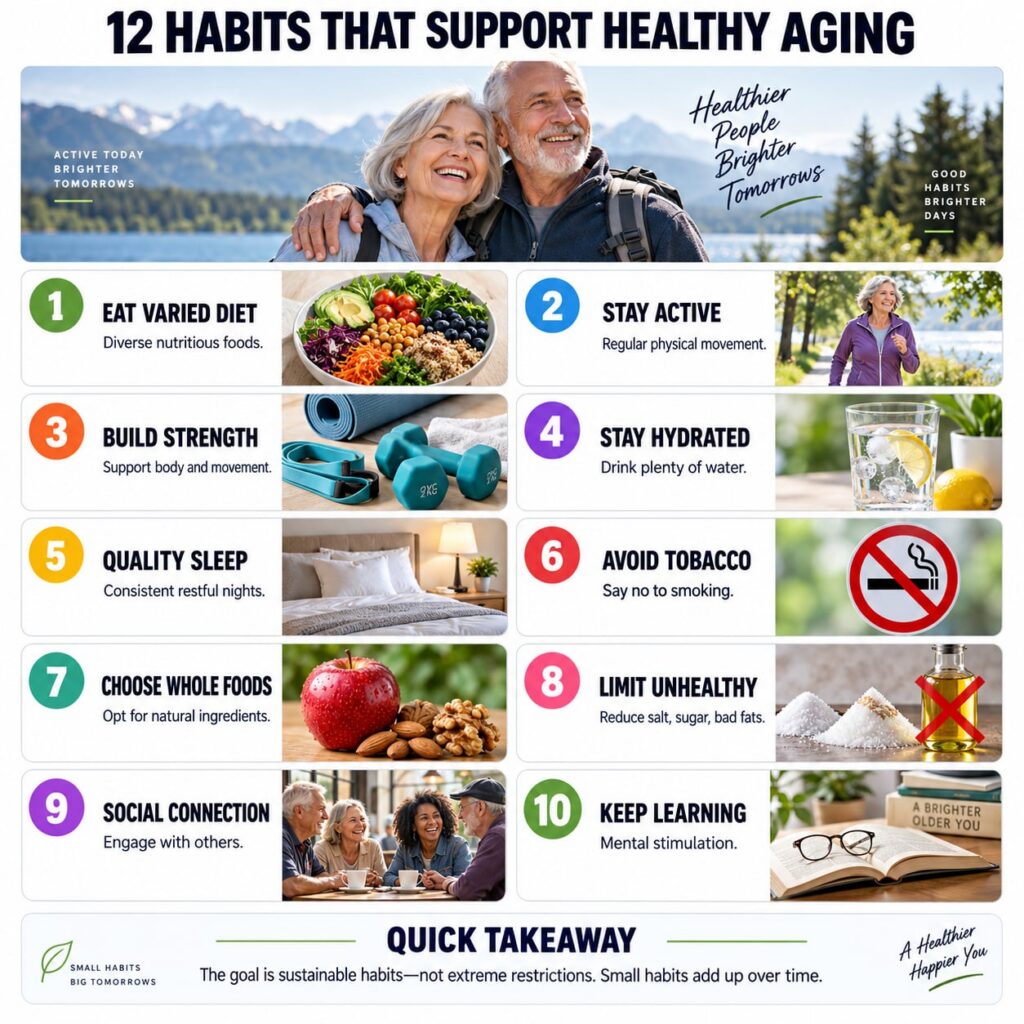
1. Eat a Varied, Nutritious Diet
Fueling your body with a diverse range of nutrients is paramount for healthy aging. This isn’t about restrictive eating but rather about embracing an abundance of whole foods. Focus on incorporating a colorful array of fruits, vegetables, whole grains, lean proteins, and healthy fats into your daily meals. A varied diet ensures you receive all the essential vitamins, minerals, and antioxidants needed to support cellular function, boost immunity, and maintain energy levels.
Practical Tips:
- Rainbow on Your Plate: Aim for different colored fruits and vegetables each day to get a wide spectrum of nutrients.
- Whole Grains First: Choose whole wheat bread, brown rice, and oats over refined grains.
- Lean Protein Sources: Include fish, poultry, beans, lentils, and nuts.
2. Stay Physically Active
Movement is medicine, especially as we age. Regular physical activity helps maintain heart health, bone density, flexibility, and a healthy weight. It doesn’t mean hours in the gym; it means finding activities you enjoy and making them a consistent part of your routine. Even simple activities like brisk walking can make a significant difference.
Practical Tips:
- Walk More: Take the stairs, park further away, or go for a daily stroll.
- Find Your Joy: Engage in activities like dancing, gardening, swimming, or cycling.
- Set Realistic Goals: Start small and gradually increase intensity and duration.
3. Maintain Strength and Mobility
Beyond general activity, specific attention to strength and mobility is crucial. Strength training helps prevent muscle loss (sarcopenia), which naturally occurs with age, and keeps your metabolism revving. Mobility exercises, such as stretching and yoga, improve flexibility and balance, reducing the risk of falls and keeping you agile.
Practical Tips:
- Bodyweight Exercises: Squats, lunges, and push-ups can be done anywhere.
- Resistance Bands: A great tool for adding gentle resistance.
- Stretch Daily: Incorporate light stretching into your morning or evening routine.
4. Stay Hydrated
Water is essential for nearly every bodily function, from regulating body temperature to transporting nutrients and lubricating joints. Dehydration can lead to fatigue, headaches, and impaired cognitive function, all of which become more prevalent as we age. Make a conscious effort to drink enough water throughout the day.
Practical Tips:
- Keep a Water Bottle Handy: Make it easy to sip throughout the day.
- Infused Water: Add fruit slices (lemon, cucumber) for flavor.
- Listen to Your Body: Drink when you feel thirsty, and even before.
5. Prioritize Quality Sleep
Sleep is not a luxury; it’s a fundamental pillar of health. During sleep, your body repairs itself, consolidates memories, and regulates hormones. Chronic sleep deprivation can impact mood, cognitive function, and increase the risk of various health issues. Aim for 7-9 hours of quality sleep each night.
Practical Tips:
- Consistent Schedule: Go to bed and wake up at the same time, even on weekends.
- Create a Routine: Wind down with reading, a warm bath, or meditation.
- Optimize Your Environment: Keep your bedroom dark, quiet, and cool.
6. Avoid Tobacco
Tobacco use is a leading cause of preventable diseases and accelerates the aging process. Quitting smoking or avoiding tobacco products altogether is one of the most impactful steps you can take for your long-term health, significantly reducing your risk of heart disease, cancer, and respiratory problems.
Practical Tips:
- Seek Support: Resources like helplines, support groups, or healthcare professionals can help.
- Set a Quit Date: Prepare yourself mentally and practically.
- Identify Triggers: Understand what makes you want to use tobacco and develop coping strategies.
7. Choose Whole Foods More Often
Building on the idea of a nutritious diet, consciously choosing whole foods over processed alternatives is a cornerstone of healthy aging. Whole foods are unprocessed and unrefined, meaning they retain their natural nutrients, fiber, and beneficial compounds, supporting better digestion, stable blood sugar, and sustained energy.
Practical Tips:
- Shop the Perimeter: Most whole foods are found around the edges of the grocery store.
- Cook at Home: This gives you control over ingredients.
- Simple Swaps: Replace sugary cereals with oatmeal, or white rice with quinoa.
8. Limit Excess Salt, Added Sugar, and Unhealthy Fats
While some salt and natural sugars are part of a balanced diet, excessive intake of added sugars, unhealthy fats (trans fats, excessive saturated fats), and sodium can contribute to inflammation, heart disease, high blood pressure, and weight gain. Being mindful of these can make a big difference in your overall health profile.
Practical Tips:
- Read Food Labels: Pay attention to sugar, sodium, and fat content.
- Cook with Herbs & Spices: Flavor your food without excess salt.
- Choose Healthy Fats: Opt for avocados, olive oil, nuts, and seeds.
9. Stay Socially Connected
Our social connections play a vital role in our mental and emotional well-being, which in turn impacts physical health. Loneliness and isolation can have detrimental effects, while strong social ties are associated with lower rates of depression, improved cognitive function, and even increased longevity.
Practical Tips:
- Reach Out: Regularly connect with family and friends.
- Join Groups: Find clubs or volunteer opportunities that align with your interests.
- Stay Engaged: Participate in community events or local activities.
10. Keep Learning and Staying Engaged
Just like our bodies, our brains benefit from regular exercise. Engaging in mentally stimulating activities can help maintain cognitive function, memory, and overall brain health. Learning new skills, reading, solving puzzles, or engaging in hobbies can keep your mind sharp and agile.
Practical Tips:
- Read Regularly: Books, articles, or even online content.
- Learn a New Skill: A language, an instrument, or a craft.
- Play Brain Games: Puzzles, crosswords, or strategy games.
Final Thoughts
Healthy aging isn’t about perfection; it’s about progress. It’s about recognizing that small, sustainable habits have a cumulative power that far outweighs any quick fix or rigid rule. By consistently nurturing your body and mind with these 10 habits, you’re not just adding years to your life, but also life to your years. Start today, one habit at a time, and embrace the journey towards a vibrant, healthy future.
Medical Disclaimer
The information provided in this article is for general knowledge and informational purposes only, and does not constitute medical advice. It is essential to consult with a qualified healthcare professional before making any decisions about your health or treatment. Individual results may vary, and the applicability of the information may depend on your specific health circumstances.