Did you know that not all fiber is created equal? While we often hear about the importance of fiber, understanding its two main types—soluble and insoluble—is key to truly harnessing its health benefits. Both play unique, vital roles in keeping your body running smoothly and your digestion happy.
In this guide, we’ll dive into the world of fiber, exploring what each type does, where to find them, and how you can easily incorporate more fiber-rich foods into your daily meals. Get ready to boost your well-being, manage blood sugar, support heart health, and feel more satisfied after meals!
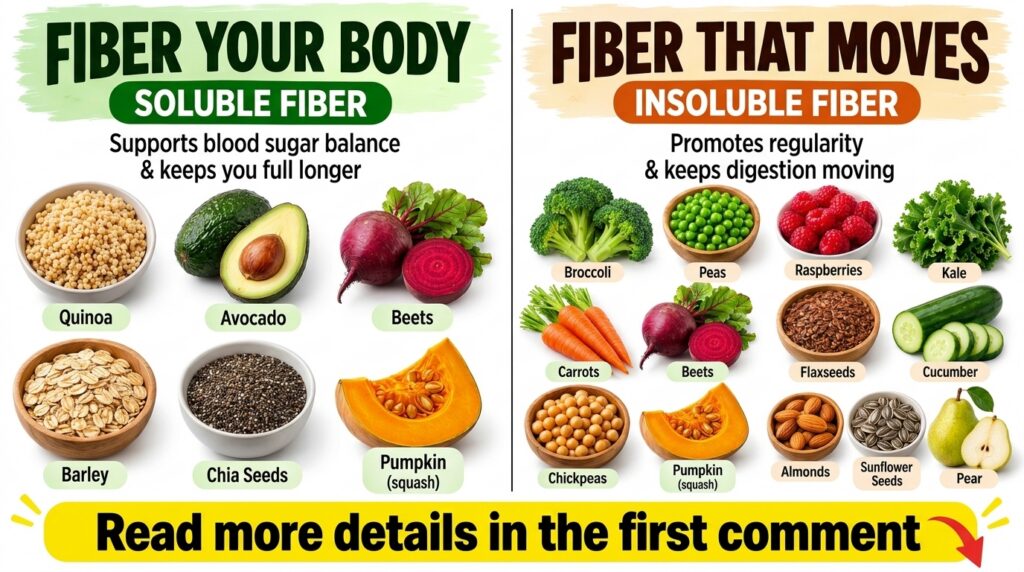
The Incredible Benefits of Fiber
Fiber isn’t just about digestion; it’s a superstar nutrient that contributes to many aspects of your health. Here’s a closer look at what it can do for you:
Supports Digestive Health
Both soluble and insoluble fiber are crucial for a healthy digestive system. Insoluble fiber adds bulk to your stool, helping food pass more easily through your gut and preventing constipation. Soluble fiber, on the other hand, forms a gel-like substance that can soften stool and act as a prebiotic, feeding beneficial gut bacteria.
Helps Manage Blood Sugar Levels
Soluble fiber is particularly effective at slowing down the absorption of sugar into your bloodstream. This can help prevent rapid spikes and crashes in blood sugar, which is beneficial for managing conditions like type 2 diabetes and promoting stable energy levels throughout the day.
Promotes Heart Health
Certain types of soluble fiber can help lower bad (LDL) cholesterol levels. It does this by binding to cholesterol particles in the digestive tract, preventing their absorption and helping to excrete them from the body. This protective effect contributes to a healthier heart.
Aids in Weight Management
Fiber-rich foods often require more chewing and take longer to digest, helping you feel fuller for longer. This increased satiety can reduce overall calorie intake, making it a valuable tool for sustainable weight management without feeling deprived.
Understanding Soluble vs. Insoluble Fiber
While both types of fiber are important, they function differently in your body. Let’s break down their unique characteristics.
Soluble Fiber
- What it is: Soluble fiber dissolves in water, forming a gel-like substance in your digestive tract.
- How it works: This gel helps slow down digestion, which can stabilize blood sugar and cholesterol levels. It also feeds beneficial gut bacteria.
- Best for: Managing blood sugar, lowering cholesterol, and promoting a feeling of fullness.
- Found in: Oats, barley, nuts, seeds, beans, lentils, peas, apples, citrus fruits, and carrots.

Insoluble Fiber
- What it is: Insoluble fiber does not dissolve in water. It passes through your digestive system largely intact.
- How it works: It adds bulk to your stool, acting like a broom to sweep waste through your intestines. This helps prevent constipation and promotes regularity.
- Best for: Promoting regular bowel movements and preventing constipation.
- Found in: Whole wheat flour, wheat bran, nuts, beans, green beans, potatoes, and the skins of fruits and vegetables.
Fiber-Rich Foods Chart
Here’s a quick overview of some fantastic fiber sources, highlighting their fiber type and key benefits:
| Food | Type of Fiber | Calories (per serving) | Protein (g) | Carbs (g) | Fiber (g) | Main Nutrients | Best Benefit |
|---|---|---|---|---|---|---|---|
| Oats (1/2 cup dry) | Soluble | 150 | 5 | 27 | 4 | Manganese, Phosphorus | Blood sugar control |
| Apples (1 medium, with skin) | Both | 95 | 0.5 | 25 | 4 | Vitamin C, Potassium | Satiety, regularity |
| Lentils (1/2 cup cooked) | Both | 115 | 9 | 20 | 8 | Iron, Folate | Digestion, sustained energy |
| Avocado (1/2 medium) | Both | 160 | 2 | 9 | 7 | Healthy fats, Potassium | Gut health, fullness |
| Broccoli (1 cup cooked) | Insoluble | 55 | 4 | 11 | 5 | Vitamin C, K, Folate | Detoxification, regularity |
| Chia Seeds (2 tbsp) | Both | 138 | 5 | 12 | 10 | Omega-3s, Calcium | Gut health, omega-3s |
| Black Beans (1/2 cup cooked) | Both | 114 | 8 | 20 | 8 | Manganese, Magnesium | Blood sugar, protein |
| Whole Wheat Bread (1 slice) | Insoluble | 80 | 4 | 14 | 2 | Iron, B Vitamins | Regularity, whole grains |
| Raspberries (1 cup) | Both | 64 | 1.5 | 15 | 8 | Vitamin C, Manganese | Antioxidants, digestion |
| Almonds (1 oz / 23 nuts) | Both | 164 | 6 | 6 | 3.5 | Vitamin E, Magnesium | Heart health, healthy fats |
Best Ways to Increase Your Fiber Intake
Adding more fiber to your diet doesn’t have to be complicated. Here are some simple, practical tips:
- Start Your Day Fiber-Rich: Opt for oatmeal, whole-grain cereals, or add berries and seeds to your yogurt for breakfast.
- Embrace Whole Grains: Swap white bread, pasta, and rice for their whole-grain counterparts. Look for

