There’s nothing quite like the vibrant burst of tulips to announce the arrival of spring. Their elegant forms and cheerful colors bring life and joy to any garden, signaling a fresh start after the quiet winter months. If you’ve ever dreamt of a garden filled with these iconic beauties, you’re in the right place! Planting tulip bulbs is a rewarding and surprisingly simple process, and with a little preparation, you can ensure a breathtaking display next spring.
At Garden – L. Quyên, we believe everyone can cultivate a beautiful garden. Let’s dig into how you can nurture new beginnings and enjoy a spectacular show of tulips right in your backyard!
Why Plant Tulips?
Beyond their undeniable beauty, tulips are relatively low-maintenance and offer a wide variety of colors, shapes, and sizes. From classic cups to fringed petals, there’s a tulip for every taste and garden design. They are perfect for creating stunning flower beds, borders, or even container displays, adding a touch of elegance and whimsy wherever they grow.
The Best Time to Plant Tulip Bulbs
Timing is crucial for successful tulip blooms. The ideal time to plant tulip bulbs is in the fall, typically from September to early December, before the ground freezes solid. This allows the bulbs enough time to establish a healthy root system before winter sets in, which is essential for vigorous growth and abundant flowers in the spring. If you live in a warmer climate, you might even chill your bulbs in the refrigerator for a few weeks before planting to mimic winter conditions.
Choosing the Right Tulip Bulbs
Start with healthy, high-quality bulbs. Look for bulbs that are firm, plump, and free from any signs of mold, rot, or cuts. Larger bulbs generally produce larger, more robust flowers. Consider the mature height and bloom time when selecting varieties to ensure a continuous display throughout spring, or to match them with other plants in your garden.
How to Plant Tulip Bulbs Step-by-Step
Planting tulip bulbs is a straightforward process that even novice gardeners can master. Follow these simple steps for a successful spring display:
1. Choose Your Location Wisely
Tulips thrive in full sun, meaning at least 6 hours of direct sunlight per day. They also need well-draining soil. If your soil is heavy clay, amend it with organic matter like compost or peat moss to improve drainage and fertility. Poor drainage can lead to bulb rot.
2. Prepare the Soil
Loosen the soil to a depth of at least 8-10 inches. Incorporate some compost to enrich the soil with nutrients. This provides a welcoming environment for your bulbs to grow strong roots.
3. Dig the Perfect Hole
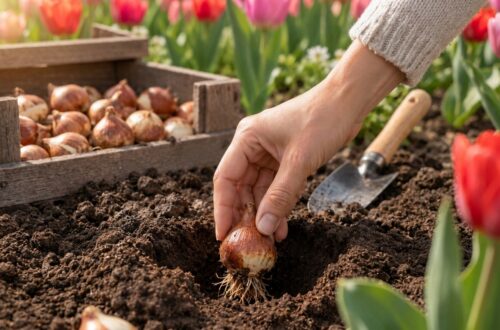
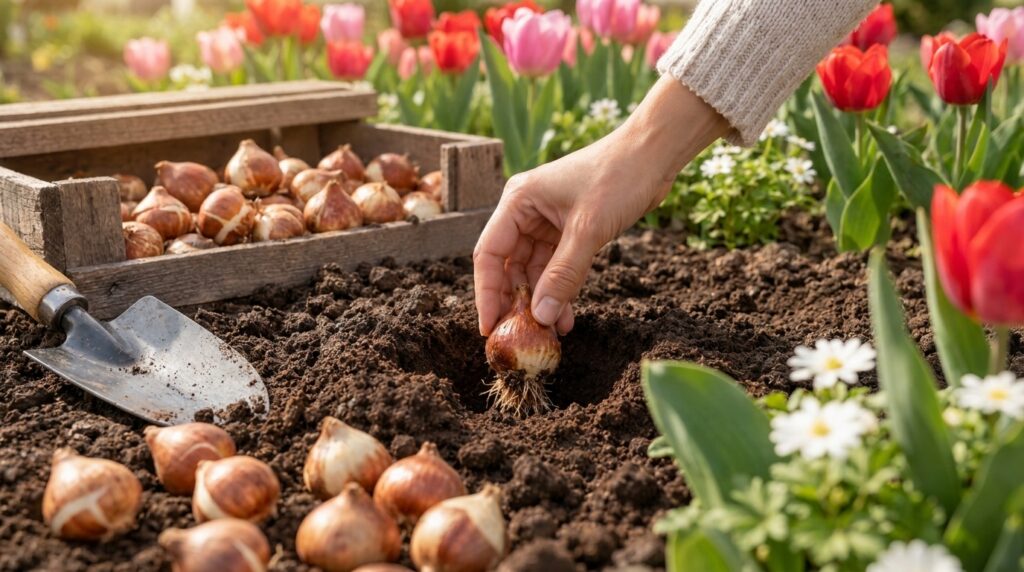
A general rule of thumb is to plant bulbs at a depth of about three times their height. So, for a 2-inch tall bulb, you would dig a hole about 6 inches deep. For larger bulbs, this could be 8 inches deep. You can plant bulbs individually or in groups for a more dramatic effect. When planting in groups, space them 4-6 inches apart.
4. Position the Bulb Correctly
Place the tulip bulb in the hole with the pointed end facing upwards. This is where the sprout will emerge. The flatter, broader end is where the roots will develop.
5. Cover and Water
Gently cover the bulbs with soil, lightly patting it down to remove any air pockets. Water thoroughly immediately after planting. This helps settle the soil and kick-starts root growth.
Caring for Your Newly Planted Tulips
- Winter Protection: In colder climates, a layer of mulch (like straw or leaves) can provide extra insulation and protect bulbs from extreme temperature fluctuations.
- Watering: After the initial watering, tulips generally don’t need much additional water during winter, especially if you receive regular rainfall or snow. Water again in early spring if the weather is unusually dry.
- Pest Protection: Squirrels and other critters can sometimes dig up bulbs. You can deter them by covering the planting area with chicken wire or a layer of sharp gravel.
Anticipating Spring’s Reward
The waiting game might be the hardest part, but the anticipation makes the eventual bloom even more special. As winter gives way to spring, you’ll witness the exciting emergence of green shoots, followed by the magnificent unfolding of colorful tulip flowers. Each bloom is a testament to your efforts and the beauty of nature.

Join Our Gardening Community!
We hope this guide inspires you to plant tulip bulbs this fall! There’s immense joy in watching your garden come alive with color. Do you have any favorite tulip varieties or planting tips? Share them with us in the comments below! We love hearing from our Garden – L. Quyên community.