Living in the city doesn’t mean you have to give up the joys of fresh, homegrown produce! Urban gardening has transformed balconies, patios, and even windowsills into thriving green oases. Among the many vegetables you can cultivate in limited spaces, cauliflower stands out as a rewarding, albeit sometimes challenging, crop. Imagine harvesting crisp, white cauliflower heads just steps from your kitchen!
While it might seem ambitious to grow cauliflower on a balcony, with a few simple tips and a bit of dedication, you can absolutely enjoy this nutritious vegetable from your very own urban garden. Let’s dig in and learn how to achieve an urban garden bounty of fresh cauliflower!
Why Grow Cauliflower on Your Balcony?
Cauliflower, a member of the brassica family, offers numerous benefits for the urban gardener. It’s packed with vitamins and nutrients, tastes incredible when freshly picked, and can be a beautiful addition to your edible landscape. Plus, the sense of accomplishment from growing something as substantial as a cauliflower head in a container is truly unparalleled.
While often associated with large garden plots, many varieties of cauliflower are well-suited for container gardening, especially if you choose compact types. The key is providing the right conditions and a little extra care.
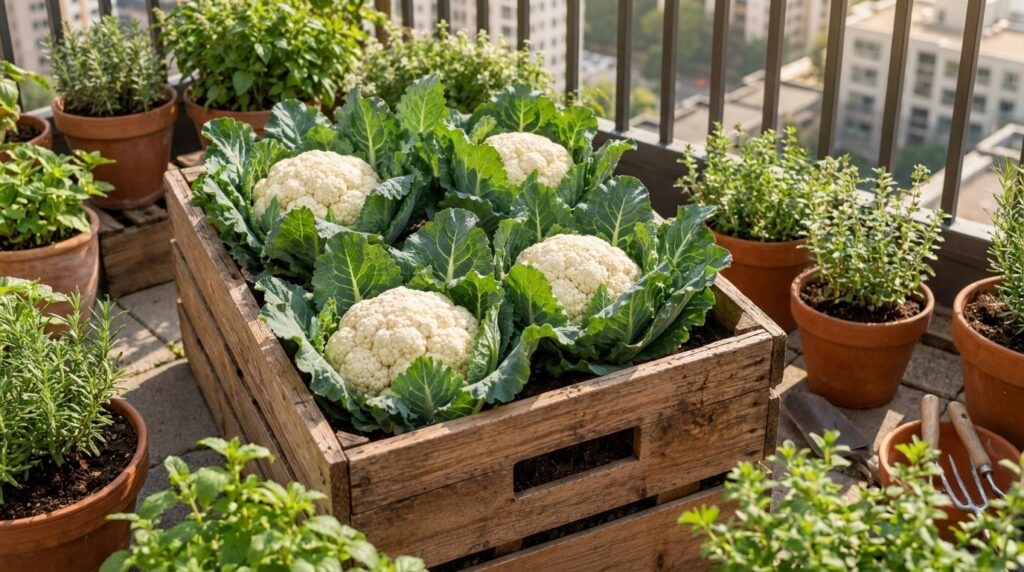
Getting Started: Essential Supplies for Balcony Cauliflower
1. Choosing the Right Container
- Size Matters: Cauliflower needs plenty of root space. Opt for large containers, at least 12-18 inches (30-45 cm) in diameter and depth, per plant. Half-whiskey barrels, large grow bags, or sturdy plastic pots work well.
- Drainage: Excellent drainage is crucial. Ensure your chosen container has ample drainage holes to prevent waterlogging, which can quickly kill your plants.
2. The Perfect Potting Mix
Don’t skimp on soil! A high-quality, well-draining potting mix is vital for container-grown cauliflower. Look for mixes rich in organic matter. You can amend your potting mix with compost to boost fertility and improve water retention.
3. Seeds or Seedlings?
- Seeds: Starting from seeds gives you more variety options, but requires more time and controlled conditions, especially indoors before transplanting.
- Seedlings: Buying young cauliflower seedlings from a local nursery is often the easiest route for balcony gardeners, as they bypass the delicate germination phase. Look for healthy, compact plants without yellowing leaves or signs of pests.
Planting and Nurturing Your Cauliflower
1. Timing is Key
Cauliflower prefers cool weather, generally thriving in spring or fall. Check your local frost dates and plant accordingly. Hot weather can cause cauliflower heads to “bolt” (go to seed) or develop an undesirable texture.
2. Sunlight Requirements
Cauliflower needs at least 6 hours of direct sunlight per day to produce good heads. Position your containers on your balcony where they will receive ample sun.
3. Watering Wisely
Consistent moisture is essential for cauliflower. The soil should be kept consistently moist but never waterlogged. Check the soil daily by sticking your finger about an inch deep. If it feels dry, it’s time to water.
4. Feeding Your Plants
Cauliflower is a heavy feeder. Begin with a nutrient-rich potting mix and supplement with a balanced liquid fertilizer every 2-3 weeks once the plants are established. Organic options like fish emulsion or compost tea are excellent choices.
5. The Art of Blanching
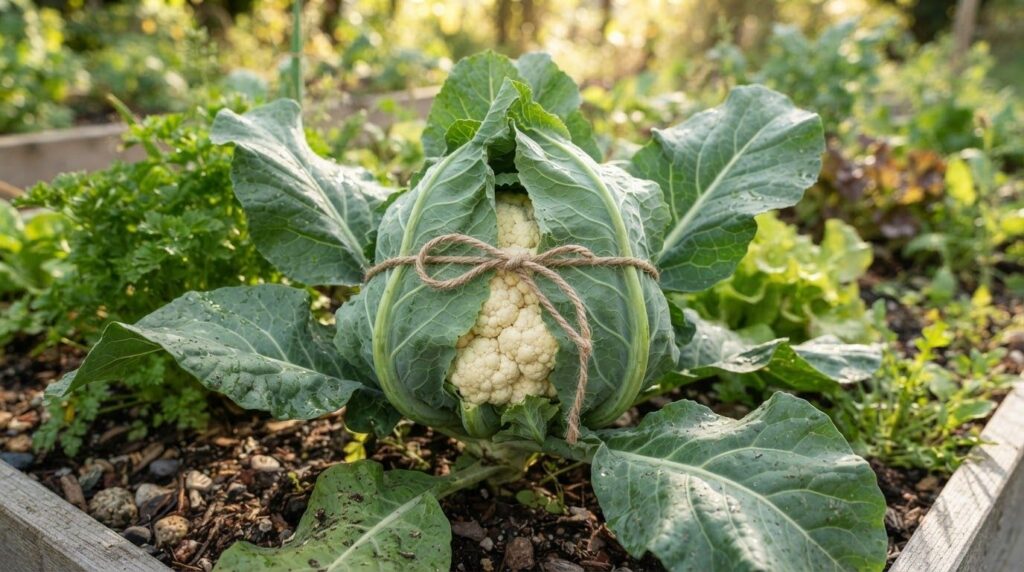
To achieve those beautiful, white cauliflower heads, you’ll need to “blanch” them. This process protects the developing head from direct sunlight, which can cause discoloration and a bitter taste. Once the head (or “curd”) is about 2-3 inches in diameter, gently gather the outer leaves and tie them loosely over the top of the head using twine or rubber bands. You can also break a few outer leaves and tuck them over the curd. Check periodically for pests and ensure the leaves are not too tight, allowing for air circulation.
Common Challenges and Solutions
- Pests: Keep an eye out for common pests like cabbage worms or aphids. Organic pest control methods include hand-picking worms, using neem oil, or introducing beneficial insects (if practical for a balcony).
- Yellowing Leaves: This can indicate a nutrient deficiency (often nitrogen) or overwatering. Adjust your fertilizing schedule or check drainage.
- Small Heads: Lack of adequate sunlight, nutrients, or inconsistent watering can lead to small heads. Ensure all needs are met.
Harvesting Your Balcony Bounty
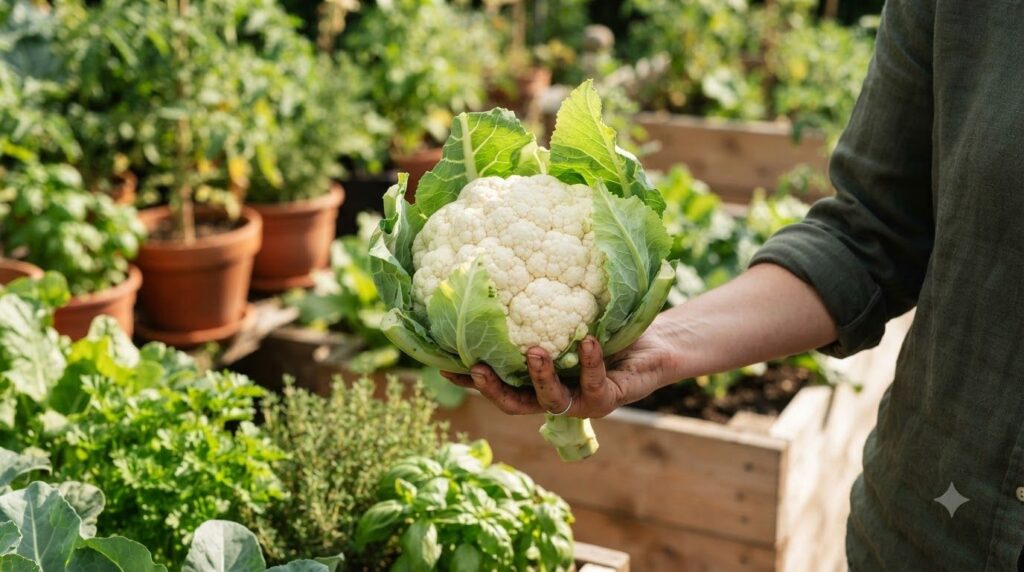
Your cauliflower is ready to harvest when the head is firm, white, and reaches its mature size (depending on the variety). This usually takes 70-120 days from planting. Use a sharp knife to cut the main stem just below the head, leaving a few wrapper leaves attached to protect it.
Enjoying Your Homegrown Cauliflower
Once harvested, your fresh cauliflower can be enjoyed in countless ways – roasted, steamed, mashed, or added to stir-fries. The flavor of homegrown produce truly stands apart!
Growing cauliflower on your balcony is a testament to the power of urban gardening. It requires a bit of patience and attention, but the reward of a fresh, crisp head of cauliflower, grown by your own hands, is priceless. So, why not give it a try? Your taste buds (and your balcony!) will thank you.
Happy gardening!