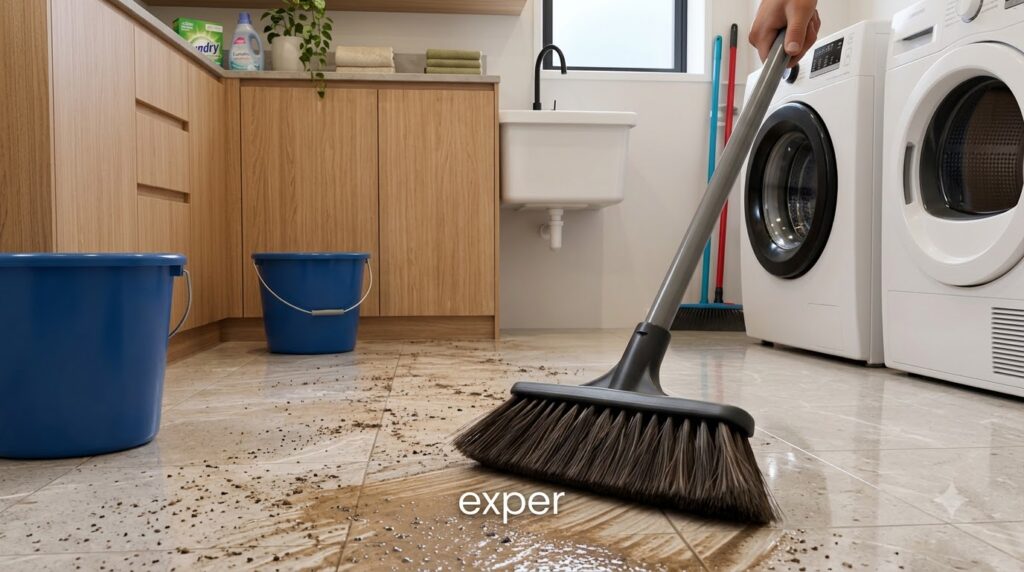
When unexpected mud tracks invade your tiled floors – perhaps after a rainy day, a gardening session, or a pet’s outdoor adventure – a dry sweep often just pushes the problem around. Instead of just moving the dirt, why not make it disappear? This simple DIY method uses water and a broom to effectively tackle heavy dirt and mud on tiled surfaces, making the task less dusty and more efficient. It’s a practical and satisfying way to restore cleanliness to your home without needing specialized equipment.
What You’ll Need
- Stiff-bristled utility broom
- Large bucket
- Warm water
- Optional: Mop or clean cloths for finishing
- Optional: Dustpan or wet/dry vacuum
Why This DIY Can Be Useful
Sweeping a muddy or heavily soiled tiled floor with water is highly effective for several reasons. Firstly, the water helps to loosen and lift caked-on mud and grime from the tile and grout lines, making it easier to remove. Unlike dry sweeping, which can kick up dust and scratch surfaces with abrasive dirt particles, wet sweeping contains the mess. It prevents airborne dust, reduces streaks, and allows the broom bristles to effectively push the heavy, wet debris towards a collection point or drain, resulting in a more thorough initial clean.
How to Make It
This isn’t a ‘making’ recipe in the traditional sense, but rather a preparation for your cleaning task:
- Fill your large bucket with warm water. Warm water can help dislodge dirt more effectively than cold water.
How to Use It
This method is ideal for tiled floors in utility rooms, entryways, or even patios that have accumulated heavy mud and dirt.
- Pre-sweep (Optional but Recommended): If there are any large, loose debris items like leaves, pebbles, or very dry clumps of mud, give the area a quick dry sweep first to remove the biggest pieces.
- Apply Water: Pour or splash a generous amount of warm water onto a small section of the muddy floor. Don’t drench the entire floor at once; work in manageable sections.
- Sweep the Mess: Using your stiff-bristled utility broom, begin to sweep the dirty water and mud towards a designated drain or an area where you can collect the dirty water (e.g., near a doorway or into a dustpan). Use firm, even strokes to push the water and debris.
- Collect Dirty Water: If you don’t have a floor drain, use a large dustpan to scoop up the dirty water and mud, emptying it into your bucket. Repeat this process until the section is relatively clear of heavy dirt.
- Repeat Sections: Continue working in small sections across your entire floor, replenishing your bucket with clean water as the water becomes too murky.
- Rinse (Optional): For a more thorough rinse, you can pour a final round of clean water onto the floor and sweep it away, ensuring all residual dirt is removed.
- Final Wipe: For a streak-free finish, follow up by mopping the floor with clean water or wiping it dry with clean cloths. This will remove any remaining film or moisture.
What to Expect
You can expect your tiled floor to be significantly cleaner and free of heavy mud and grime. This method is excellent for the initial removal of thick dirt. While it provides a deep clean for heavy messes, for a sparkling, spotless finish, you might still want to follow up with your usual floor cleaner and mop. The primary goal here is to efficiently remove bulk dirt without spreading dust or creating more mess.
Helpful Tips
- Change Water Frequently: As the water in your bucket gets dirty, change it for fresh, warm water. Using dirty water will just redistribute grime.
- Work Towards a Drain: If you have a floor drain, always sweep towards it to make collection easier.
- Consider a Squeegee: For very large tiled areas, a floor squeegee can be very effective at pushing dirty water quickly.
- Wet/Dry Vacuum: If you own a wet/dry shop vacuum, it can be incredibly useful for sucking up the dirty water after sweeping, making the cleanup faster and more efficient.
Important Notes / Safety
- Slippery Surfaces: Floors will be extremely slippery when wet. Exercise caution to prevent slips and falls.
- Electrical Outlets: Be mindful of electrical outlets, cords, and appliances in utility rooms. Avoid splashing water onto them.
- Proper Disposal: Dispose of dirty water responsibly. Avoid pouring large amounts of muddy water down indoor drains that might clog easily. An outdoor drain or toilet is often a better option.
- Ventilation: Ensure good ventilation in the area, especially if you plan to follow up with chemical cleaners.

