Unlock the secrets to vibrant health by understanding how specific foods can nourish every part of your body. Our bodies are complex systems, and each organ thrives on a unique blend of nutrients. Embracing targeted nutrition means making intentional food choices that provide essential support for your brain, heart, eyes, lungs, bones, and more.
Far from a one-size-fits-all approach, this guide will help you discover how certain dietary staples can contribute to the optimal functioning of your most vital organs. Prepare to explore a world where your plate becomes a powerful tool for sustained wellness.
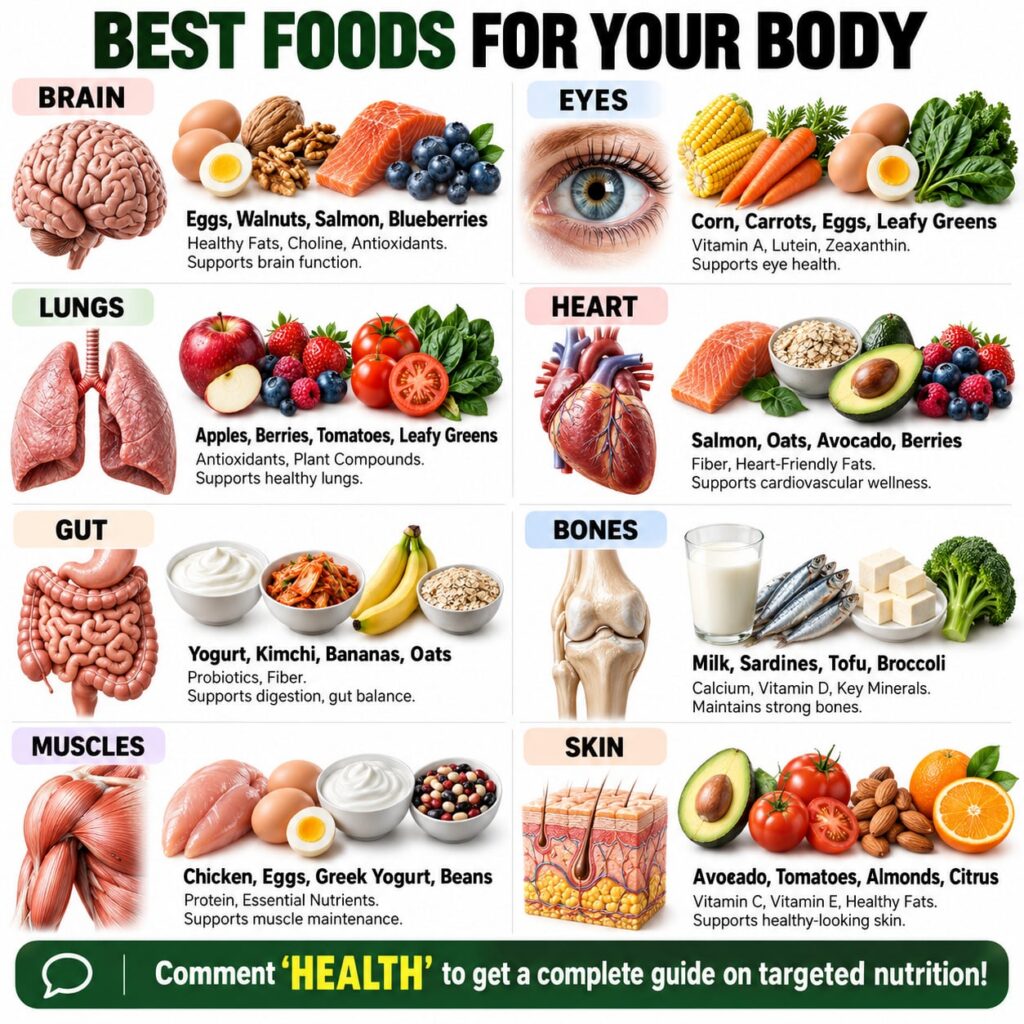
Fuel Your Brain: Foods for Enhanced Cognitive Health
Your brain is an incredibly complex organ that requires a steady supply of specific nutrients to function at its best. Foods rich in omega-3 fatty acids, antioxidants, and B vitamins are crucial for memory, focus, and overall cognitive function.
Omega-3 Rich Foods for Brain Power
- Fatty Fish: Salmon, mackerel, sardines, and trout are excellent sources of omega-3 fatty acids, particularly DHA, which is vital for brain structure and function.
- Walnuts: These nuts are packed with omega-3s, antioxidants, and vitamin E, all of which may support brain health and protect against cognitive decline.
- Chia Seeds & Flaxseeds: Plant-based sources of ALA (alpha-linolenic acid), another omega-3 fatty acid, which the body can convert into DHA and EPA.
Antioxidant Powerhouses for Cognitive Protection
- Blueberries: Often called “brain berries,” blueberries are rich in anthocyanins, antioxidants that may improve memory and slow brain aging.
- Dark Chocolate: High in flavonoids, which are antioxidants that can improve blood flow to the brain and enhance cognitive function.
- Turmeric: Contains curcumin, a potent anti-inflammatory and antioxidant compound that may cross the blood-brain barrier and benefit the brain.
Support Your Heart: Foods for Cardiovascular Wellness
A healthy heart is fundamental to overall well-being. Diet plays a critical role in maintaining cardiovascular health by influencing blood pressure, cholesterol levels, and inflammation. Focus on foods that are high in fiber, healthy fats, and antioxidants.
Fiber-Rich Foods for a Healthy Heart
- Oats: Soluble fiber, particularly beta-glucan in oats, can help lower LDL (bad) cholesterol levels.
- Legumes: Beans, lentils, and chickpeas are excellent sources of soluble fiber, which can help manage cholesterol and blood sugar.
- Leafy Greens: Spinach, kale, and collard greens are rich in vitamins, minerals, and antioxidants that support heart health and blood vessel function.
Healthy Fats for Cardiovascular Support
- Avocado: A great source of monounsaturated fats, which may help reduce bad cholesterol levels and lower the risk of heart disease.
- Olive Oil: Extra virgin olive oil, rich in monounsaturated fats and antioxidants, is a cornerstone of the heart-healthy Mediterranean diet.
Nourish Your Eyes: Foods for Optimal Vision
Our eyes work tirelessly, and proper nutrition is key to protecting them from age-related conditions and maintaining sharp vision. Specific vitamins and antioxidants are particularly beneficial for eye health.
Vitamins A & Beta-Carotene for Vision
- Carrots: Famous for their beta-carotene content, which the body converts to vitamin A, essential for good vision, especially in low light.
- Sweet Potatoes: Another excellent source of beta-carotene, along with vitamin C and E, which are beneficial for eye health.
Lutein & Zeaxanthin for Macular Health
- Spinach & Kale: These leafy greens are packed with lutein and zeaxanthin, powerful antioxidants that accumulate in the retina and may help protect against age-related macular degeneration (AMD) and cataracts.
- Eggs: Egg yolks are a good source of lutein and zeaxanthin, along with zinc, which further supports eye health.
Strengthen Your Lungs: Foods for Respiratory Health
While often overlooked, lung health is vital for breathing and overall vitality. Certain foods can help reduce inflammation, boost immunity, and support respiratory function.
Antioxidant-Rich Foods for Lung Protection
- Berries: Blueberries, strawberries, and raspberries are rich in antioxidants like flavonoids and vitamin C, which may help protect lung tissue from damage.
- Citrus Fruits: Oranges, grapefruits, and lemons are excellent sources of vitamin C, an antioxidant that supports immune function and may reduce inflammation in the airways.
- Bell Peppers: Especially red bell peppers, they are loaded with vitamin C and other antioxidants that are beneficial for lung health.
Anti-Inflammatory & Immune-Boosting Foods
- Broccoli: Contains sulforaphane, a compound that may help protect lung cells and reduce inflammation.
- Ginger & Turmeric: Both are known for their potent anti-inflammatory properties, which can be beneficial for respiratory conditions.
Build Strong Bones: Foods for Skeletal Health
Bones provide structure, protect organs, and anchor muscles. Maintaining strong bones throughout life requires a consistent intake of calcium, vitamin D, and other essential minerals.
Calcium Sources for Bone Density
- Dairy Products: Milk, yogurt, and cheese are well-known for being rich in calcium, a primary building block for bones.
- Fortified Plant Milks: Almond, soy, and oat milks often come fortified with calcium and vitamin D, making them excellent alternatives.
- Leafy Greens: Kale, collard greens, and broccoli provide a good amount of calcium, along with vitamin K, which also plays a role in bone health.
Vitamin D for Calcium Absorption
- Fatty Fish: Salmon, tuna, and mackerel contain some vitamin D.
- Fortified Foods: Many cereals, orange juices, and plant milks are fortified with vitamin D, which is crucial for the body to absorb calcium effectively.
- Mushrooms: Certain mushrooms, especially those exposed to UV light, can provide vitamin D.
Final Thoughts
Embracing targeted nutrition is a powerful way to invest in your long-term health. By understanding which foods specifically benefit your brain, heart, eyes, lungs, and bones, you can make more informed choices that contribute to optimal function and sustained wellness. Start by incorporating a few of these nutrient-dense foods into your daily meals, and experience the profound difference targeted nutrition can make for your entire body.