Ever wished you had a magic touch in the garden? Good news – you already do! You don’t need expensive gadgets or special chemicals to grow a thriving, beautiful garden. Often, the best solutions are hiding in plain sight, right in your kitchen or recycling bin. At Garden – L. Quyên, we believe gardening should be fun, accessible, and sustainable for everyone.
Today, we’re sharing some of our favorite “garden hacks” – clever, easy, and often free ways to boost your plants’ health, deter pests, and make your gardening life a whole lot easier. Get ready to transform everyday items into powerful gardening tools and truly unlock your green thumb!
Boost Plant Health and Soil Fertility Naturally
Healthy plants start with healthy soil and the right nutrients. Skip the synthetic fertilizers and try these natural boosters.
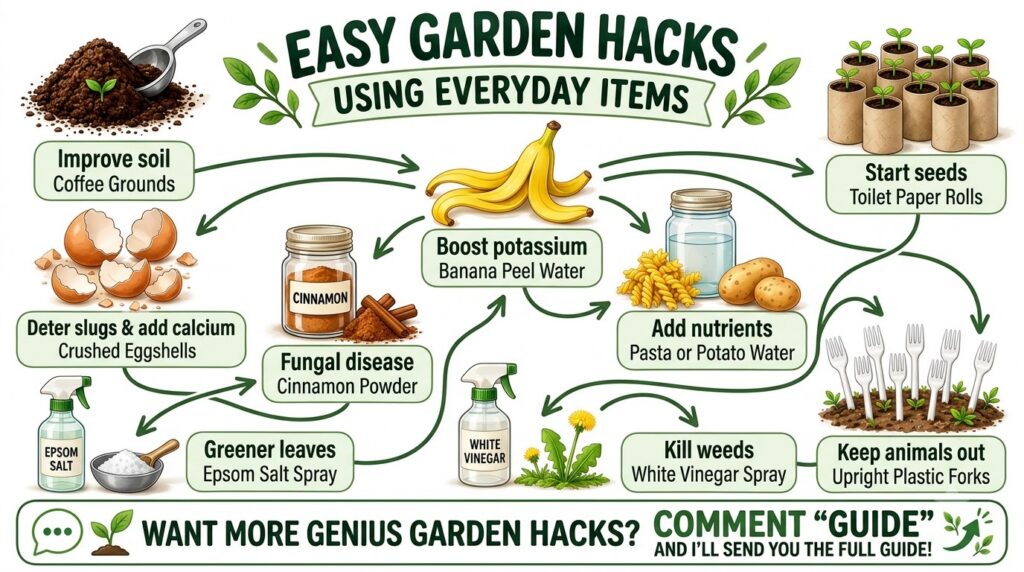
Rice Water: Your Plants’ Secret Hydration & Nutrient Boost
That starchy water you usually pour down the drain after cooking rice? It’s liquid gold for your plants! Rice water is packed with starches, proteins, and B vitamins that can nourish your soil and encourage stronger growth. It’s especially great for ferns and other foliage plants.
- How to Use: After cooking, let the rice water cool completely. Use it to water your plants once every 2-4 weeks. You can also ferment it for even more benefits, but even plain cooled rice water works wonders.
- Benefits: Promotes beneficial bacteria in the soil, provides a gentle nutrient boost, and helps strengthen plant roots.
Coffee Grounds: A Jolt for Acid-Loving Plants
Love your morning coffee? Your acid-loving plants, like roses, blueberries, azaleas, and hydrangeas, will love your used coffee grounds too! They add nitrogen to the soil, improving its structure and attracting earthworms.
- How to Use: Sprinkle a thin layer of used coffee grounds directly onto the soil around your plants. Avoid piling them too thick, as they can sometimes compact.
- Benefits: Adds nitrogen, improves soil structure, slightly lowers soil pH, and can deter some pests like slugs and snails.
Eggshells: Calcium Powerhouse for Stronger Growth
Don’t toss those eggshells! They’re an excellent source of calcium, a vital nutrient that helps prevent blossom end rot in tomatoes and peppers, and strengthens cell walls in all plants.
- How to Use: Rinse and dry eggshells thoroughly. Crush them into small pieces (the finer, the better for faster nutrient release). Mix them into your potting soil or sprinkle around the base of plants.
- Benefits: Provides calcium, improves drainage, and can deter slugs and snails with their sharp edges.
Banana Peels: Potassium Rich Treat
Just like eggs, banana peels are often thrown away, but they are a fantastic source of potassium, which is crucial for flower and fruit development. They also contain phosphorus and calcium.
- How to Use: Chop fresh banana peels into small pieces and bury them directly in the soil around your plants, especially flowering and fruiting ones. You can also steep them in water for a “banana tea” fertilizer.
- Benefits: Boosts flowering and fruiting, provides essential nutrients, and is completely organic.
Epsom Salt: The Magnesium Miracle
Epsom salt (magnesium sulfate) isn’t just for baths; it can give your plants a boost too! Magnesium helps plants absorb other nutrients more efficiently and aids in chlorophyll production, leading to greener foliage.
- How to Use: Dissolve 1 tablespoon of Epsom salt in 1 gallon of water and use it to water plants once a month. For a foliar spray, dissolve 1-2 tablespoons in a spray bottle of water and mist leaves in the morning or evening.
- Benefits: Corrects magnesium deficiencies, promotes bushier growth, and enhances bloom production.
Pasta Water: A Starchy Boost for Soil
The starchy water left over after boiling pasta isn’t just for draining! Once cooled, it can provide a gentle nutrient boost to your plants, thanks to the starches and minerals released during cooking. This can benefit soil microbes and provide some micro-nutrients.
- How to Use: Let the pasta water cool completely. Use it to water your indoor or outdoor plants. Ensure it’s unsalted if using for plants.
- Benefits: Adds beneficial starches and minerals to the soil, supporting microbial life and plant vigor.
Natural Pest Control and Plant Protection
Keep unwanted visitors away and protect your plants without harsh chemicals using these simple solutions.
Cinnamon Powder: Natural Fungicide & Rooting Aid
This common spice is a powerful natural fungicide and antiseptic for plants! It can help prevent damping-off disease in seedlings and promote rooting in cuttings.
- How to Use: For damping-off, sprinkle a light layer of cinnamon powder on the soil surface around new seedlings. For cuttings, dip the cut end into cinnamon powder before planting to encourage rooting and prevent rot.
- Benefits: Acts as a natural fungicide, deters some pests, and can aid in successful plant propagation.
White Vinegar: Cautionary Weed Killer & Soil Acidifier
While potent, white vinegar can be a useful tool for specific garden tasks. It’s a non-selective herbicide, meaning it will kill any plant it touches, so use with extreme care. It can also temporarily acidify soil for certain plants.
- How to Use: For weeds, spray undiluted white vinegar directly onto weed foliage on a sunny day. Avoid spraying desirable plants. For soil acidification, dilute 1 cup of vinegar in 1 gallon of water and apply sparingly to acid-loving plants if soil pH is too high. Always test a small area first.
- Benefits: Effective for killing weeds in paving cracks, and can be used to acidify soil for specific plants (use with caution).
Plastic Forks: Simple Pest Deterrent
Got pesky critters digging up your seedlings or munching on your tender greens? Plastic forks can offer a simple, visual deterrent.
- How to Use: Stick plastic forks (tines up) into the soil around your seedlings or plants. The tines create an uncomfortable barrier for small animals and birds.
- Benefits: Deters small animals and birds from disturbing young plants, cheap and reusable.
Smart Seed Starting & Garden Tools
Make your gardening life easier from the very start with these creative ideas.
Toilet Paper Rolls: Eco-Friendly Seed Starters
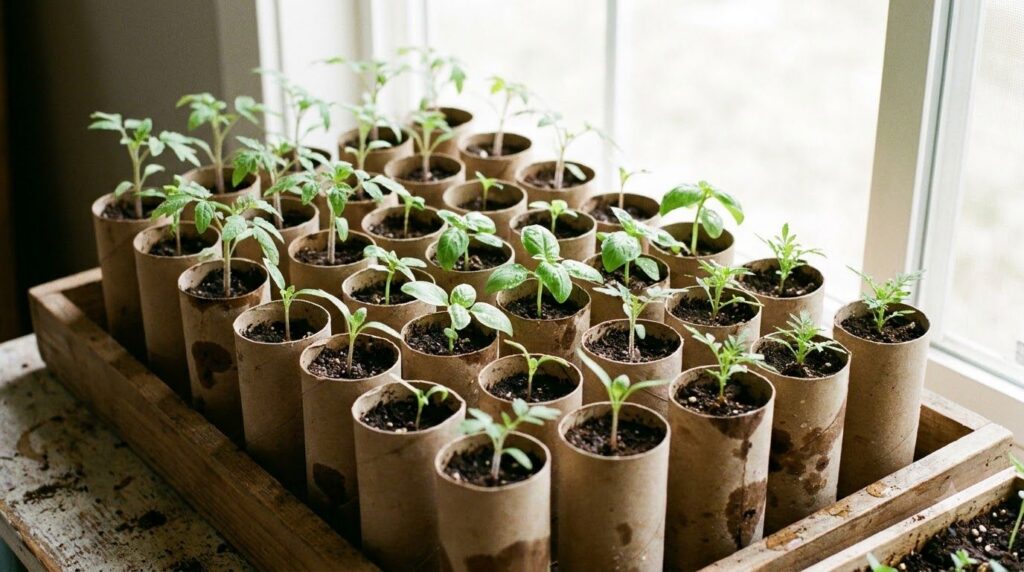
Give your seeds a great start while being kind to the planet! Empty toilet paper rolls are perfect biodegradable pots for seedlings.
- How to Use: Fill toilet paper rolls with potting mix and plant your seeds. When it’s time to transplant, simply plant the entire roll directly into the garden. The cardboard will break down, minimizing transplant shock.
- Benefits: Biodegradable, reduces plastic waste, and minimizes root disturbance during transplanting.
Embrace Sustainable Gardening
These hacks aren’t just easy; they’re also a fantastic way to practice sustainable gardening. By repurposing household items and using natural ingredients, you reduce waste, minimize your carbon footprint, and create a healthier environment for your plants and the planet.
We hope these simple garden hacks inspire you to look at everyday items with a new, green perspective. Which one will you try first? Share your favorite hacks and gardening successes with us in the comments below!