We all love the crisp, clean look of a pair of brand-new white socks. But let’s be honest, that pristine whiteness rarely lasts. After a few wears and washes, they start to look dull, grey, or even yellowed, making them an eyesore in your laundry basket and a challenge to restore. It’s a common problem for many households, leading to frustration and often, the premature discarding of perfectly good socks.
You’ve probably tried various detergents or even bleach, only to find that your socks still don’t quite regain their original brightness. The good news is, you don’t need harsh chemicals or expensive products to bring your white socks back to life. There’s a simple, effective, and budget-friendly home trick that uses common ingredients you likely already have in your pantry.
This guide is for anyone tired of dingy white socks and looking for a natural, easy-to-follow solution. Whether your socks are slightly discolored or deeply stained, you’ll learn a method that can make a significant difference. Say goodbye to dullness and hello to dazzling white!
Why You’ll Love This Guide
- Easy to Follow: Simple, step-by-step instructions that anyone can master.
- Affordable Ingredients: Uses common household items, saving you money.
- Amazing Results: Effectively restores the brightness of your white socks.
- Environmentally Friendly: Relies on natural ingredients, reducing chemical exposure.
- Safe for Your Garments: Gentle on fabric when used correctly.
- Requires Minimal Effort: Mostly passive soaking time, with little active scrubbing.
- Sustainable Solution: Helps you extend the life of your favorite white socks.
Materials You’ll Need
- Dirty white socks (any quantity that fits your basin)
- Hot water (enough to submerge the socks)
- Regular laundry detergent (about 1/4 cup, or a scoop)
- Baking soda (1/2 cup to 1 cup, depending on quantity of socks and severity of stains)
- White vinegar (1/2 cup, optional, for extra brightening and odor removal)
- Lemon juice (from 1-2 lemons, optional, for sun bleaching)
Equipment Needed
- Large basin, bucket, or clean laundry tub
- Measuring cup and spoon
- Rubber gloves (optional, for protecting your hands)
- Soft-bristled brush (optional, for scrubbing stubborn spots)
Step-by-Step Instructions: Whiten Your White Socks
- Initial Preparation (5 minutes): Before you begin, give your dirty white socks a good shake to remove any loose dirt, lint, or debris. If there are any solid clumps of mud or dirt, gently knock them off. This prevents unnecessary muddiness in your soaking water.
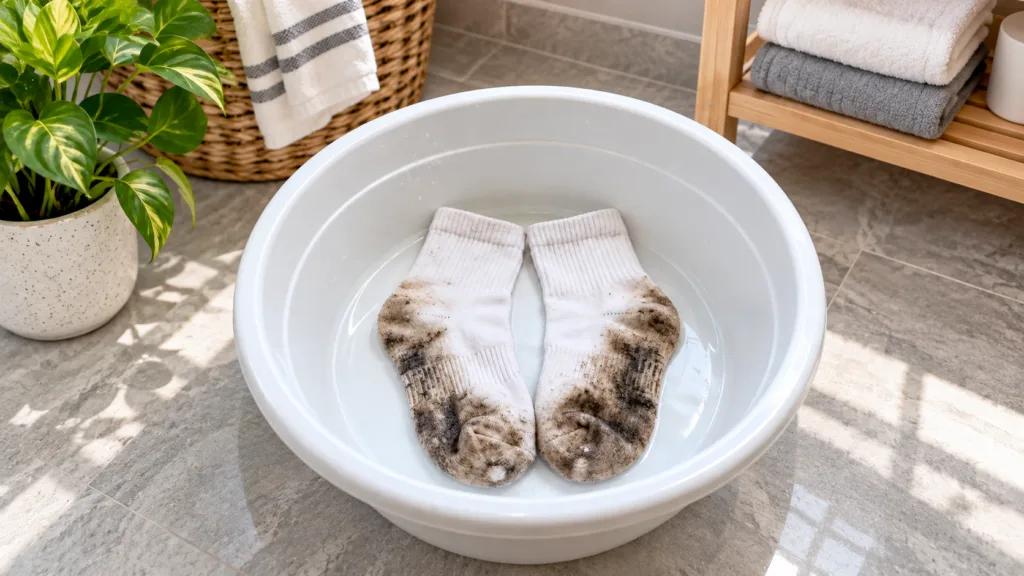
- Pre-Soak in Hot Water (30-60 minutes): Fill your basin or bucket with hot water, as hot as you can comfortably handle (or as hot as your machine allows for whites). Add about 1/4 cup of your regular laundry detergent. Submerge the dirty white socks completely in this soapy water. Let them soak for at least 30 minutes, or up to an hour for heavily soiled socks. This helps to loosen general dirt and grime.
- Add the Whitening Power (2 minutes): After the initial soak, drain the soapy water. Rinse the socks briefly under running water. Now, place the damp socks back into the basin. Sprinkle 1/2 to 1 cup of baking soda directly onto the socks, ensuring it’s distributed over all the garments.
- Optional: Boost with Vinegar or Lemon (1 minute): For an extra whitening boost and to neutralize odors, pour 1/2 cup of white vinegar over the socks. If you plan to dry them in the sun, you can also squeeze the juice of 1-2 lemons over them at this stage. The combination of baking soda and vinegar will create a fizzing reaction, which is normal and indicates the ingredients are working to lift stains.
- Soak for Deep Cleaning (2-4 hours or overnight): Add just enough hot water to cover the socks again. Mix gently to ensure the baking soda (and vinegar/lemon, if used) is well distributed. Let the socks soak in this powerful solution for at least 2-4 hours. For extremely yellowed or stained socks, an overnight soak can yield even better results.
- Scrub Stubborn Spots (5-10 minutes, if needed): After soaking, if you notice any particularly stubborn stains, put on your gloves. Take a sock out, place it on a clean surface, and use a soft-bristled brush (an old toothbrush works well) or simply rub the fabric against itself to gently scrub the stained areas with the baking soda paste.
- Normal Wash Cycle (Standard wash time): Drain the soaking water. Wring out the socks and transfer them to your washing machine. Wash them on a regular hot cycle with your usual laundry detergent. You can add a little extra baking soda or vinegar directly to the wash if you wish.
- Dry Properly (Varies by method): Once washed, remove the socks. If you used lemon juice in the earlier steps, hang them to dry in direct sunlight. The sun’s UV rays, combined with the lemon, act as a natural bleach, enhancing the whitening effect. Otherwise, you can tumble dry on a low setting or air dry indoors.
Expert Tips
- Pre-Treating is Key: For specific, visible stains (like grass or mud), always pre-treat them with a stain remover or a paste of baking soda and water before the soaking process.
- Don’t Overload: Avoid stuffing too many socks into the basin. Allow enough space for the cleaning solution to circulate and penetrate all the fabric evenly.
- Separate Whites: Always wash white socks separately from colored garments to prevent dye transfer, which can easily undo all your whitening efforts.
- Avoid High Heat Drying: If your socks are still not as white as you’d like, avoid drying them in a high-heat dryer. High heat can set in stains and yellowing, making them harder to remove later. Air dry instead, and repeat the whitening process if necessary.
- Regular Maintenance: Incorporate this whitening trick into your laundry routine every few washes, especially for frequently used white socks, to keep them consistently bright.
- Use Quality Detergent: While natural ingredients do most of the work, a good quality laundry detergent designed for whites can enhance the overall cleaning and brightening.
Variations for Different Needs
- Hydrogen Peroxide Boost: For an alternative powerful whitener, add 1/2 cup of 3% hydrogen peroxide to the soaking water along with the baking soda instead of vinegar. Hydrogen peroxide is an excellent oxygen-based bleach alternative.
- Overnight Soak Method: For severely yellowed or heavily stained socks, extend the soaking time to overnight (8-12 hours) in the baking soda and hot water solution. The longer contact time can significantly improve results.
- For Delicate White Socks: If your white socks are made of delicate materials, use lukewarm water instead of hot water for soaking. Reduce the scrubbing intensity and opt for a gentle wash cycle.
- Bleach Alternative Soak: While this guide focuses on natural methods, if you prefer a non-chlorine bleach, you can add an oxygen-based laundry booster (following product instructions) to the soaking water instead of baking soda and vinegar.
Post-Wash Care and Storage
Once your white socks are sparkling clean, proper care can help maintain their brilliance longer:
- Thorough Drying: Always ensure your socks are completely dry before storing them. Damp socks can develop mildew, leading to unpleasant odors and potential discoloration.
- Store in a Clean, Dry Place: Keep your white socks in a dedicated drawer or section of your closet that is clean, dry, and free from dust.
- Fold or Roll Neatly: Neatly folding or rolling your socks prevents them from getting tangled or picking up accidental marks from other items.
- Avoid Contact with Dyes: Try to store white socks away from brightly colored garments or items that might bleed dye over time, especially if they are new.
- Promptly Address New Stains: If your socks get stained again, address the stain as soon as possible. Fresh stains are always easier to remove than old, set-in ones.
Safety Notes
- Protect Your Hands: While baking soda and vinegar are generally mild, prolonged contact with hot water and cleaning solutions can dry out or irritate your skin. Wearing rubber gloves is a good practice.
- Ventilation: When using hot water and solutions, ensure you are in a well-ventilated area, especially if you opt to use any commercial boosters.
- Never Mix Bleach and Vinegar: This is a crucial safety warning. Never combine white vinegar (or any acid) with chlorine bleach, as it creates highly toxic chlorine gas. Since this method doesn’t use bleach, this is a general caution for laundry.
- Surface Compatibility: Ensure your basin or bucket is clean and compatible with hot water and the cleaning agents used to avoid any damage or discoloration to your equipment.
- Keep Out of Reach: Store baking soda, vinegar, and any other cleaning products out of reach of children and pets.
Frequently Asked Questions
How often should I whiten my socks?
For frequently worn white socks, incorporating this whitening trick every 2-4 washes can help maintain their brightness. For occasional use, you can do it as needed when you notice discoloration.
Can I use bleach to whiten my socks?
While chlorine bleach can whiten, it’s a harsh chemical that can weaken fabric fibers over time and may cause yellowing if not used correctly. This guide focuses on natural alternatives that are gentler on your socks and the environment.
Does baking soda damage fabric?
No, baking soda is very gentle and safe for most fabrics. It acts as a natural deodorizer and mild abrasive that helps lift dirt without harming the fibers.
Does this method work for other white garments?
Yes, this method can often be adapted for other white cotton or cotton-blend garments like t-shirts, underwear, or dish towels. Always test on an inconspicuous area first if you’re unsure about the fabric.
What if a specific stain doesn’t come out?
For very stubborn stains, you might need to repeat the soaking and scrubbing process. For some extreme stains, specialized stain removers may be necessary, but try the natural method a couple of times first.
Is it safe for colored patterns on white socks?
While this method is generally safe, for socks with colored patterns, there’s a slight risk of colors fading or running, especially with prolonged sun drying or very hot water. Test a small area or consider a milder, shorter soak.
Conclusion
Bringing your white socks back to their original brilliance doesn’t have to be a daunting task filled with harsh chemicals and endless scrubbing. With this simple, effective, and natural home trick, you can restore your dingy white socks to a pristine condition using ingredients you likely already have. It’s an empowering way to tackle laundry challenges, save money, and contribute to a more sustainable home.
So, the next time you look at your tired white socks, don’t despair! Grab your baking soda, some hot water, and get ready to witness a remarkable transformation. Give this method a try, and enjoy the satisfaction of perfectly white, fresh-looking socks once again!