Are you dreaming of a bountiful garden but constantly battling with less-than-ideal soil? Don’t despair! Many gardeners face the challenge of poor soil, whether it’s too sandy, too clayey, or simply lacking in essential nutrients. But here’s a secret: you don’t always need perfectly rich, loamy soil to enjoy a fantastic harvest. In fact, some vegetables surprisingly thrive even when conditions are tough! Let’s explore some resilient heroes that can turn your ‘poor soil’ woes into a ‘rich harvest’ triumph.
Understanding Poor Soil: It’s Not Always a Deal-Breaker
Before we dive into the stars of our show, let’s briefly define what we mean by ‘poor soil’. It could be:
- Compacted clay: Drains poorly, making it hard for roots to spread and for air and water to penetrate.
- Sandy soil: Drains too quickly, leaching nutrients away and drying out fast.
- Nutrient-deficient: Lacks essential minerals vital for plant growth.
- Imbalanced pH: Too acidic or too alkaline, hindering nutrient uptake.
While these conditions can be challenging, certain vegetables have evolved to tolerate, and even thrive in, these less-than-perfect environments. Their resilience comes from various adaptations, such as extensive root systems, lower nutrient demands, or tolerance to specific soil structures.
Surprising Veggies That Love a Challenge
Get ready to add these tough-as-nails vegetables to your garden plan!
Garlic
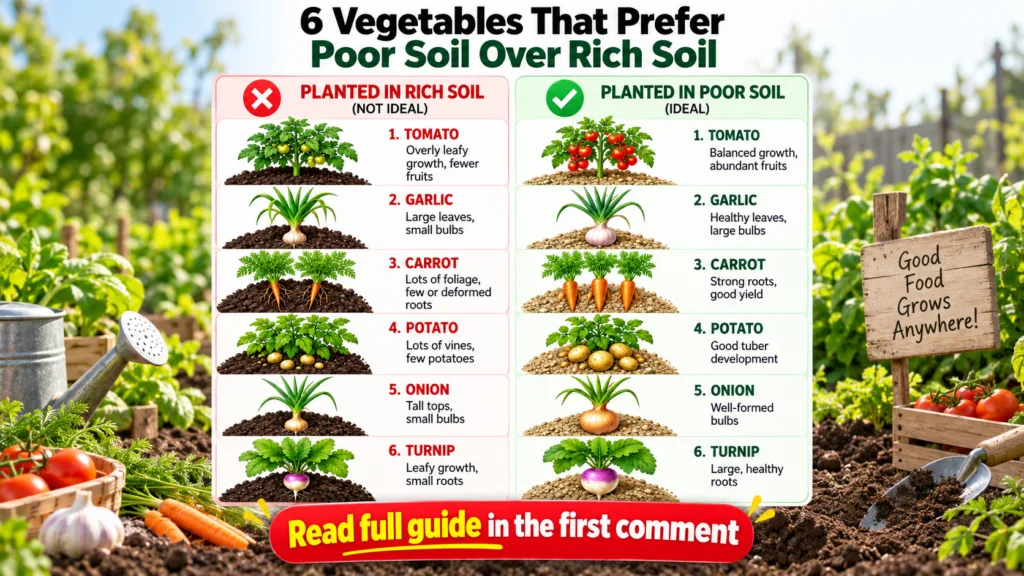
Garlic is a fantastic choice for poor soil, often doing well even in heavier clay soils, as long as it has good drainage. It’s not a heavy feeder and can produce robust bulbs without an overly rich environment. Plant individual cloves in the fall, and by next summer, you’ll be harvesting pungent garlic to use in all your favorite dishes!
Onions
Similar to garlic, onions are surprisingly tolerant of poor soil conditions. They prefer a slightly sandy loam but can adapt to heavier soils too. The key for both onions and garlic is consistent moisture and sunlight. Don’t expect giant prize-winners in truly barren soil, but you’ll certainly get a usable, delicious harvest.
Carrots
While carrots are famously known for needing loose, stone-free soil to grow straight, they are not necessarily heavy feeders. In fact, too much nitrogen in rich soil can lead to more leafy tops and less root development. Sandy, less fertile soil, provided it’s free of obstructions, can actually encourage carrots to send down strong, straight taproots in search of nutrients and moisture. Just make sure the soil isn’t too compacted.
Potatoes
Often considered a staple crop, potatoes are quite adaptable. While they certainly appreciate good, well-draining soil, many varieties can produce a decent yield even in less fertile conditions. The main considerations are adequate moisture and hilling (mounding soil around the plants as they grow) to protect the developing tubers from sunlight. Experiment with different varieties to find the ones best suited to your specific soil.
Turnips
These root vegetables are true champions of poor soil. Turnips are quick-growing and can produce edible roots and greens in a wide range of soil types, including those that are less fertile. They don’t require much fuss and are a rewarding crop for beginner gardeners or those with challenging plots.
Tomatoes (The Surprising Contender!)
This might come as a surprise, as tomatoes are often considered heavy feeders. However, certain determinate (bush) varieties and heirloom types can be remarkably resilient. While they won’t produce as prolifically as in rich soil, they can still yield a satisfactory harvest. The trick is to ensure they get plenty of sun and consistent watering. Starting with good quality compost in the planting hole can give them a much-needed boost without completely amending your entire plot.
Tips for Maximizing Your Harvest in Poor Soil
Even with resilient veggies, a little help goes a long way:
- Add Organic Matter: Incorporate compost, well-rotted manure, or leaf mold into your soil. Even small additions can significantly improve soil structure, water retention, and nutrient availability over time.
- Raised Beds: If your native soil is truly problematic, consider building raised beds and filling them with a good quality soil mix. This gives you complete control over the growing medium.
- Container Gardening: For very limited space or extremely poor soil, growing vegetables in containers is an excellent option.
- Mulch Heavily: A layer of organic mulch (straw, wood chips, shredded leaves) helps retain moisture, regulate soil temperature, suppress weeds, and slowly add organic matter as it breaks down.
- Water Wisely: Poor soil can dry out quickly (sandy) or become waterlogged (clay). Adjust your watering schedule to match your soil type, ensuring plants get enough moisture without being drowned.
- Choose the Right Varieties: Research specific varieties known for their hardiness and adaptability to less-than-ideal conditions.
Embrace the Challenge!
Don’t let poor soil hold you back from the joy of gardening. By selecting resilient vegetables and implementing a few smart gardening practices, you can still achieve a wonderful and rewarding harvest. So, roll up your sleeves, pick out some of these tenacious plants, and watch your garden flourish, proving that even in poor soil, a rich harvest is absolutely possible. Happy gardening!