Every gardener dreams of a thriving, vibrant space, but sometimes pesky intruders can make that dream feel out of reach. Before you reach for harsh chemicals, consider a natural solution: your garden’s unsung heroes, the beneficial insects! These tiny allies are crucial for maintaining a healthy garden ecosystem, working tirelessly to keep harmful pests in check. Learning to identify them is the first step in nurturing a truly organic and flourishing garden.
It’s all too common for gardeners to mistake a beneficial insect for a pest, accidentally eliminating the very creatures that could save their plants. This guide will help you recognize these invaluable helpers in both their adult and larval stages, ensuring you can protect them and leverage their natural pest control abilities.
Why Beneficial Insects Are Your Garden’s Best Allies
Beneficial insects offer a sustainable and eco-friendly approach to pest management. They reduce the need for synthetic pesticides, which can harm the environment, pollinators, and even human health. By encouraging these natural predators, you’re building a more resilient garden that can largely take care of itself. They play vital roles, from pollination to preying on aphids, slugs, and other common garden nuisances.
Key Beneficial Adults You Should Know
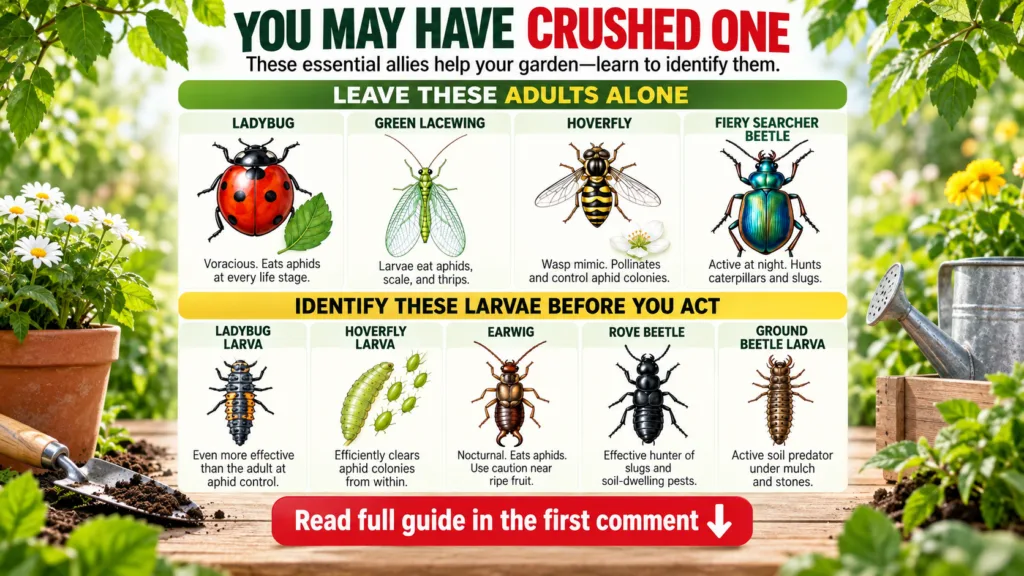
Many beneficial insects are easily identifiable in their adult forms. Recognizing them can prevent accidental harm and help you create an inviting habitat.
Ladybugs (Lady Beetles)
- Appearance: Small, dome-shaped beetles, typically red or orange with black spots.
- Role: Adults and larvae are voracious predators of aphids, scale insects, and mites.
Lacewings (Green and Brown)
- Appearance: Delicate, green or brown insects with large, lacy wings and golden eyes.
- Role: Adults primarily feed on nectar and pollen, but their larvae (often called ‘aphid lions’) are fierce predators of aphids, thrips, and other soft-bodied pests.
Hoverflies (Syrphid Flies)
- Appearance: Often mistaken for bees or wasps due to their yellow and black striped bodies, but they have only two wings and a characteristic hovering flight.
- Role: Adults are important pollinators, while their slug-like larvae consume large numbers of aphids and other small pests.
Praying Mantises
- Appearance: Large, green or brown insects with distinctive triangular heads and folded front legs.
- Role: Excellent generalist predators, they eat a wide variety of insects, including grasshoppers, flies, and caterpillars.
Spotting Beneficial Larvae: Don’t Mistake Them for Pests!
This is where many gardeners make mistakes! The larval stages of beneficial insects often look very different from their adult forms and can be easily confused with pests. Learning to identify them is critical.
Ladybug Larvae
- Appearance: Small, alligator-like creatures, often black or grey with orange or red markings, spiky bodies, and six legs. They move quickly.
- Why they’re important: They consume hundreds of aphids before pupating.
Lacewing Larvae (Aphid Lions)
- Appearance: Small, mottled grey or brown, alligator-like larvae with prominent, pincer-like jaws.
- Why they’re important: True to their name, they are relentless hunters of aphids and other small pests.
Hoverfly Larvae
- Appearance: Small, legless, greenish or brownish maggots, somewhat slug-like, found on leaves among aphid colonies.
- Why they’re important: They latch onto aphids and suck them dry, clearing your plants of these common nuisances.
How to Attract and Keep Beneficial Insects in Your Garden
Once you know who your garden’s friends are, the next step is to create a welcoming environment for them. Here are a few tips:
- Plant a Diversity of Flowers: Many beneficial adults feed on nectar and pollen. Include a variety of flowering plants with different bloom times and flower shapes to provide a continuous food source. Examples include dill, fennel, cilantro, cosmos, and sunflowers.
- Provide Shelter: Leave some areas of your garden a little wild with tall grasses, leaf litter, or an insect hotel to offer overwintering sites and refuge.
- Avoid Broad-Spectrum Pesticides: These chemicals kill beneficial insects along with the pests. Opt for targeted, organic solutions only when absolutely necessary, or better yet, let your beneficials do the work!
- Water Source: A shallow dish of water with pebbles for landing can be a huge draw for many insects.
- Consider Companion Planting: Some plants naturally attract beneficial insects. For example, planting marigolds or nasturtiums can draw ladybugs and lacewings.
Cultivating a Balanced Garden
Embracing beneficial insects is a cornerstone of organic and sustainable gardening. By learning to identify these tiny heroes and providing them with a hospitable habitat, you’re not just controlling pests; you’re fostering a vibrant, resilient, and beautiful garden ecosystem. So next time you see a strange creature crawling on your plants, take a closer look – it might just be your garden’s best friend at work!