Welcome back to Garden – L. Quyên! Today, we’re diving into a wonderful secret weapon for your garden that’s probably already in your spice cabinet: cloves! If you’re passionate about nurturing your plants naturally and keeping those pesky garden invaders at bay without harsh chemicals, you’re in for a treat. The gentle art of cloves isn’t just about cooking; it’s a fantastic way to protect your beloved plants.
Many gardeners face the common struggle of keeping their plants healthy and vibrant amidst constant threats from pests. While there are numerous solutions out there, finding one that aligns with organic principles and is safe for your family and the environment can be challenging. That’s where the aromatic power of cloves comes into play!
Why Cloves for Natural Pest Control?
Cloves, derived from the dried flower buds of the clove tree (Syzygium aromaticum), are renowned for their strong, distinctive aroma. This very scent, which we find appealing in our kitchens, is what many common garden pests absolutely detest. The eugenol present in cloves acts as a natural repellent, confusing pests and deterring them from munching on your precious greens.
Using cloves for pest control offers several benefits:
- It’s Natural and Non-Toxic: Say goodbye to concerns about harmful residues on your fruits, vegetables, and flowers.
- Cost-Effective: You likely already have cloves, or they are readily available and affordable.
- Safe for Beneficial Insects: When used correctly, natural clove sprays are less likely to harm beneficial insects like bees and ladybugs, which are essential for a healthy ecosystem.
- Pleasant Aroma: Unlike many commercial pesticides, a clove-scented garden is a delightful bonus!
Pests That Cloves Can Help Deter
While cloves aren’t a one-stop solution for every single pest, they are particularly effective against a range of common garden nuisances:
- Aphids: These tiny sap-sucking insects can quickly devastate young plants.
- Ants: Cloves can disrupt ant trails and deter them from nesting near your plants.
- Spider Mites: The strong scent can make your plants less appealing to these microscopic pests.
- Some Fungus Gnats: In indoor plants, a clove solution can help deter these small, annoying flies.
Crafting Your Own Natural Clove Spray
Making a clove-based pest deterrent is incredibly simple and requires just a few basic ingredients. Here’s a step-by-step guide to preparing your own effective natural spray:
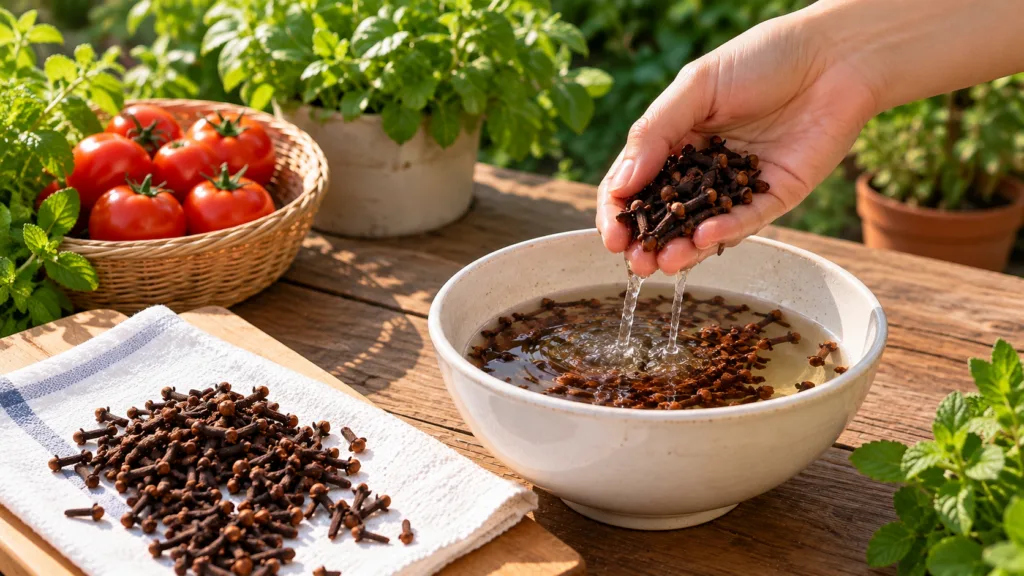
What You’ll Need:
- 1 tablespoon of whole cloves (or 1 teaspoon of ground cloves)
- 2 cups of hot water (boiled and slightly cooled)
- A spray bottle
- Optional: A few drops of natural dish soap (to help the spray adhere to leaves)
Instructions:
- Infuse the Cloves: Place the whole cloves (or ground cloves) into a heat-resistant container. Pour the hot water over them. The heat will help extract the aromatic oils from the cloves.
- Steep: Allow the mixture to steep for at least 24 hours, or even up to 48 hours, at room temperature. The longer it steeps, the stronger the solution will be. You’ll notice the water darkening and taking on the distinct clove aroma.
- Strain: After steeping, strain the liquid through a fine-mesh sieve or cheesecloth to remove all the clove particles. This is crucial, especially if you used ground cloves, to prevent clogging your spray bottle.
- Add Soap (Optional): If you choose to add dish soap, mix in 2-3 drops per cup of strained clove water. This helps the spray stick to the leaves of your plants, increasing its effectiveness.
- Bottle and Store: Pour the strained and optionally soaped solution into your clean spray bottle.
How to Apply Your Clove Spray for Best Results
Once your natural clove spray is ready, proper application is key to its success:
- Test First: Always do a small patch test on a hidden part of a plant before full application, especially if you added soap, to ensure there’s no adverse reaction.
- Spray Directly on Pests: For visible pests like aphids, spray directly onto them, making sure to coat the undersides of leaves where they often hide.
- Preventative Spray: For general deterrence, mist your plants lightly every 5-7 days, or after heavy rain, especially those known to be susceptible to specific pests.
- Time of Day: Apply the spray in the early morning or late evening when the sun is not intense. This prevents leaf burn and allows the solution to work effectively before evaporating too quickly.
- Consistency is Key: Natural remedies often require consistent application to be most effective. Don’t get discouraged if you don’t see instant results; regular use builds protection.

Beyond the Spray: Other Clove Uses in the Garden
While the spray is potent, there are other ways to harness the power of cloves:
- Clove Sachets: For indoor plants, place small sachets of whole cloves near pots to deter fungus gnats and other household pests.
- Ground Clove Sprinkle: A light sprinkle of ground cloves around the base of plants can help deter ants and slugs, but be mindful not to overdo it as it can affect soil pH slightly.
- Clove Oil: Highly concentrated clove essential oil can be diluted with a carrier oil and then emulsified in water with soap for a more potent spray, but always use with caution due to its strength.
Embracing natural pest control methods like this clove spray is a rewarding step towards a more sustainable and harmonious garden. Not only are you protecting your plants, but you’re also fostering a healthier environment for everyone. Give this gentle art of cloves a try in your garden, and watch your plants thrive!