Are you looking for a natural way to support hair growth and thickness while reducing hair fall? This simple DIY hair rinse combines the power of fenugreek, rice, and cloves to create a homemade remedy that may help your hair look and feel its best.
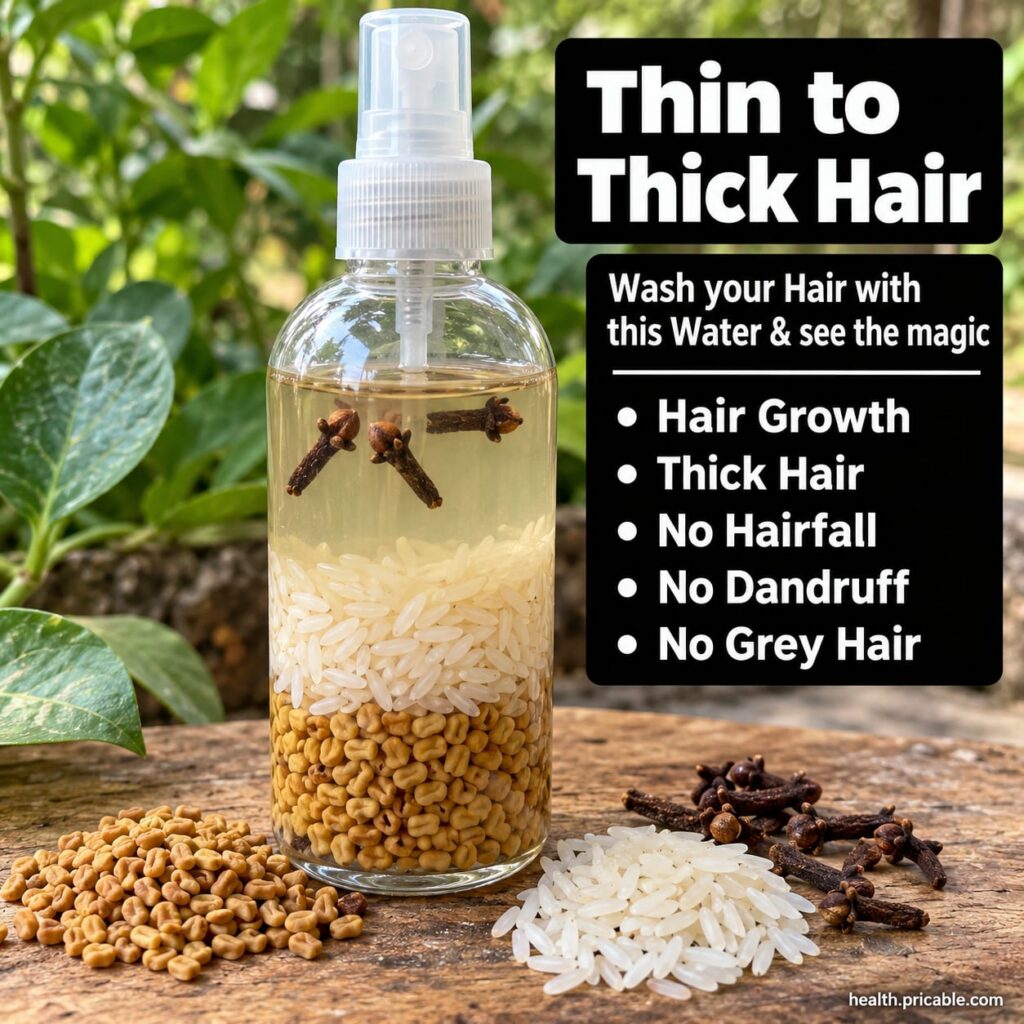
Quick Recipe
Prep time: 15 minutes active + 8-12 hours infusion
Best for: Promoting hair growth, supporting hair thickness, reducing hair fall
Use type: Hair rinse
Main ingredients:
- Fenugreek seeds
- White rice
- Whole cloves
Ingredients
- 2 tablespoons fenugreek seeds
- 1/4 cup uncooked white rice (such as jasmine or basmati)
- 1 teaspoon whole cloves (approximately 5-7 cloves)
- 2 cups filtered water
How to Make It
- Rinse the Rice: Place the 1/4 cup of rice in a fine-mesh sieve and rinse it under cold running water until the water runs clear. This helps remove excess starch and impurities.
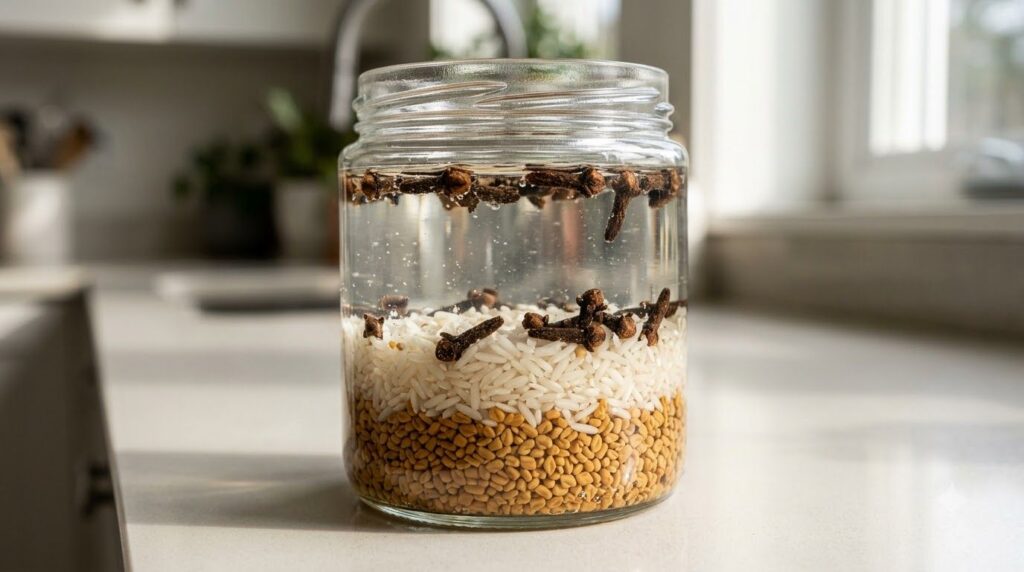
- Combine Ingredients: Transfer the rinsed rice, fenugreek seeds, and whole cloves into a clean, heat-proof glass jar or bowl.
- Add Water: Pour the 2 cups of filtered water over the ingredients. Ensure everything is submerged.
- Soak and Infuse: Cover the jar or bowl and let the mixture sit at room temperature for 8 to 12 hours. This allows the ingredients to infuse their beneficial properties into the water. For a stronger infusion, you can soak it overnight.
- Strain the Rinse: After the infusion period, strain the liquid through a fine-mesh sieve or cheesecloth into a clean spray bottle or a sealable container. Discard the solids.
- Store: Your fenugreek and rice water hair rinse is ready to use. Store it in the refrigerator to maintain freshness.
How to Use It
- Shampoo Hair: Start by shampooing your hair as usual and rinsing thoroughly.
- Apply the Rinse: After shampooing and conditioning (if desired), pour or spray the fenugreek and rice water rinse evenly over your scalp and hair, from roots to ends.
- Massage: Gently massage your scalp for 2-3 minutes to ensure good absorption and stimulate circulation.
- Leave On or Rinse: You can choose to leave the rinse in your hair, especially if you prefer a leave-in treatment. Alternatively, let it sit for 10-20 minutes before rinsing with cool water. Some people prefer not to rinse for maximum benefits, but this depends on your hair type and preference.
- Style: Proceed with your regular hair styling routine.
How Often to Use It
For best results, use this fenugreek and rice water hair rinse 1 to 2 times per week. Consistent use over several weeks is key to observing potential benefits.
Why These Ingredients Are Used
Fenugreek Seeds
Fenugreek seeds are rich in protein, iron, and nicotinic acid, which are traditionally believed to help strengthen hair follicles and reduce hair shedding. They also contain compounds that may support a healthy scalp environment, promoting the appearance of thicker hair.
Rice Water
Rice water, particularly fermented rice water, is a traditional beauty secret in many cultures. It contains amino acids, B vitamins, Vitamin E, and antioxidants, which can help strengthen hair, improve its elasticity, and add shine. It’s often associated with promoting healthy hair growth and a smoother appearance.
Whole Cloves
Cloves are known for their anti-inflammatory and antiseptic properties, which can be beneficial for scalp health. They contain compounds like eugenol, which may help stimulate blood circulation to the scalp, potentially supporting hair growth and contributing to overall hair vitality.
What Results to Expect
With regular use, this fenugreek and rice water hair rinse may help your hair feel stronger and appear thicker. You might notice a reduction in hair fall and an improvement in overall hair texture and shine. Remember, natural remedies work gradually, so consistency is important to see visible changes and support a healthier-looking mane.
Safety Notes
- Patch Test First: Always perform a patch test on a small area of skin (e.g., behind your ear or inner arm) 24 hours before applying the rinse to your entire scalp and hair to check for any allergic reactions or irritation.
- Use Gently: Apply the rinse gently and avoid vigorous rubbing, especially if your scalp is sensitive.
- Avoid Irritated or Broken Skin: Do not apply the rinse to a scalp with open wounds, cuts, or severe irritation.
- Stop Using If Discomfort Occurs: If you experience any redness, itching, burning, or discomfort, discontinue use immediately.
- Storage: Since this is a water-based remedy, it can spoil. Store the strained rinse in an airtight container in the refrigerator for up to one week. Discard if it develops an unusual smell or appearance.
- Eye Contact: Avoid getting the rinse into your eyes. If contact occurs, rinse thoroughly with cool water.

FAQ
Can I use fermented rice water in this recipe?
Yes, you can use fermented rice water. To ferment, simply let the strained rice water sit at room temperature for an additional 12-24 hours after the initial infusion, until it develops a slightly sour smell. Fermentation can enhance the nutrient content, but be mindful of the stronger smell.
How long will it take to see results?
Results vary from person to person, but with consistent use (1-2 times a week), you may start to notice improvements in hair texture, shine, and reduced hair fall within 4-6 weeks. Significant changes in hair growth and thickness may take longer, often several months.
Can I add essential oils to this rinse?
Yes, once the rinse is cooled and strained, you can add a few drops of hair-beneficial essential oils like rosemary, peppermint, or lavender oil. Always dilute essential oils properly by adding them to the final rinse and perform a patch test, as they are potent.
Final Thoughts
Embracing natural hair care can be a rewarding journey, and this fenugreek, rice, and clove hair rinse offers a simple yet powerful way to support your hair’s health. By incorporating this traditional remedy into your routine, you can provide your scalp and strands with beneficial nutrients that may help promote a thicker, stronger, and more vibrant-looking mane. Give it a try and see how these accessible ingredients can make a difference in your hair care routine.