Welcome, fellow garden enthusiasts! Have you ever wondered why some plants thrive effortlessly while others struggle, despite your best efforts? Often, the secret lies beneath the surface: in the soil! Just like we need the right nutrition to flourish, our plants depend on the perfect soil mix to grow strong, healthy, and vibrant. Choosing the right soil isn’t just about dumping dirt into a pot; it’s about providing a tailor-made environment that meets your plant’s specific needs. Today, we’re going to unlock the mystery of soil types and help you become a true green-thumb expert!
Understanding soil is fundamental to successful gardening. Different plants have different requirements for drainage, nutrients, and aeration. Using the wrong soil can lead to stunted growth, nutrient deficiencies, or even root rot. But don’t worry, once you know the basics, you’ll be able to select the ideal foundation for all your gardening projects, from delicate seedlings to bountiful vegetable patches.
The Foundation of Growth: Why Soil Matters
Soil isn’t just dirt; it’s a living ecosystem teeming with microorganisms that help break down organic matter and deliver essential nutrients to your plants. Good soil provides several critical functions:
- Nutrient Supply: It stores and releases vital nutrients like nitrogen, phosphorus, and potassium, which plants absorb through their roots.
- Water Retention & Drainage: It holds moisture for plants to use while also allowing excess water to drain away, preventing waterlogging.
- Aeration: It provides air pockets for roots to breathe, which is crucial for nutrient uptake and overall plant health.
- Anchorage: It provides a stable base for plants to grow and develop strong root systems.
Knowing this, it becomes clear why choosing the right type of soil for each specific plant or gardening scenario is so important.
Understanding Different Soil Types and Their Uses
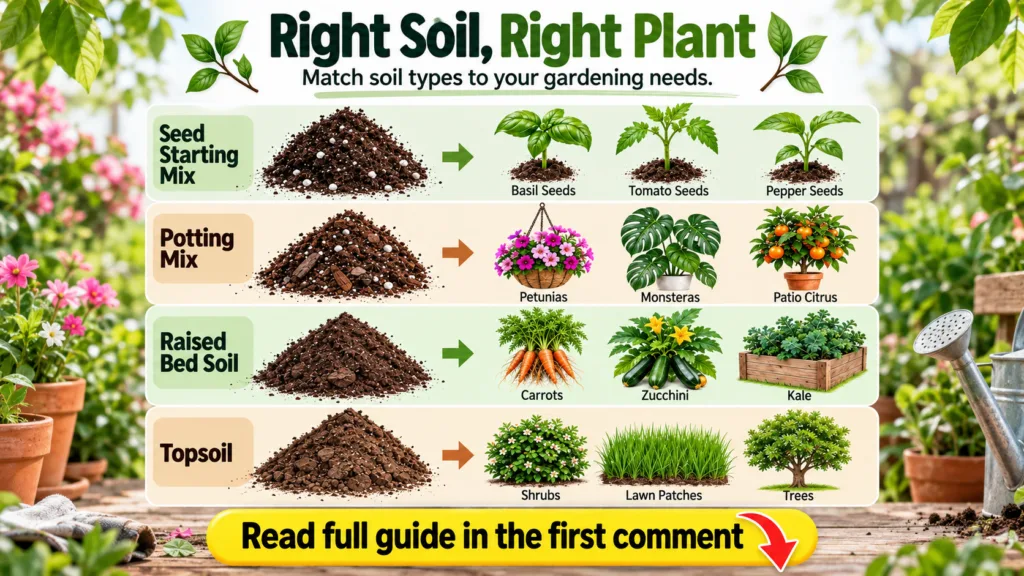
Let’s dive into the different kinds of soil mixes you’ll encounter and what makes each one unique.
1. Seed Starting Mix
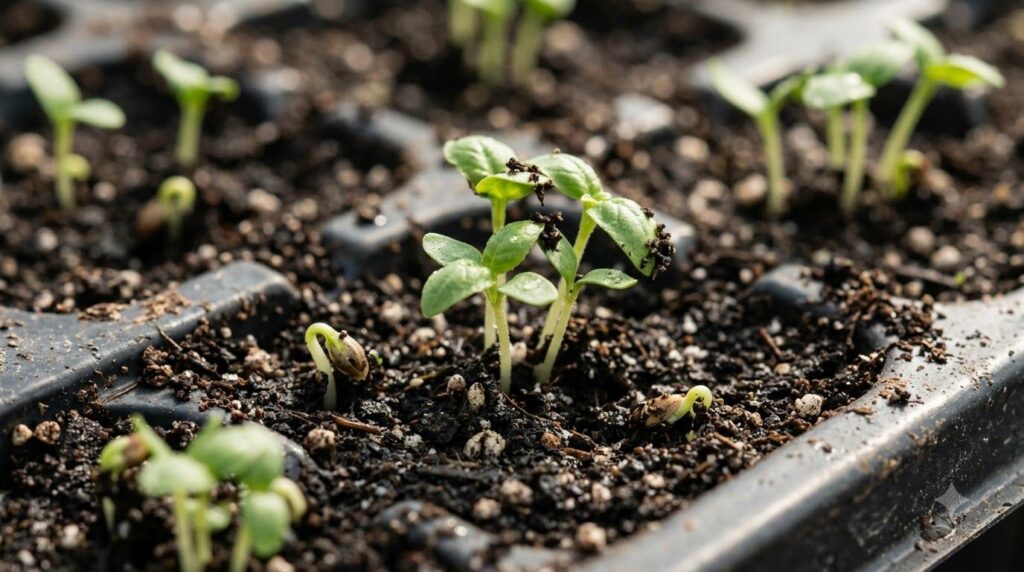
What it is: This is a fine, lightweight, sterile mix, typically made from peat moss, perlite, and/or vermiculite. It’s often pH-balanced and designed to be free of disease-causing pathogens.
Why it’s great: Its fine texture allows tiny roots to easily penetrate, while its sterile nature prevents ‘damping-off’ disease, a common killer of young seedlings. It also holds moisture consistently without becoming waterlogged.
Best for: Germinating seeds, rooting cuttings, and giving delicate seedlings a strong start before transplanting.
2. Potting Mix (Potting Soil)
What it is: A versatile, soilless mix designed for container gardening. It’s usually a blend of peat moss or coco coir, perlite or vermiculite, compost, and sometimes a slow-release fertilizer.
Why it’s great: Potting mix offers excellent drainage, good aeration, and retains moisture well, making it ideal for the confined space of pots and containers. It’s lighter than garden soil, preventing compaction, and provides a balanced environment for plant roots.
Best for: Houseplants, container vegetables, patio plants, hanging baskets, and any plant grown in a pot.
3. Raised Bed Soil
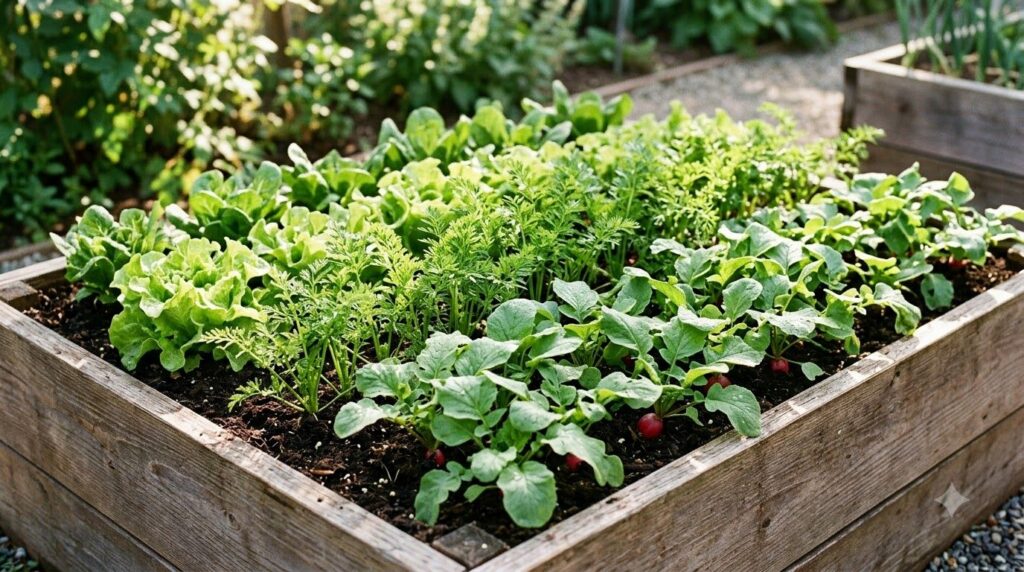
What it is: This is a heavier, nutrient-rich mix specifically formulated for raised garden beds. It often contains a blend of compost, topsoil, and amendments like perlite or vermiculite to ensure good drainage and aeration in a larger volume.
Why it’s great: Raised beds require soil that can withstand compaction over time while providing ample nutrients for a diverse range of plants. This mix supports healthy root development, offers superior drainage compared to in-ground gardens, and is built for long-term productivity.
Best for: Vegetable gardens, herb gardens, and perennial flowers planted in raised beds.
4. Topsoil
What it is: The uppermost layer of soil, typically rich in organic matter and nutrients, collected from natural ground. It can vary greatly in composition depending on its source, often containing a mix of sand, silt, and clay.
Why it’s great: Topsoil is excellent for filling in low spots, leveling garden beds, or improving existing in-ground soil. It’s cost-effective for large areas and provides a natural base for many outdoor plants.
Best for: Filling large areas, creating new garden beds, leveling uneven lawns, and as a base layer for in-ground planting. It’s generally not recommended for containers due to its density and potential for pests/diseases.
Tips for Choosing and Using Soil Wisely
- Read the Label: Always check the product description to ensure it matches your specific gardening needs. Don’t use garden soil in pots, and vice-versa.
- Consider Your Climate: If you live in a very hot or rainy area, you might need soil with extra drainage or water retention properties.
- Amend When Necessary: Even the right soil can benefit from amendments. Add compost for nutrient boost, perlite for drainage, or vermiculite for moisture retention.
- Don’t Re-use Potting Mix Indefinitely: Over time, potting mix loses its structure and nutrients. It’s best to refresh or replace it annually for container plants.
- Test Your Garden Soil: For in-ground gardens, a soil test can reveal nutrient deficiencies or pH imbalances, guiding you on how to amend your topsoil for optimal plant health.
Cultivate a Thriving Garden!
Choosing the right soil is truly one of the most impactful decisions you can make for your plants. By understanding the unique properties of seed starting mix, potting mix, raised bed soil, and topsoil, you’re empowering your garden to reach its full potential. So go ahead, get your hands dirty, and watch your garden flourish like never before! Your plants will thank you for providing them with the perfect foundation for growth and beauty.