Imagine biting into a perfectly ripe, sweet fruit, freshly picked from your own garden. For many home gardeners, the dream of an abundant fruit harvest can sometimes feel out of reach. But what if we told you that the secret to healthier trees and significantly bigger, juicier harvests lies in one essential gardening practice? That’s right – we’re talking about fruit tree pruning!
Pruning might seem intimidating, especially if you’re new to gardening, but it’s a fundamental technique that transforms your fruit trees from merely surviving into thriving, productive powerhouses. At Garden – L. Quyên, we believe every gardener deserves the joy of a bountiful harvest, and understanding the art of pruning is your first step towards achieving it.
Why Pruning Your Fruit Trees is Crucial for Success
Many gardeners hesitate to prune, fearing they might harm their trees. However, proper pruning is not about damaging the tree; it’s about guiding its growth, enhancing its health, and optimizing its fruit production. Think of it as giving your tree a strategic haircut!
The Benefits Beyond Just More Fruit
- Improved Fruit Quality and Quantity: By removing overcrowded branches, you allow more sunlight and air circulation to reach the remaining fruits, leading to larger, sweeter, and more uniformly ripened produce. Fewer, better-quality fruits are often more desirable than many small, inferior ones.
- Enhanced Tree Health and Vigor: Pruning removes dead, diseased, or damaged branches that can harbor pests and diseases, preventing their spread and allowing the tree to direct its energy towards healthy growth. It also encourages stronger branch structures, reducing the risk of breakage under heavy fruit loads.
- Better Air Circulation and Sunlight Penetration: A dense canopy can prevent sunlight from reaching inner branches and developing fruit, and restrict air movement, creating a humid environment that’s perfect for fungal diseases. Pruning opens up the canopy, promoting healthier growth and reducing disease risk.
- Manageable Tree Size and Shape: Pruning allows you to control the size and shape of your fruit trees, making harvesting easier, pest management more effective, and fitting them better into your garden space.
- Stimulates New Growth: Certain pruning cuts encourage the tree to produce new fruiting wood, ensuring consistent harvests year after year.
Understanding When and How to Prune
Knowing when to prune is almost as important as knowing how. Different pruning objectives often dictate different timing.
Timing is Everything: The Best Seasons for Pruning
- Dormant Season Pruning (Late Winter/Early Spring): This is the most common and generally recommended time for major structural pruning for most deciduous fruit trees (like apples, pears, plums, cherries, and peaches). The trees are leafless, making it easier to see their structure, and they are dormant, minimizing stress and sap loss. The cuts stimulate vigorous new growth in the spring.
- Summer Pruning: This type of pruning is often used for growth control and to improve light penetration. Light summer pruning can help slow down overly vigorous growth, encouraging the tree to put more energy into fruit development rather than leafy growth. It can also be done after fruiting for some varieties, particularly stone fruits.
Key Pruning Techniques Every Gardener Should Know
While specific techniques vary slightly between fruit types, several universal principles apply. The infographic below provides an excellent overview of essential cuts for various fruit trees.
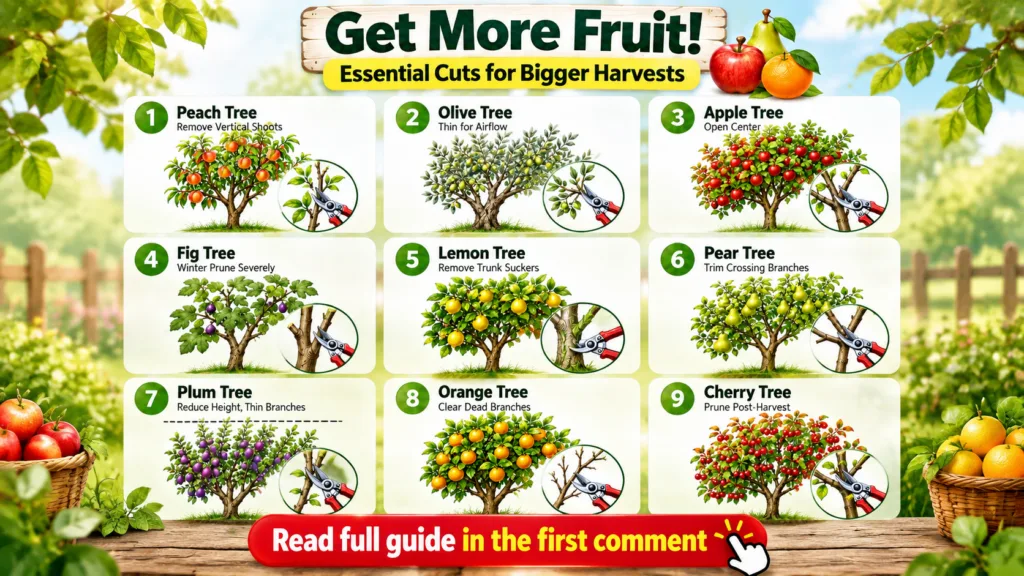
- Removing the Three D’s: Always start by identifying and removing any branches that are Dead, Diseased, or Damaged. This is crucial for tree health.
- Thinning Cuts: These cuts remove entire branches back to their point of origin (a main branch or trunk) or to a strong lateral branch. They are used to open up the canopy, improve air circulation, and reduce overall density.
- Heading Cuts: These cuts shorten a branch, removing a portion of its tip. They are used to encourage bushier growth, stimulate new side shoots, or control the direction of growth.
- Removing Water Sprouts and Suckers: Water sprouts are vigorous, upright shoots that grow from the main branches or trunk. Suckers grow from the rootstock or base of the tree. Both compete for nutrients and should be removed.
- Opening the Center: For many fruit trees, especially those grown in a ‘vase’ or ‘open center’ shape, removing crossing branches or those growing inwards helps to create an open structure that maximizes light penetration.
Essential Tools for Effective Pruning
Having the right tools makes all the difference for clean cuts and preventing damage to your trees:
- Hand Pruners (Bypass Shears): Ideal for small branches up to 3/4 inch thick.
- Loppers: For branches up to 1 1/2 to 2 inches thick, providing extra leverage.
- Pruning Saw: Essential for larger branches over 2 inches in diameter.
- Safety Glasses and Gloves: Always protect your eyes and hands!
Ensure your tools are always clean and sharp to make precise cuts that heal quickly, preventing disease entry.
General Pruning Tips for a Bountiful Orchard
- Start Small: If you’re new to pruning, begin with smaller, more manageable cuts. You can always remove more, but you can’t put it back!
- Understand Your Tree: Each fruit tree species has slightly different pruning needs. Do a little research on your specific varieties.
- Maintain a Strong Central Leader or Open Center: Depending on the desired form for your tree (e.g., central leader for apples/pears, open vase for peaches/nectarines), prune to maintain that structure.
- Don’t Over-Prune: Removing too much foliage can stress the tree and reduce its ability to photosynthesize, leading to reduced fruit production. Aim to remove no more than 20-30% of the canopy in a single year.
- Observe and Learn: Pay attention to how your tree responds to pruning. Over time, you’ll develop an intuitive understanding of what your trees need.
By incorporating proper pruning into your gardening routine, you’re not just maintaining your trees; you’re actively investing in their future health and your garden’s productivity. Get ready to enjoy the sweetest, juiciest harvests your garden has ever produced!