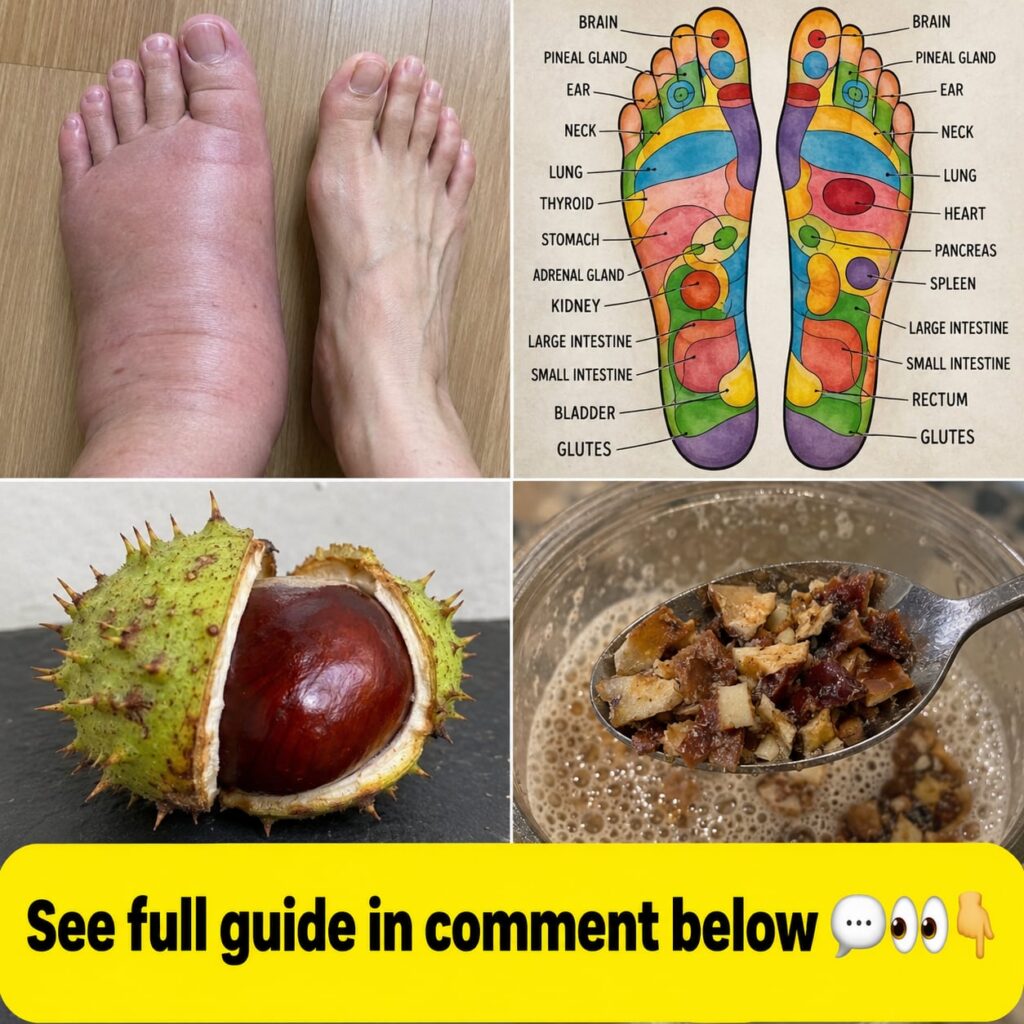
 Understand the common problem of swollen feet and the natural source of Horse Chestnut.
Most people associate healthy circulation with the heart, but often overlook the crucial role of the veins in our legs and feet. When these falter, the result can be uncomfortable, heavy, and visibly swollen feet and ankles. It’s a common issue, especially after long periods of standing or sitting, during pregnancy, or as we age. But what if a centuries-old natural remedy could offer practical relief?
While many reach for generic pain relievers or elevation, a specific botanical ingredient has a long-held tradition for soothing discomfort associated with leg and foot swelling: Horse Chestnut. However, one small preparation mistake can render it useless or, worse, harmful. This guide cuts through the confusion, offering a practical, safe way to incorporate this powerful plant into your routine for noticeable relief.
What is Horse Chestnut and How Does it Help?
Horse Chestnut, scientifically known as Aesculus hippocastanum, is a large deciduous tree native to the Balkans. It’s not related to the edible sweet chestnut; in fact, its raw nuts are toxic if ingested due to compounds like aesculin. The part of the plant that holds the beneficial compounds for circulatory health is primarily the seed (nut) and sometimes the bark.
The key active compound in Horse Chestnut that provides its therapeutic effects is called aescin (also spelled escin). Aescin is a mixture of triterpene saponins that have venotonic, anti-inflammatory, and anti-edematous (anti-swelling) properties. It works by strengthening capillary walls, reducing fluid leakage into surrounding tissues, and improving venous tone. This makes it particularly effective for conditions like chronic venous insufficiency (CVI), varicose veins, and general leg swelling (edema).
Did You Know?
The name “Horse Chestnut” is thought to come from the fact that its nuts were once fed to horses to relieve chest ailments, or because the scar left on the twig after the leaves fall resembles a horseshoe.
Choosing the Right Horse Chestnut Preparation
Given the toxicity of raw Horse Chestnut, it is absolutely crucial to use commercially prepared and standardized extracts, gels, or creams for topical application. Do NOT attempt to prepare remedies from raw nuts yourself for internal consumption, and exercise extreme caution even for external preparations of raw materials. Reputable manufacturers process the nuts to remove or neutralize toxic compounds while concentrating the beneficial aescin.
For soothing swollen feet, topical applications like gels, creams, or liquid extracts for compresses are generally the safest and most effective approaches for home use.
Ingredients for a Soothing Horse Chestnut Compress or Foot Soak
This method focuses on using a commercially prepared liquid extract or gel for maximum safety and efficacy.
- Commercially available Horse Chestnut liquid extract: Look for a standardized extract, preferably alcohol-free if you have sensitive skin, from a reputable herbal supplier.
- OR, a prepared Horse Chestnut gel or cream: Many brands offer topical gels specifically formulated for leg and foot swelling.
- Warm water: Filtered or distilled water is ideal, but tap water is usually fine for external use.
- Clean cloths or small towels: For making a compress.
- A foot basin: If opting for a foot soak.
Approximate Measurements
- For a compress: 1-2 teaspoons of liquid Horse Chestnut extract per cup (240ml) of warm water.
- For a foot soak: 2-4 tablespoons of liquid Horse Chestnut extract per gallon (approximately 3.8 liters) of warm water.
- For direct gel/cream application: A generous dollop, enough to cover the affected area.
Formula / Recipe: Horse Chestnut Topical Application
The “recipe” here is less about cooking and more about proper dilution and application of a safe, purchased product.
For a Compress:
- In a bowl, combine the warm water with the specified amount of liquid Horse Chestnut extract.
- Stir gently to ensure the extract is evenly dispersed.
- Submerge a clean cloth or small towel into the mixture until saturated.
For a Foot Soak:
- Fill a foot basin with warm water.
- Add the specified amount of liquid Horse Chestnut extract to the water.
- Stir the water gently to mix the extract thoroughly.
For Direct Gel/Cream Application:
- No mixing needed. Simply open the product.
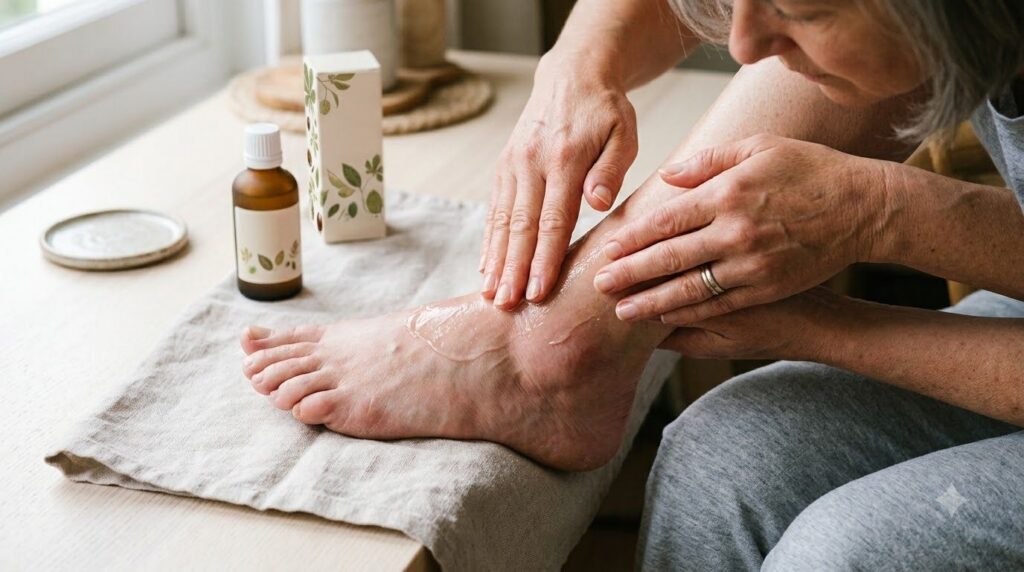 Gently apply Horse Chestnut gel or cream directly to areas of swelling.
Step-by-Step Method: How to Use It
Using a Horse Chestnut Compress:
- Prepare: Follow the “Formula / Recipe” above to create your Horse Chestnut water mixture.
- Apply: Wring out the saturated cloth lightly so it’s damp but not dripping.
- Place: Gently wrap or place the damp cloth around your swollen feet or ankles.
- Relax: Elevate your feet if possible and leave the compress in place for 15-30 minutes.
- Repeat: You can re-dampen the cloth and reapply if desired.
Using a Horse Chestnut Foot Soak:
- Prepare: Follow the “Formula / Recipe” above to fill your foot basin.
- Soak: Immerse your feet into the warm Horse Chestnut solution.
- Relax: Soak your feet for 20-30 minutes. Gently massage your feet while soaking for added relief.
- Dry: Pat your feet dry with a clean towel after the soak.
Using Horse Chestnut Gel or Cream:
- Cleanse: Ensure your skin is clean and dry before application.
- Apply: Squeeze a generous dollop of gel or cream onto your fingertips.
- Massage: Gently massage the product into your skin over the swollen areas, using upward strokes towards the heart. Do not rub vigorously.
- Absorb: Allow the gel or cream to fully absorb before covering the area.
How Often to Use
For acute swelling or discomfort, you can use a compress or foot soak 1-2 times daily. For ongoing support or chronic issues, applying a gel or cream once daily or every other day can be beneficial. Always follow the specific instructions on your purchased product, as concentrations can vary.
How to Choose & Buy Quality Horse Chestnut Ingredients
When purchasing Horse Chestnut products, quality and standardization are paramount due to the plant’s toxicity and the need for active compound concentration.
- Standardized Extracts: Look for products that state “standardized to 16-20% aescin.” This ensures a consistent and effective amount of the active compound.
- Reputable Brands: Buy from well-known herbal companies or pharmacies that have a history of quality control and third-party testing.
- Formulation: Decide between a liquid extract (for compresses/soaks) or a gel/cream (for direct application) based on your preference and need.
- Alcohol-Free Options: If you have sensitive skin, opt for alcohol-free liquid extracts or gels.
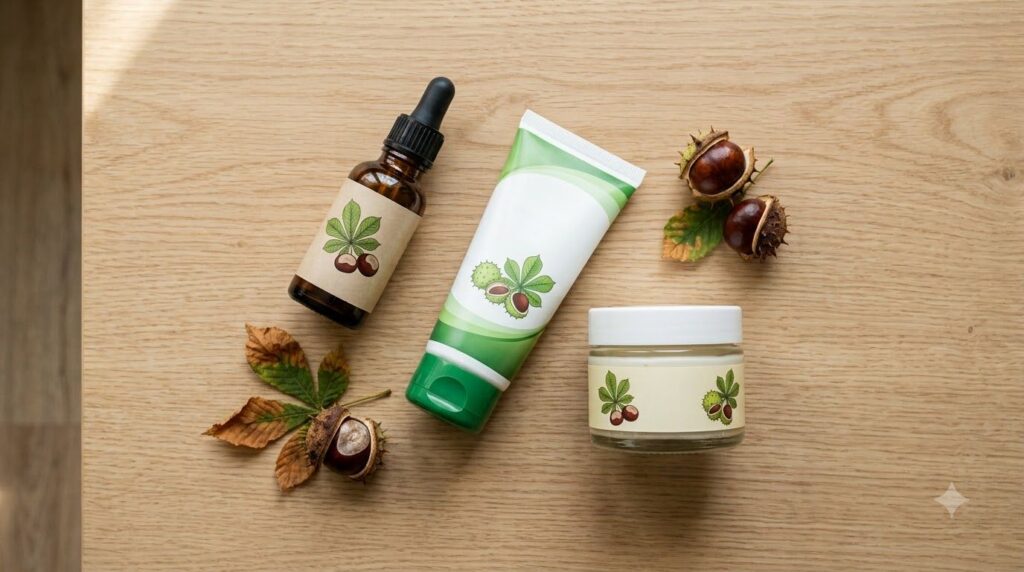 Always choose standardized and reputable Horse Chestnut extracts, gels, or creams.
Storage
Store liquid extracts and gels in a cool, dark place, away from direct sunlight and heat. Always keep the lid tightly sealed. Check the product’s packaging for specific storage instructions and expiration dates. Do not store prepared compress mixtures or foot soak solutions; always make a fresh batch for each use.
Practical Tips for Enhanced Relief
- Elevation: Always elevate your feet above heart level whenever possible, especially when resting or using a compress. This naturally aids fluid drainage.
- Movement: Regular, gentle exercise like walking or simple foot and ankle rotations can improve circulation.
- Hydration: Staying well-hydrated helps your body manage fluid balance.
- Compression Stockings: For chronic swelling, consider wearing graduated compression stockings during the day.
- Cooling Effect: While the compress or soak should be warm, a slightly cooler temperature can sometimes offer additional soothing for very hot, swollen feet.
Common Mistakes to Avoid
Using Horse Chestnut incorrectly can diminish its effectiveness or lead to adverse reactions.
- Using Raw Horse Chestnut: This is the most critical mistake. Raw Horse Chestnut nuts and leaves contain aesculin, a toxic compound. Always use commercially prepared, standardized products for safety.
- Applying to Broken Skin: Never apply Horse Chestnut extracts, gels, or creams to open wounds, cuts, or irritated skin, as it can cause further irritation or absorption of undesirable compounds.
- Ignoring Allergic Reactions: If you experience redness, itching, burning, or increased swelling after application, discontinue use immediately.
- Expecting Instant Cures: While Horse Chestnut can provide relief, it’s not a magic bullet. Consistency is key, and it works best as part of a holistic approach to managing swelling.
- Over-Concentrating: More isn’t always better. Stick to recommended dilutions for compresses and soaks to avoid skin irritation.
Comparison: External vs. Internal Horse Chestnut Products
FeatureTopical (Gels, Creams, Compresses)Oral (Capsules, Tinctures – *Consult Doctor*)Primary UseLocalized swelling, discomfort, minor bruisesChronic Venous Insufficiency, severe varicose veins, systemic circulation supportSafety for DIYSafer when using commercial extractsNEVER DIY due to toxicity of raw nuts; only use pharmaceutical-grade supplementsAbsorptionLocal, through skinSystemic, through digestive systemCommon Side EffectsSkin irritation, itching (rare)Digestive upset, headache, dizziness (more common)Who Should UseMost adults for temporary reliefAdults with diagnosed conditions, under medical supervision Cautions / Who Should Avoid It
While topical Horse Chestnut is generally well-tolerated, it’s not suitable for everyone:
- Pregnancy and Breastfeeding: Avoid use unless specifically advised by a healthcare professional.
- Children: Not recommended for use on children.
- Kidney or Liver Disease: Individuals with these conditions should exercise caution and consult a doctor, especially if considering internal use.
- Blood Thinners (Anticoagulants): Horse Chestnut may have blood-thinning properties. If you are on blood-thinning medication, consult your doctor before use, even topically.
- Allergies: If you have known allergies to Horse Chestnut or other members of the Sapindaceae family, avoid use.
- Broken Skin: Do not apply to open wounds or broken skin.
Quick Summary
- Best Preparation: Commercially prepared, standardized Horse Chestnut liquid extract, gel, or cream.
- Best Use-Case: Topical application via compress, foot soak, or direct massage for swollen feet and ankles due to poor circulation or fluid retention.
- Storage: Store products in a cool, dark place. Discard any unused compress/soak solutions immediately.
- When to Use: 1-2 times daily for acute swelling; daily for chronic maintenance.
- What to Avoid: Absolutely avoid raw Horse Chestnut nuts for any purpose. Do not apply to broken skin.
FAQ
Here are common questions about using Horse Chestnut for swollen feet:
Q: Can I use fresh Horse Chestnut nuts to make my own remedy?
A: No. Raw Horse Chestnut nuts are toxic and contain harmful compounds that require specific processing to remove. Always use commercially prepared, standardized extracts or gels for safety.
Q: How long does it take for Horse Chestnut to work?
A: Some people experience relief from swelling and discomfort within a few days of consistent topical application. For chronic issues, it may take a few weeks to notice significant improvement.
Q: Can I refrigerate a Horse Chestnut compress solution?
A: No, it’s best to prepare a fresh compress solution each time. Refrigerating can lead to bacterial growth. Store only the original commercial product according to its instructions.
Q: How often should I use the foot soak or compress?
A: For acute swelling, 1-2 times daily. For general maintenance or milder symptoms, daily or every other day may suffice. Listen to your body and follow product guidelines.
Q: Is it safe to use Horse Chestnut if I have varicose veins?
A: Topical Horse Chestnut gels or creams are often used to help alleviate symptoms of varicose veins, such as heaviness and discomfort. However, for severe varicose veins, consult your doctor for diagnosis and treatment.
Q: Can I use Horse Chestnut alongside other remedies for swelling?
A: Yes, it often complements other remedies like elevation, compression stockings, and gentle exercise. Always check with a healthcare provider if you are combining multiple herbal or medicinal treatments.
Q: What if I accidentally get Horse Chestnut extract in my eyes?
A: Rinse your eyes thoroughly with clean water for several minutes. If irritation persists, seek medical attention immediately. Always handle extracts with care.
Conclusion
Dealing with swollen, heavy feet can significantly impact your comfort and mobility. Horse Chestnut offers a time-tested, practical, and natural approach to finding relief, particularly when used topically in a safe and informed manner. By choosing quality, standardized products and following these clear guidelines, you can harness the benefits of this remarkable plant to soothe your weary feet. Remember, consistency is key, and always prioritize safety by avoiding raw, unprocessed materials. Give your feet the gentle care they deserve and step into a lighter, more comfortable routine.