Unlock your full potential with a strong, stable core! A robust core is fundamental for much more than just a toned appearance; it plays a critical role in enhancing your posture, improving balance, and significantly reducing the risk of common back pain. By strengthening the muscles in your abdomen, back, and pelvis, you build a stable foundation that supports almost every movement your body makes throughout the day.
In this comprehensive guide, we’ll explore essential core exercises designed to help you build strength and stability. The key to success with any abdominal workout lies in engaging your core muscles mindfully, rather than simply going through the motions. Consistency combined with proper form will yield the best results, helping you achieve a stronger, more resilient body. Let’s dive into some effective exercises you can incorporate into your routine!
Understanding Your Core
Before we delve into the exercises, let’s briefly understand what your ‘core’ actually encompasses. It’s not just your visible six-pack muscles (rectus abdominis). Your core includes the deep abdominal muscles (transversus abdominis), the obliques (internal and external), hip flexors, and muscles of the lower back. Together, these muscles act as a natural corset, stabilizing your spine and pelvis.
Why a Strong Core Matters
- Improved Posture: A strong core helps you sit and stand taller, reducing slouching.
- Reduced Back Pain: By providing better support for your spine, core strength can alleviate and prevent lower back discomfort.
- Enhanced Balance and Stability: Essential for everyday movements and athletic performance.
- Better Functional Movement: From lifting groceries to playing sports, a strong core makes all physical activities easier and safer.
Essential Core Exercises for Strength and Stability
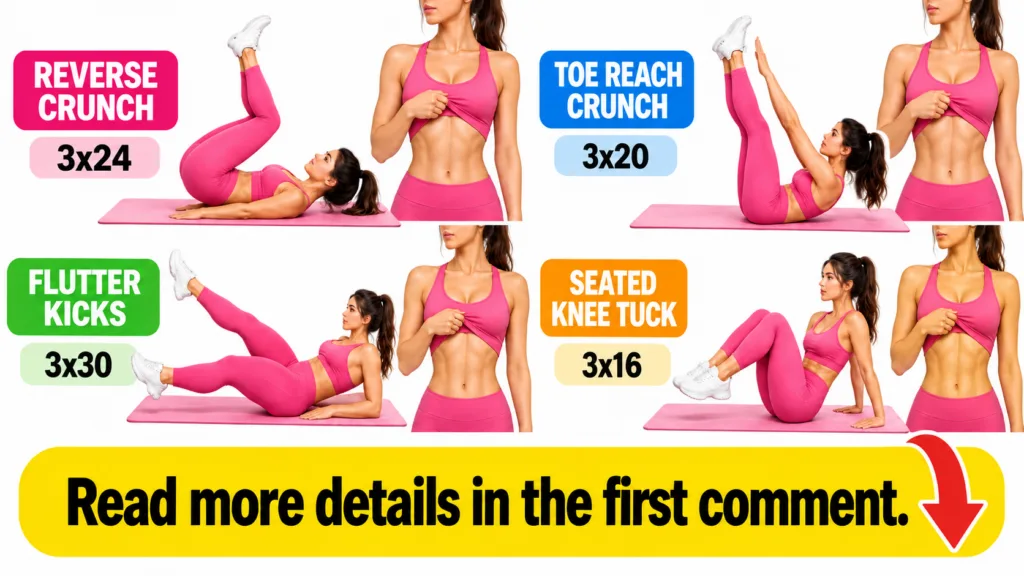
Here are four highly effective exercises to target various aspects of your core, focusing on proper execution for maximum benefit.
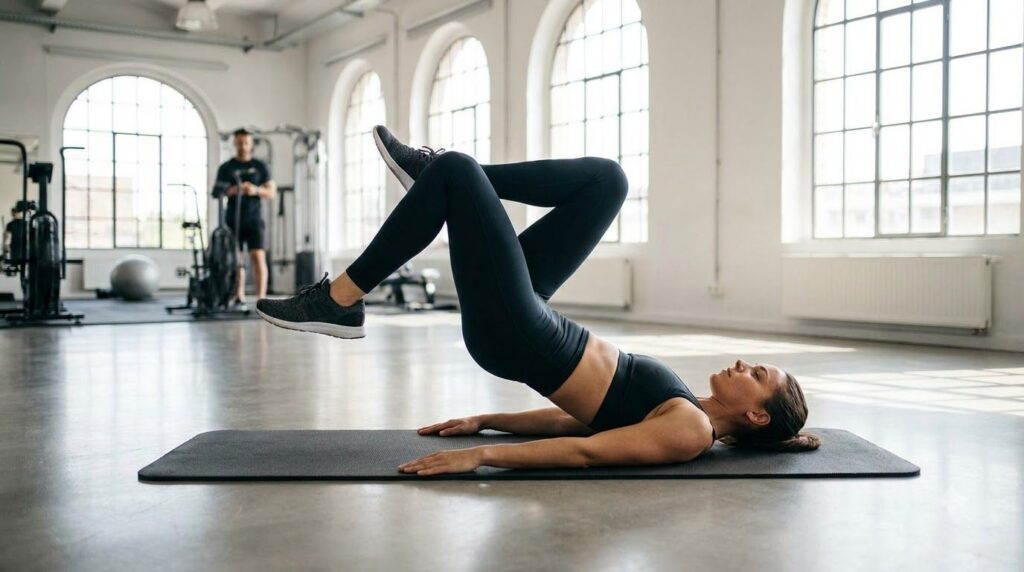
1. Reverse Crunch
The reverse crunch is an excellent exercise for targeting the lower abdominal muscles, often a challenging area to engage. It minimizes stress on the neck and lower back compared to traditional crunches.
How to Perform:
- Lie on your back with your knees bent at a 90-degree angle, feet flat on the floor, and arms by your sides.
- Engage your core and slowly lift your feet off the floor, bringing your knees towards your chest.
- Continue to lift your hips slightly off the floor, curling your pelvis upwards.
- Hold briefly at the top, feeling the contraction in your lower abs.
- Slowly lower your legs back to the starting position with control.
Tips for Success:
- Focus on using your lower abs to lift your hips, not momentum.
- Keep your movements slow and controlled.
- Aim for 2-3 sets of 10-15 repetitions.
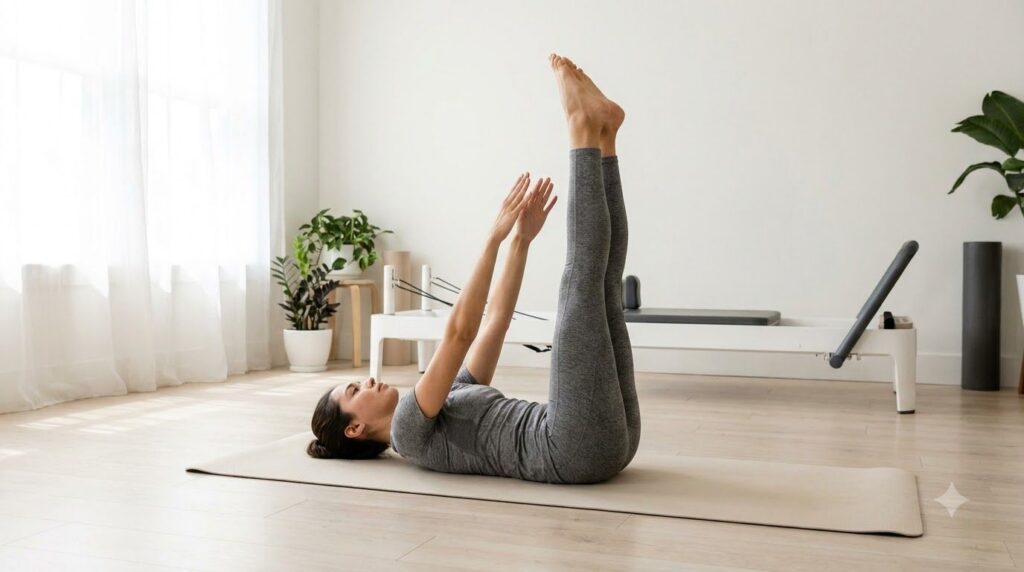
2. Toe Reach Crunch
The toe reach crunch (also known as a vertical leg crunch) intensifies the abdominal contraction by requiring you to reach for your toes, working the upper abs and challenging your stability.
How to Perform:
- Lie on your back with your legs extended straight up towards the ceiling, perpendicular to the floor. You can slightly bend your knees if needed.
- Place your hands behind your head or extend them towards your feet.
- Engage your core and lift your head and shoulders off the floor, reaching your hands towards your toes.
- Focus on lifting your shoulder blades off the ground, rather than just pulling with your neck.
- Slowly lower your head and shoulders back to the starting position.
Tips for Success:
- Keep your lower back pressed into the mat throughout the exercise.
- Breathe out as you crunch up and inhale as you lower down.
- Aim for 2-3 sets of 12-18 repetitions.
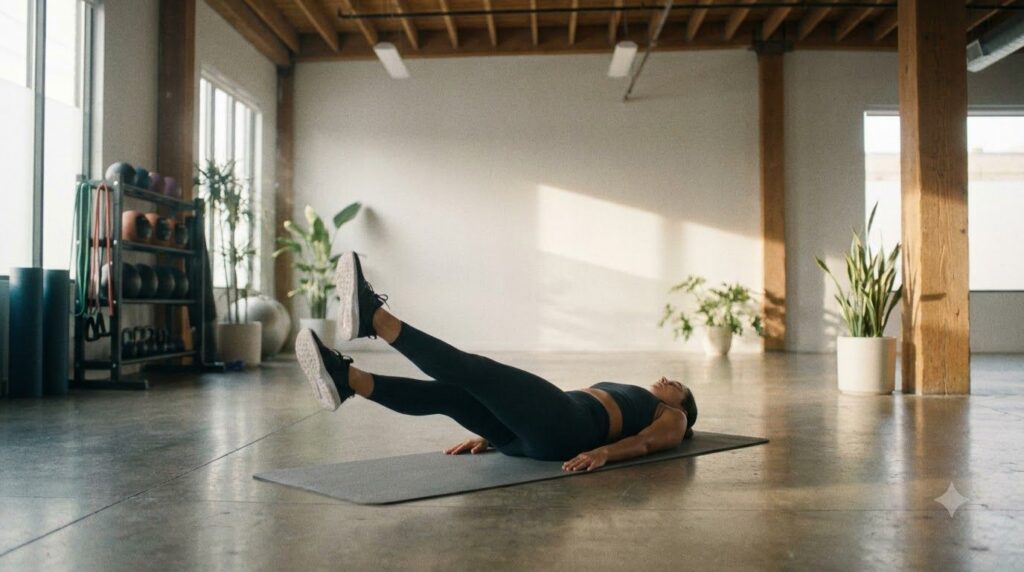
3. Flutter Kicks
Flutter kicks are a dynamic exercise that improves core endurance and targets the lower abs and hip flexors. They require continuous engagement to keep your lower back stable.
How to Perform:
- Lie on your back with your hands either under your glutes for lower back support or by your sides.
- Lift your legs slightly off the floor, keeping them straight.
- Engage your core to press your lower back into the mat.
- Keeping your legs straight and core engaged, rapidly alternate lifting one leg slightly higher than the other in a small, controlled kicking motion.
Tips for Success:
- Ensure your lower back stays flat against the floor. If it arches, lift your legs higher or reduce the range of motion.
- Keep your movements controlled and fluid, avoiding jerky motions.
- Perform for 30-60 second intervals for 2-3 sets.
4. Seated Knee Tuck
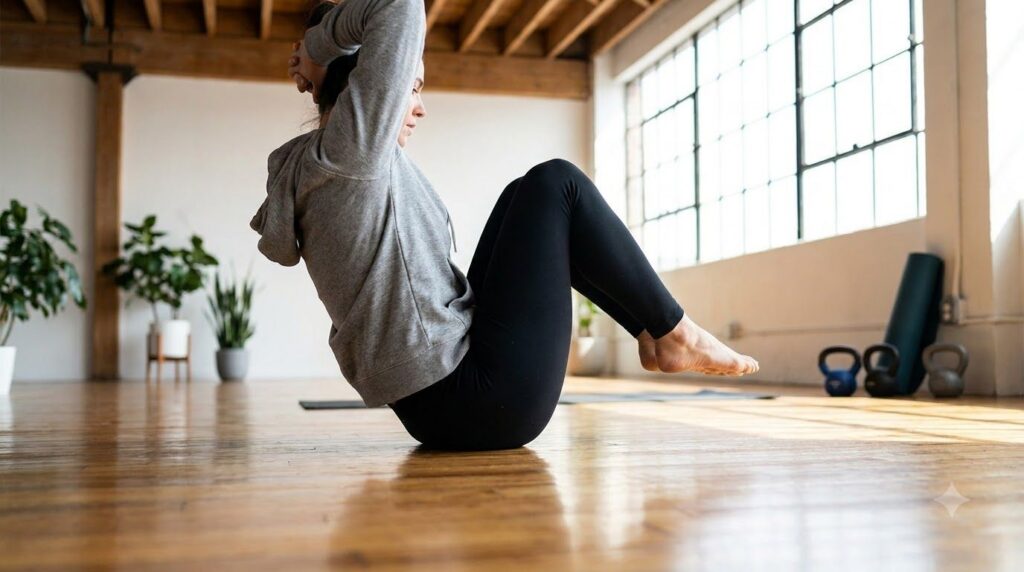
The seated knee tuck is a versatile exercise that can be performed almost anywhere, effectively working both the upper and lower abdominal muscles while challenging balance.
How to Perform:
- Sit on the floor with your knees bent, feet flat, and lean back slightly, supporting yourself with your hands on the floor behind you (fingers pointing forward or backward).
- Lift your feet off the floor, bringing your knees towards your chest while simultaneously leaning slightly forward to meet them. Your body should form a ‘V’ shape.
- Extend your legs back out, keeping them slightly off the floor, and lean back again to the starting position.
Tips for Success:
- Maintain a strong, engaged core throughout the movement to prevent your back from arching.
- If you want an extra challenge, try performing without hand support.
- Aim for 2-3 sets of 12-20 repetitions.
The Importance of Proper Form
As with any exercise, proper form is paramount. Incorrect form can not only diminish the effectiveness of the exercise but also increase the risk of injury. Always prioritize control and muscle engagement over speed or the number of repetitions. If you’re new to these exercises, consider watching instructional videos or consulting a fitness professional to ensure you’re performing them correctly.
Consistency and Progression
Building core strength is a journey, not a destination. Consistency is key. Aim to incorporate core work into your fitness routine 2-4 times a week, allowing for rest days in between. As you get stronger, you can progress by:
- Increasing the number of repetitions or sets.
- Holding positions for longer (e.g., plank variations).
- Slowing down the movements to increase time under tension.
- Adding resistance (e.g., holding a weight during reverse crunches, if appropriate and safe).
Conclusion
A strong core is an invaluable asset for overall health, preventing pain, and enhancing your body’s functional capabilities. By regularly incorporating these essential ab exercises into your routine, focusing on proper form and progressive overload, you’ll be well on your way to a stronger, more stable, and more resilient body. Remember, listen to your body, stay consistent, and celebrate your progress!
This article is for informational purposes only and does not constitute medical advice. Always consult with a qualified healthcare professional before starting any new exercise program, especially if you have any pre-existing health conditions or concerns.