Bread is a staple in many diets around the world, but with so many options available, choosing the healthiest one can feel a bit overwhelming. From classic white bread to hearty whole wheat, dense rye, and varied multigrain loaves, each type offers a unique nutritional profile. Understanding these differences can help you make informed choices that best support your health goals.
In this guide, we’ll break down the nutritional facts of four popular bread types: White, Whole Wheat, Multigrain, and Rye. We’ll compare them based on calories, protein, carbs, fat, fiber, and other key nutrients. By the end, you’ll have a clear picture of which bread might be the best fit for your plate.
Nutrition Comparison: White vs. Whole Wheat vs. Multigrain vs. Rye Bread
Let’s dive into the nutritional breakdown of these popular bread varieties. The values below are approximate for one standard slice (around 30-35 grams), but remember that exact numbers can vary by brand and recipe.
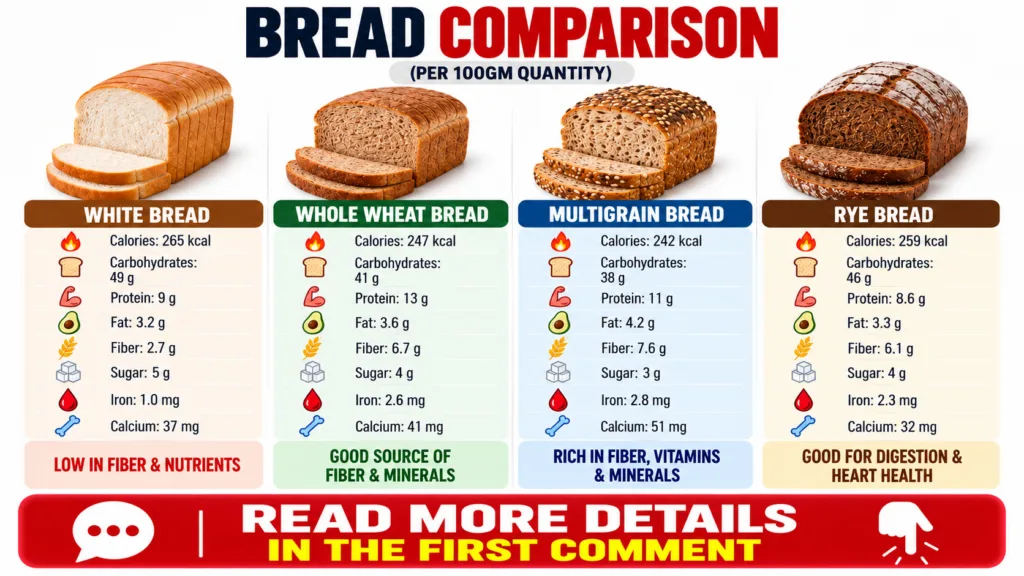
| Bread Type (per slice) | Calories | Protein (g) | Carbs (g) | Fat (g) | Fiber (g) | Main Nutrients | Best Benefit |
|---|---|---|---|---|---|---|---|
| White Bread | 80-90 | 2-3 | 15-18 | 1-2 | 0-1 | Folate, Iron (enriched) | Soft texture, familiar taste |
| Whole Wheat Bread | 70-85 | 3-4 | 12-15 | 1-2 | 2-3 | Fiber, B Vitamins, Iron, Magnesium | High in fiber, supports digestion |
| Multigrain Bread | 80-95 | 3-5 | 14-18 | 1-3 | 2-4 | Fiber, Manganese, Selenium | Variety of grains, often good fiber |
| Rye Bread | 65-80 | 2-3 | 12-15 | 1 | 2-3 | Fiber, Iron, Magnesium, Zinc | Low glycemic index, rich flavor |
White Bread
White bread is often made from refined wheat flour, which means the bran and germ have been removed during processing. This gives it a soft texture and mild flavor that many enjoy. While it’s often enriched with vitamins and minerals like iron and B vitamins, it generally lacks the fiber and many nutrients found in whole grains.
For those looking for an easy-to-digest option, white bread might be a choice, but for overall nutritional value, other breads often offer more.

Whole Wheat Bread
Whole wheat bread is made from flour that includes the entire wheat kernel: the bran, germ, and endosperm. This makes it a nutritional powerhouse, rich in dietary fiber, B vitamins, iron, and magnesium. The fiber content is excellent for digestive health, helping to regulate bowel movements and promote a feeling of fullness.
Choosing whole wheat bread is a simple way to increase your intake of whole grains, which are associated with a lower risk of heart disease, type 2 diabetes, and certain cancers.

Multigrain Bread
Multigrain bread means it’s made with two or more types of grain. These can include oats, barley, millet, flax seeds, and more. However,

