Have you ever found yourself wondering, “What does 1,200 calories really look like in a day?” It’s a common question, especially for those interested in understanding portion sizes and building balanced meals for their wellness journey. While calorie needs vary greatly from person to person, visualizing a day’s worth of food can be incredibly helpful for learning about nutrition and making informed choices.
At Remedy – T.Nhàn, we believe in simple, understandable ways to nourish your body naturally. This guide isn’t about rigid dieting, but rather about illustrating how a day’s worth of diverse, wholesome foods can come together to keep you feeling energized and satisfied, even within a specific calorie range. Let’s explore what a balanced day of eating could look like, focusing on fresh fruits, vegetables, lean proteins, and whole grains.
Understanding 1,200 Calories: A Visual Journey
For many, 1,200 calories can be a useful benchmark to learn about mindful eating and portion control. It’s often used as a starting point for exploring dietary changes, but remember, your unique needs might be different based on your activity level, age, and health goals. Our aim is to show you how delicious and filling a day can be when you choose nutrient-dense foods.
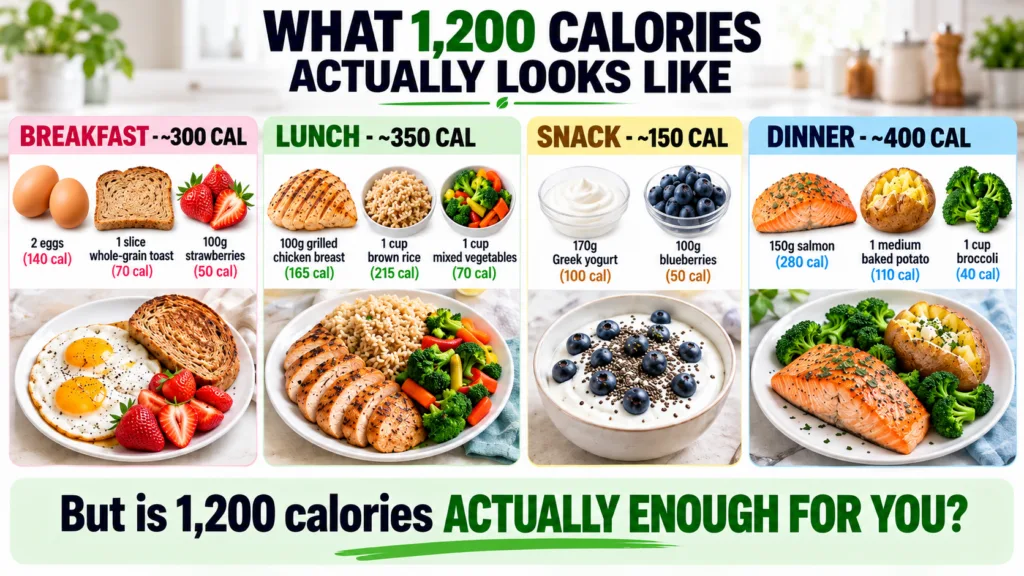
Breakfast: Starting Your Day Right (Approx. 300-350 Calories)
Kickstart your morning with a meal that provides sustained energy. A balanced breakfast can include protein for satiety and complex carbohydrates for fuel.
- Example: Two scrambled eggs with a slice of whole-wheat toast (or a small portion of avocado toast), topped with a handful of fresh strawberries.
- Why it works: Eggs offer high-quality protein, whole-wheat toast provides fiber, and strawberries add vitamins and natural sweetness. This combination helps keep hunger at bay until lunch.
Lunch: Powering Through Your Midday (Approx. 400-450 Calories)
Your midday meal should keep you focused and prevent that afternoon slump. Focus on lean protein, whole grains, and plenty of vegetables.
- Example: A generous serving of grilled chicken breast (about 4-5 ounces) with half a cup of cooked brown rice and a cup of mixed steamed or raw vegetables (like bell peppers, cucumber, and leafy greens) with a light vinaigrette dressing.
- Why it works: Chicken is an excellent lean protein source, brown rice offers slow-releasing energy, and the colorful veggies provide essential nutrients and fiber.
Snack: Bridging the Gap (Approx. 100-150 Calories)
Sometimes, a small, healthy snack is exactly what you need to keep your energy steady between meals. Choose something that offers a good mix of nutrients without being overly processed.
- Example: Half a cup of plain Greek yogurt with a quarter cup of fresh blueberries.
- Why it works: Greek yogurt is packed with protein, making it very satisfying, and blueberries are full of antioxidants. It’s a simple, refreshing, and nutritious choice.
Dinner: A Wholesome Evening Meal (Approx. 300-350 Calories)
End your day with a comforting and nourishing meal that supports your body without feeling heavy. Again, balance is key.
- Example: A baked salmon fillet (about 3-4 ounces) with a small baked sweet potato or a medium white baked potato and a cup of steamed broccoli.
- Why it works: Salmon provides healthy omega-3 fatty acids, baked potatoes offer complex carbs, and broccoli is a powerhouse of vitamins and fiber. This meal is both delicious and wholesome.
Key Principles for Balanced Eating
Beyond calorie counts, embracing these principles can transform your approach to daily wellness:
- Focus on Whole Foods: Prioritize foods that are as close to their natural state as possible. Think fresh fruits, vegetables, lean proteins, and whole grains.
- Hydration: Don’t forget to drink plenty of water throughout the day. It’s crucial for every bodily function and can help you feel full.
- Mindful Eating: Pay attention to your body’s hunger and fullness cues. Eat slowly and savor your meals.
- Portion Awareness: Learning what a healthy portion looks like can make a big difference in managing your energy intake.
- Preparation: Planning and preparing your meals in advance can help you stick to your goals and make healthier choices when hunger strikes.
Is 1,200 Calories Right for You?
While this guide provides a visual example of what 1,200 calories can look like, it’s important to remember that individual calorie needs vary significantly based on factors like age, gender, activity level, and health goals. This is an illustrative example designed to educate on portion sizes and balanced eating. If you’re considering a specific calorie target for your diet, especially for weight management or health concerns, we always recommend consulting with a healthcare professional or a registered dietitian. They can provide personalized advice tailored to your unique situation.
Understanding what goes into your body is a powerful step towards a healthier, happier you. By focusing on nutrient-rich whole foods, you can create delicious and satisfying meals that fuel your body and mind naturally. We hope this visual journey empowers you to make informed choices and enjoy the process of nurturing your wellness.