Are you dreaming of a lush, thriving vegetable garden overflowing with healthy plants and abundant harvests? What if we told you there’s a simple, natural secret that can help you achieve just that? Welcome to the wonderful world of companion planting!
Companion planting is an age-old gardening technique that involves strategically placing different plant species near each other to foster mutual growth and protection. It’s like having a best friend system right in your garden, where plants support each other, deter pests, attract beneficial insects, and even improve soil health. Whether you’re working with a traditional plot or a compact square-foot garden, understanding companion planting can truly transform your gardening experience.
What Exactly Is Companion Planting?
At its heart, companion planting is about creating a balanced ecosystem in your garden. Instead of planting large blocks of the same crop, you mix and match plants that have beneficial interactions. These interactions can be varied:
- Pest Deterrence: Certain plants emit scents that confuse or repel common garden pests.
- Beneficial Insect Attraction: Some plants attract pollinators or predatory insects that feast on harmful pests.
- Soil Improvement: Legumes, for example, can fix nitrogen in the soil, enriching it for neighboring plants.
- Shade and Support: Taller plants can provide shade for sun-sensitive companions, while sturdy plants can offer physical support.
- Weed Suppression: Densely planted companions can outcompete weeds for resources.
- Improved Flavor and Growth: Anecdotal evidence suggests some pairs can enhance the flavor or growth of their neighbors.
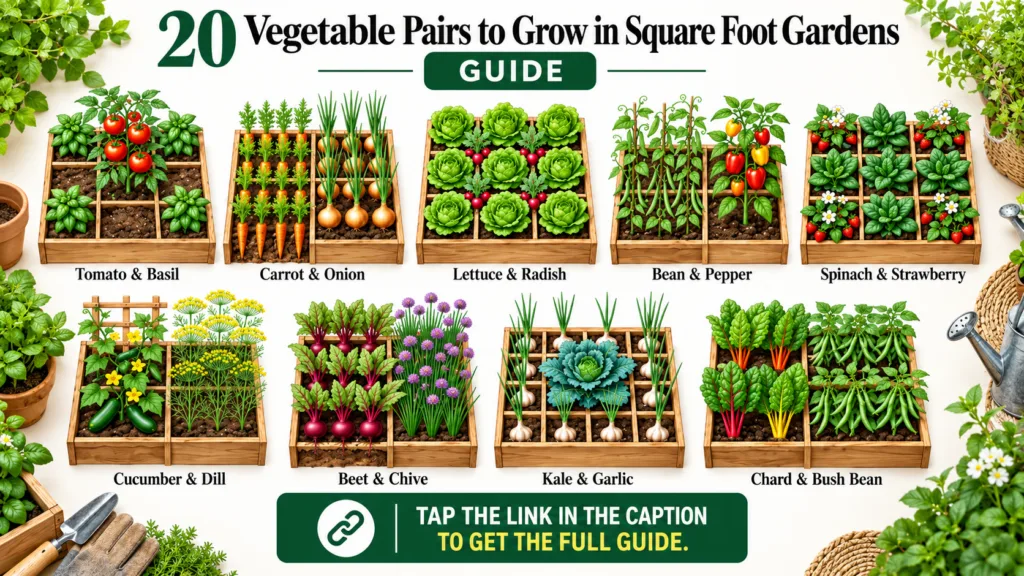
Top Companion Planting Pairs for a Thriving Vegetable Garden
Ready to put theory into practice? Here are some classic and highly effective companion planting pairings that can work wonders in your garden, especially in a square-foot setup where space is precious:
1. Tomato & Basil
This is perhaps one of the most famous and effective duos. Basil is believed to improve the flavor of tomatoes and also helps repel tomato hornworms and flies. Plant basil at the base of your tomato plants for a delightful partnership.
2. Carrots & Onions (or Leeks/Chives)
Onions, leeks, and chives are excellent companions for carrots. The strong scent of alliums can deter carrot rust flies and aphids, while carrots don’t mind the alliums’ close proximity.
3. Corn, Beans, & Squash (The Three Sisters)
This ancient Native American technique is a perfect example of synergy. Corn provides a trellis for climbing beans, beans fix nitrogen in the soil for the hungry corn and squash, and squash leaves spread out to shade the soil, suppressing weeds and retaining moisture.
4. Lettuce & Mint
Mint can deter slugs and ants that might bother lettuce. Just be sure to plant mint in a contained pot, as it can be very invasive if left unchecked.
5. Marigolds & Almost Everything
French marigolds are a gardener’s best friend. Their roots release a chemical that deters nematodes (microscopic worms that can damage plant roots), and their flowers are known to repel aphids, slugs, and other pests. Plant them around the edges of your beds or interspersed with your vegetables.
6. Cucumbers & Nasturtiums
Nasturtiums act as a trap crop for aphids, drawing them away from your cucumbers. They also attract beneficial insects and can be a beautiful edible addition to your garden.
Applying Companion Planting to Square-Foot Gardens
Square-foot gardening is all about maximizing yield in a small space. Companion planting fits perfectly with this philosophy:
- Strategic Placement: With limited squares, thoughtfully placing your companion pairs becomes even more crucial. Group plants that benefit each other within adjacent squares.
- Vertical Growth: Utilize vertical space. For instance, grow pole beans on a trellis in one square, with a nitrogen-loving plant like spinach or lettuce in the square below.
- Pest Zones: Dedicate a square or two to pest-repelling plants like marigolds or strong-scented herbs at the entrance or corners of your garden beds.
Tips for Getting Started with Companion Planting
- Start Small: Don’t try to revamp your entire garden at once. Experiment with a few known good pairs in one or two beds.
- Observe and Learn: Pay attention to how your plants interact. What works well in one garden might need slight adjustments in another.
- Research Your Plants: Before planting, do a quick check for common companions and known antagonists (plants that don’t get along). For example, avoid planting beans near onions or garlic, as onions can inhibit bean growth.
- Prioritize Organic Practices: Companion planting is a cornerstone of organic gardening. Combine it with healthy soil practices and natural pest control for the best results.
Embracing companion planting is a rewarding journey that connects you more deeply with the natural rhythms of your garden. It’s a sustainable, effective, and beautiful way to grow healthier, happier vegetables without relying on synthetic chemicals. So, go ahead, unlock your garden’s potential, and watch your plants thrive together!