Welcome, Gardeners! Ready to Transform Your Outdoor Space?
Have you ever wondered why some plants thrive in one part of your garden while others struggle, even with the same care? The secret often lies beneath your feet: the soil! Understanding your garden’s soil type is one of the most fundamental steps to becoming a successful gardener. It’s not just dirt; it’s the living foundation that provides nutrients, water, and support for everything you grow. Let’s dig in and unlock your garden’s true potential!
The Foundation of Your Garden: Understanding Soil
Soil is a complex mixture of mineral particles (sand, silt, clay), organic matter (decomposed plants and animals), water, and air. Each component plays a crucial role in plant health. The ratio of sand, silt, and clay determines the soil’s texture, which in turn affects drainage, aeration, and nutrient retention.
Why Soil Type Matters So Much
- Nutrient Availability: Different soils hold nutrients differently.
- Water Retention: Some soils drain quickly, while others hold too much water.
- Aeration: Roots need oxygen, and soil structure affects air circulation.
- Root Development: Soil texture influences how easily roots can spread and grow.
Decoding the Different Soil Types and Their Characteristics
Let’s explore the most common soil types you might encounter in your garden and what makes each one unique.
Sandy Soil: The Quick Drainer
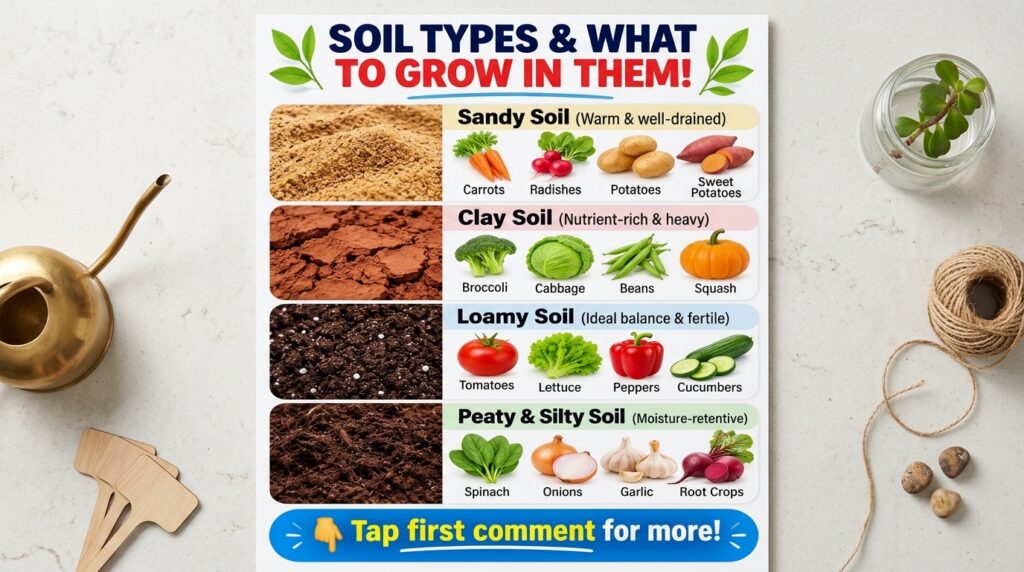
Sandy soil is characterized by large, coarse particles, giving it a gritty feel. It drains water very quickly, which is great for plants that dislike wet feet, but it also means nutrients can leach out rapidly. It warms up fast in spring, allowing for earlier planting, but can dry out quickly in summer. To improve sandy soil, incorporate plenty of organic matter like compost to help it retain moisture and nutrients.
Clay Soil: The Nutrient Holder
Clay soil consists of very fine particles that pack together tightly, making it feel smooth and sticky when wet. It retains moisture and nutrients very well, which is a big plus! However, its dense structure can lead to poor drainage, waterlogging, and compaction, making it hard for roots to penetrate and for air to circulate. Improving clay soil involves adding organic matter to break up the particles and enhance drainage and structure.
Loamy Soil: The Gardener’s Dream
Loam is often considered the ideal soil type. It’s a balanced mix of sand, silt, and clay, along with a good amount of organic matter. Loamy soil has excellent drainage, holds moisture adequately, is rich in nutrients, and is easy to work with. It’s the perfect environment for a wide variety of plants to flourish.
Peaty & Silty Soil: The Moisture and Nutrient Rich
Peaty Soil is dark, rich in organic matter, and feels spongy. It retains a lot of water and has a high acidity, which is great for acid-loving plants. It’s excellent for moisture retention but might need pH adjustment for some vegetables. Silty Soil has medium-sized particles, feeling smooth and somewhat powdery. It holds moisture and nutrients better than sandy soil but can compact easily. Both peaty and silty soils benefit from good management to prevent compaction and ensure balanced nutrient availability.
Matching Crops to Your Garden’s Soil Type
Now that you know the characteristics of each soil type, here’s how to choose the best vegetables to ensure they thrive in your specific garden environment:
- For Sandy Soil: Root vegetables that don’t like heavy, wet soil, such as carrots, radishes, potatoes, and parsnips, often do well. Other good choices include lettuce, peppers, corn, and zucchini. These plants appreciate the good drainage and the ability of roots to easily grow through the loose soil.
- For Clay Soil: Plants that need consistent moisture and can tolerate heavier conditions thrive here. Broccoli, cabbage, Brussels sprouts, kale, and beans are excellent choices. They can handle the higher nutrient retention and moisture levels that clay soil provides, often developing deep, strong root systems.
- For Loamy Soil: Lucky you! Almost anything grows well in loamy soil. Tomatoes, cucumbers, spinach, peas, onions, and most herbs will flourish. This versatile soil offers the perfect balance for a bountiful harvest.
- For Peaty & Silty Soil: These soils are fantastic for moisture-loving plants. Cabbage, peas, lettuce, and celery can do exceptionally well in peaty soil. Silty soil, with its good moisture retention, is also suitable for a wide range of vegetables including broccoli, beans, and spinach.
Start Digging: Your Garden Awaits!
Knowing your soil type is like having a secret weapon for your garden. It empowers you to make informed decisions about what to plant and how to amend your soil for optimal health. Don’t let uncertainty hold you back – get out there, observe your soil, and choose the right crops for a thriving, productive garden!
What’s your soil type? Share your tips and favorite plants that thrive in your garden in the comments below!

