Is your stainless steel kitchen sink looking a little worse for wear? Over time, even the most diligent cleaning can leave behind tough grime, water spots, and a dull finish. Instead of reaching for harsh chemicals, you can achieve a truly sparkling clean with a simple, effective, and affordable DIY solution using common household items you likely already have.
This method harnesses the power of natural abrasives and acids to cut through grease, lift stains, and leave your sink shining. It’s a practical way to revitalize your kitchen without a hefty cost or strong fumes.
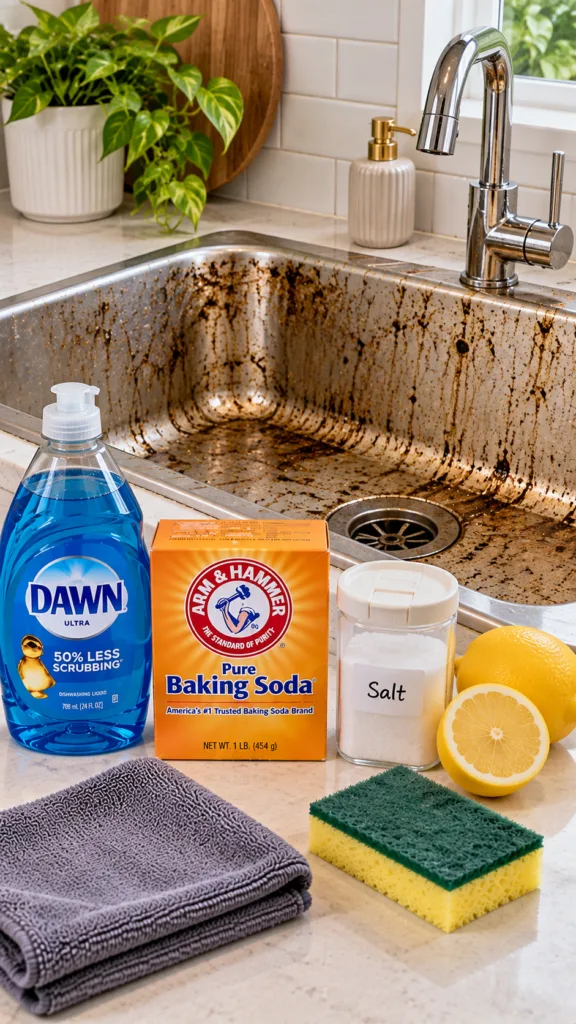 Turn a grimy sink into a gleaming one with these simple supplies.
What You’ll Need
- 1/2 cup Baking Soda
- 1/4 cup Salt
- 2 Lemons (halved)
- A few squirts of Dish Soap
- Scrubbing Sponge (yellow and green type)
- Microfiber Towel
Why This DIY Can Be Useful
Each ingredient in this DIY cleaner plays a specific role in tackling tough sink grime:
- Baking Soda: A mild abrasive that gently scrubs away stains and grime without scratching stainless steel. It also helps to deodorize, absorbing unpleasant odors that can linger in a sink.
- Salt: Provides an additional natural abrasive boost, helping to scour away stubborn spots and mineral deposits.
- Lemons: The citric acid in lemons acts as a natural degreaser and disinfectant. It breaks down hard water stains, adds a fresh, clean scent, and helps polish the stainless steel to a shine.
- Dish Soap: An effective surfactant that cuts through grease and helps lift away dirt, making rinsing easier and ensuring a truly clean surface.
How to Use It
- Rinse the Sink: Begin by rinsing your entire stainless steel sink with warm water to wet the surface and remove any loose food particles.
- Sprinkle Baking Soda: Generously sprinkle the 1/2 cup of baking soda evenly over the entire surface of the sink, including the sides.
- Add Salt: Follow with a sprinkle of 1/4 cup of salt over the baking soda. The combination of these two fine abrasives will start to work on the grime.
- Scrub with Lemon: Take one of your halved lemons and use the cut side to scrub the baking soda and salt mixture into the sink. The lemon’s natural acidity and the pulp will work with the abrasives to scour away stains and brighten the surface.
- Apply Dish Soap: Once you’ve scrubbed thoroughly with the lemon, add a few squirts of dish soap directly onto your scrubbing sponge.
- Final Scrub: Using the sponge, scrub the entire sink again, focusing on any remaining tough spots. The dish soap will help emulsify grease and lift away the loosened grime.
- Rinse Thoroughly: Rinse the sink completely with warm water, ensuring all the cleaning solution and residue are washed down the drain.
- Dry and Polish: Use a clean microfiber towel to dry the sink immediately. Drying prevents new water spots and helps buff the stainless steel to a brilliant, streak-free shine.
What to Expect
After using this DIY method, you can expect a significantly cleaner, shinier, and fresher-smelling stainless steel sink. Stubborn stains and grime should be largely removed, and the surface should have a noticeable sparkle. While it’s not a magic bullet for every single deep scratch or blemish, it will dramatically improve the overall appearance and hygiene of your sink.
Helpful Tips
- Regular Maintenance: For best results, incorporate this deep-cleaning routine once every week or two, or whenever your sink starts to look dull.
- Use the Lemon Wisely: Don’t throw away the lemon halves after scrubbing! You can also use them to clean your cutting boards or even your faucet.
- Clean Drain Openings: Don’t forget to scrub around the drain openings and the faucet base, as these areas often accumulate grime.
- Avoid Abrasive Pads: While baking soda and salt are mild abrasives, avoid using steel wool or highly abrasive scouring pads on stainless steel, as they can cause scratches.
Important Notes / Safety
- Always rinse thoroughly after cleaning to remove all residue.
- While generally safe for stainless steel, it’s always wise to test on an inconspicuous area first if you have any concerns about your particular sink finish.
- Ensure good ventilation in your kitchen, even when using natural ingredients.
- Store unused baking soda and salt in a cool, dry place.