Is the inside of your oven looking a little worse for wear? Baked-on food, grease splatters, and stubborn grime can make your oven an eyesore, and tackling it often means reaching for harsh chemical cleaners with strong fumes. If you’re looking for an effective, more natural, and budget-friendly alternative to get your oven sparkling again, this DIY method is worth trying. It uses simple household ingredients to cut through tough grease and leave your oven looking much cleaner without the overpowering chemical smells.
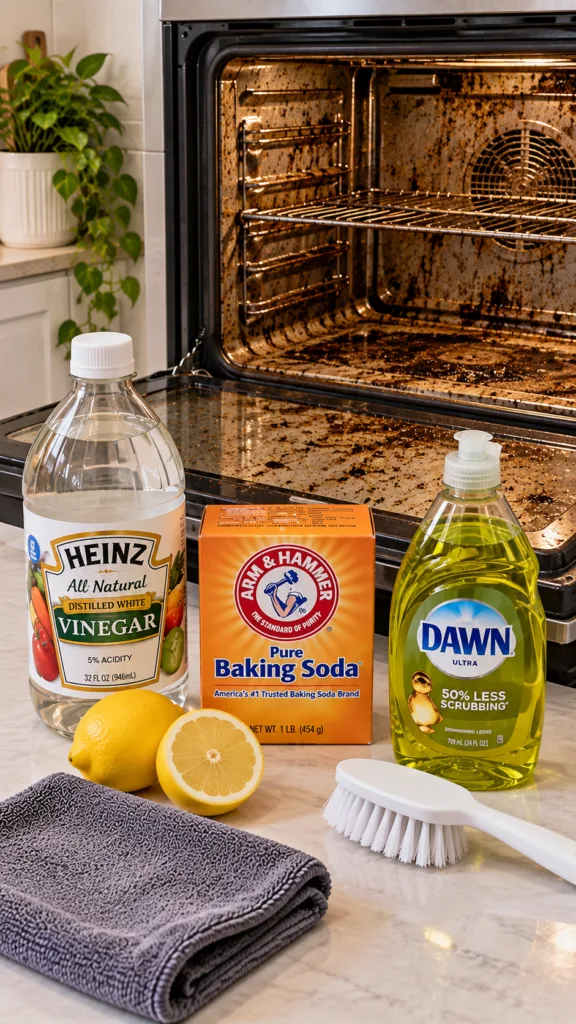 Gather your natural cleaning arsenal to tackle oven grime.
What You’ll Need
Ingredients
- Approximately 1/2 cup Baking Soda
- Approximately 2 tablespoons Dishwashing Liquid (like Dawn Ultra)
- 2 Fresh Lemons (sliced or halved)
- Approximately 1/4 cup White Vinegar (more if needed for spraying)
- Warm Water (as needed)
Tools
- Small bowl for mixing
- Spoon or spatula for spreading
- Spray bottle (optional, for vinegar)
- Scrubbing brush
- Microfiber cleaning cloth(s)
- Rubber gloves (recommended for protection)
Why This DIY Can Be Useful
This natural oven cleaning method relies on the power of common household items:
- Baking Soda: A mild abrasive that helps scrub away stuck-on food and grease without scratching surfaces. It’s also great for absorbing odors.
- Dishwashing Liquid: Specifically formulated to cut through grease and oil, making it an excellent helper in breaking down baked-on residue.
- Lemons: The citric acid in lemons acts as a natural degreaser and deodorizer, leaving a fresh scent.
- White Vinegar: Its acetic acid helps to dissolve grime, cut through grease, and act as a disinfectant, also leaving surfaces shiny.
Together, these ingredients create a potent cleaning paste and follow-up spray that can tackle even stubborn oven messes without harsh chemicals.
How to Make It
- In a small bowl, combine about 1/2 cup of baking soda with 1-2 tablespoons of dishwashing liquid.
- Gradually add small amounts of warm water, stirring constantly, until you form a thick paste. The paste should be spreadable but not too watery. You might not need much water at all.
- If you plan to use a vinegar spray, fill an empty spray bottle with white vinegar.
How to Use It
Before you start, make sure your oven is completely cool. Remove all oven racks and any loose debris from the bottom.
- Apply the Paste: Using a spoon, spatula, or your gloved hands, spread the baking soda and dish soap paste all over the inside surfaces of your oven, avoiding heating elements and the fan. Pay extra attention to areas with heavy grease and baked-on food. Don’t forget the inside of the oven door.
- Let it Sit: For best results, allow the paste to sit for at least 4-6 hours, or even better, overnight. This gives the ingredients time to break down the grime.
- Scrub: After the waiting period, use your scrubbing brush to gently scrub the paste and the loosened grime. For particularly tough spots, you can apply a bit more paste and let it sit for another hour.
- Vinegar Spray (Optional but Recommended): Lightly spray the inside of the oven with white vinegar. This will react with any remaining baking soda, creating a fizzing action that helps lift stubborn residue and neutralize odors.
- Wipe Clean: Use your damp microfiber cloth to wipe away the paste, grime, and vinegar. Rinse your cloth frequently in clean water and continue wiping until all residue is gone and the oven surfaces are clean.
- Clean the Racks: While the paste is working in the oven, you can clean your oven racks. You can spray them with the vinegar and scrub with the lemon halves and a bit of baking soda and dish soap, or soak them in hot soapy water.
- Final Wipe: Use a clean, damp cloth to give the entire oven a final wipe-down. You can use a lemon half to wipe down the inside for an extra fresh scent.
What to Expect
You can expect a significantly cleaner oven with much of the baked-on grease and grime removed. While heavily encrusted areas might require a second application or more vigorous scrubbing, this method will greatly improve the appearance and hygiene of your oven. The natural ingredients also leave behind a fresher scent compared to chemical cleaners.
Helpful Tips
- For extremely tough, burnt-on food, try scraping off larger pieces with a plastic scraper before applying the paste.
- Cover the floor around your oven with old newspapers or towels to catch any drips during the cleaning process.
- Always wear rubber gloves to protect your hands from the cleaning paste and scrubbing.
- Regular, lighter cleanings with this method can prevent heavy buildup and make future deep cleans much easier.
Important Notes / Safety
- Always ensure your oven is completely cool before starting any cleaning.
- Avoid getting the paste or liquids directly onto the oven’s electrical components, pilot light, or convection fan openings.
- Ensure good ventilation in your kitchen by opening a window or using an exhaust fan, even though these are natural ingredients.
- Rinse all surfaces thoroughly to remove any residue. Leftover baking soda could produce smoke or an odor when the oven is next used.
- Always test the paste on an inconspicuous area first if you are concerned about your oven’s finish, although baking soda and dish soap are generally safe for most oven interiors.