Unlock the secret to a truly satisfying breakfast that keeps you feeling energized and full until your next meal. While a warm bowl of oatmeal is a classic choice, many find themselves hungry again surprisingly quickly. The truth is, when it comes to maximizing satiety with your morning oats, it’s not the oats themselves that make all the difference.
Instead, a simple, strategic swap can transform your everyday breakfast into a powerhouse meal designed to fuel your day and curb those mid-morning cravings. Ready to discover how to make your oatmeal work harder for you?
We’re diving into the key distinction between a common oatmeal bowl and a protein-packed version, revealing why one leaves you feeling fuller for longer and how you can easily achieve this upgrade at home.
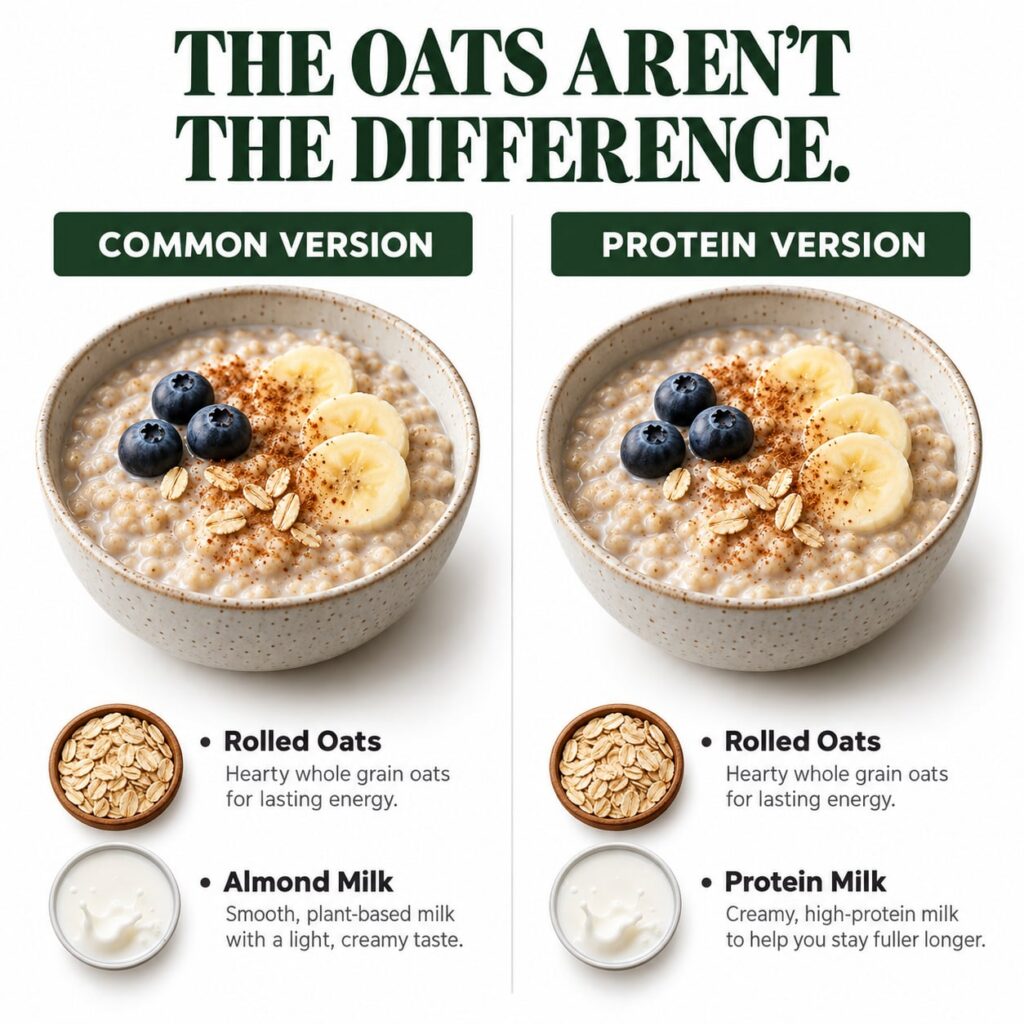 The visual difference might be subtle, but the impact on your morning can be huge!
The Secret to a More Satisfying Breakfast: It’s Not Just the Oats!
For many, oatmeal is a go-to breakfast, celebrated for its fiber and whole-grain goodness. However, the common version often leaves something to be desired in terms of lasting fullness. This isn’t because oats aren’t healthy; it’s because a crucial element is often overlooked.
The infographic highlights a powerful truth: the oats aren’t the difference. The core components of the common and protein versions — rolled oats, blueberries, banana, and cinnamon — remain the same. The real game-changer lies in the liquid base you choose for your oatmeal.
Common Oatmeal vs. Protein Oatmeal: A Nutritional Showdown
Let’s break down the two versions and understand why one offers superior satiety.
The Common Oatmeal Approach
A typical bowl of oatmeal often features:
- Rolled Oats: A good source of complex carbohydrates and soluble fiber, which supports digestive health and can help regulate blood sugar levels.
- Almond Milk: A popular plant-based milk alternative, often chosen for its lower calorie count and mild flavor.
- Blueberries & Banana: Provide natural sweetness, essential vitamins, minerals, and additional fiber.
- Cinnamon: Adds flavor and may offer antioxidant benefits.
While this combination provides valuable nutrients, the protein content, especially from almond milk, is relatively low. This can lead to a quicker rise and fall in blood sugar, and a less sustained feeling of fullness, making you more prone to snacking before lunch.
Elevating Your Bowl with Protein Oatmeal
The protein version takes the same delicious foundation and introduces a key upgrade:
- Rolled Oats: Still providing that fantastic fiber and energy.
- Protein Milk: This is where the magic happens. Swapping standard almond milk for protein milk significantly boosts the protein content of your breakfast.
- Blueberries & Banana: Retain their place as nutrient-rich toppings.
- Cinnamon: Continues to enhance flavor.
By incorporating protein milk, this version is specifically designed to help you stay fuller longer. Protein is known for its ability to increase satiety, slow down digestion, and stabilize blood sugar, providing sustained energy throughout your morning.
What is “Protein Milk” and Why Does it Matter?
So, what exactly constitutes “protein milk”? It can refer to a few different options, all designed to increase your protein intake:
- Fortified Dairy Milk: Some dairy milk brands offer higher protein versions, often achieved through ultrafiltration.
- High-Protein Plant Milks: Options like fortified soy milk or pea milk naturally contain more protein than almond or rice milk. These are excellent choices for those seeking plant-based high-protein breakfast solutions.
- Regular Milk + Protein Powder: You can easily transform any milk (dairy or plant-based) into “protein milk” by blending in a scoop of your favorite protein powder. This allows for customization with various flavors and types of protein, such as whey, casein, or plant-based protein powders like pea, rice, or soy. When choosing a protein powder, look for options with minimal added sugars and ingredients.
Protein is a macronutrient vital for muscle repair, hormone production, and overall cellular function. When consumed, it triggers the release of satiety hormones, helping to reduce appetite and prevent overeating. This makes protein oatmeal an excellent choice for anyone looking to manage their weight or simply maintain steady energy levels.
Crafting Your Perfect Protein Oatmeal Bowl
Ready to experience the lasting fullness of protein oatmeal? Here’s how to make a delicious and satisfying bowl, inspired by our comparison.
Yields: 1 serving
Prep time: 5 minutes
Cook time: 5-7 minutes (for stovetop) or 2 minutes (for microwave)
Ingredients:
- 1/2 cup rolled oats
- 1 cup protein milk (see options above)
- 1/2 cup fresh or frozen blueberries
- 1/2 medium banana, sliced
- 1/4 teaspoon ground cinnamon
- Optional: 1 teaspoon chia seeds for extra fiber and omega-3s
- Optional: Drizzle of maple syrup or honey for added sweetness
Instructions:
- Combine Oats & Milk: In a small saucepan (for stovetop) or a microwave-safe bowl (for microwave), combine the rolled oats and protein milk.
- Cook (Stovetop): Bring the mixture to a gentle simmer over medium heat, stirring occasionally. Reduce heat to low and cook for 5-7 minutes, or until the oats have absorbed most of the liquid and reached your desired consistency.
- Cook (Microwave): Microwave on high for 1-2 minutes, stir, then continue microwaving in 30-second intervals until the desired consistency is reached. Be careful as it can bubble over.
- Assemble Your Bowl: Pour the cooked oatmeal into your serving bowl.
- Add Toppings: Arrange the sliced banana and blueberries on top of the oatmeal.
- Finish & Serve: Sprinkle with cinnamon and add any optional toppings like chia seeds or a touch of sweetener. Serve immediately and enjoy a breakfast that helps you stay fuller longer!
Beyond Breakfast: The Benefits of a High-Protein Start
Starting your day with a high-protein breakfast like protein oatmeal offers more than just sustained fullness. It can contribute to better blood sugar control, support muscle maintenance, especially if you’re active, and even enhance mental clarity throughout your morning. Making protein a priority in your first meal sets a positive tone for healthy eating choices for the rest of the day.
Frequently Asked Questions About Protein Oatmeal
Q: Can I use protein powder instead of protein milk?
A: Absolutely! If you don’t have pre-made protein milk, simply use regular milk (dairy or plant-based) and stir in 1 scoop (about 20-25g) of your favorite protein powder after the oats are cooked or while they’re cooling slightly. This is an easy way to customize your protein intake.
Q: What are the best protein milk options for taste and nutrition?
A: For dairy, ultra-filtered milk often provides extra protein. For plant-based, soy milk and pea milk are generally the highest in protein. Experiment to find what you enjoy most! You can also look for milk alternatives specifically marketed as “high protein” at your local grocery store.
Q: Is protein oatmeal good for weight loss?
A: Yes, it can be. Foods high in protein and fiber, like protein oatmeal, contribute to increased satiety, which can help reduce overall calorie intake by preventing overeating and snacking between meals. It fits well into a calorie deficit meal plan.
Q: Can I meal prep protein oatmeal?
A: Yes! Protein oatmeal makes an excellent healthy meal prep option. Prepare a larger batch, divide it into individual serving containers (glass meal prep containers work well), and store in the refrigerator for up to 3-4 days. You can reheat it on the stovetop or in the microwave, adding fresh toppings before serving.
Final Thoughts
The journey to a more satisfying and nutritious breakfast doesn’t require a complete overhaul; sometimes, it’s about making smart, impactful swaps. By choosing protein milk for your morning bowl of oats, you transform a simple meal into a powerful tool for sustained energy, reduced hunger, and overall wellness. Embrace the difference that protein can make and enjoy feeling fuller, longer, with every delicious spoonful of your upgraded protein oatmeal.
Medical Disclaimer
The information provided in this article is for general informational purposes only and does not constitute medical advice. It is not intended to diagnose, treat, cure, or prevent any disease. Always seek the advice of a qualified healthcare professional for any medical concerns or before making any changes to your diet or health regimen.