Iron is an essential mineral that plays a critical role in maintaining your energy levels and overall well-being. It’s vital for creating hemoglobin, the protein in red blood cells responsible for carrying oxygen throughout your body. Without sufficient iron, you might feel fatigued, weak, and less focused.
Understanding which foods are rich in iron and how to maximize its absorption can significantly impact your health. This comprehensive guide will walk you through the best sources of iron, explain the different types, and provide practical tips to ensure your body makes the most of this crucial nutrient.
The Power of Iron: Why It Matters for Your Health
Every cell in your body needs oxygen to function optimally, and iron is the mineral that makes this transport possible. When you consume iron, your body uses it to produce hemoglobin. This protein binds to oxygen in your lungs and carries it through your bloodstream to every tissue and organ, powering everything from your brain function to muscle performance.
A consistent supply of iron helps maintain:
- Sustained Energy Levels: Combats fatigue and lethargy.
- Cognitive Function: Supports concentration and memory.
- Immune System Strength: Helps your body fight off infections.
- Healthy Skin, Hair, and Nails: Contributes to their vitality.
Recognizing the signs of low iron and actively incorporating iron-rich foods into your diet is a proactive step towards a more vibrant and energetic life.
Heme vs. Non-Heme Iron: Understanding Your Sources
Not all iron is created equal. Dietary iron comes in two main forms: heme iron and non-heme iron. Understanding the difference is key to optimizing your intake.
Top Heme Iron Foods
Heme iron is found exclusively in animal-based foods and is known for its high bioavailability, meaning your body absorbs it easily and efficiently. These sources are often recommended for those with higher iron needs or those struggling with iron deficiency.
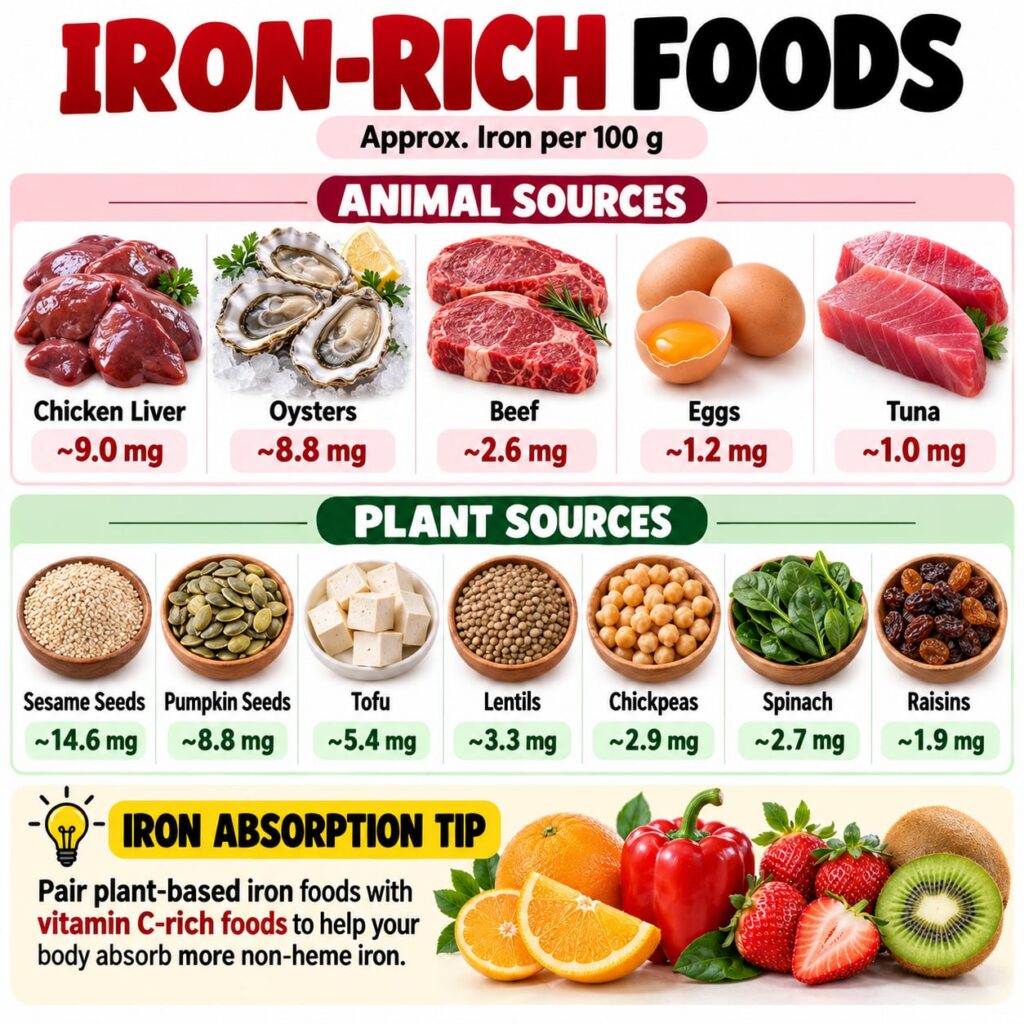
- Liver: Particularly beef liver, is one of the most concentrated sources of heme iron, along with a wealth of other vitamins and minerals.
- Oysters: These shellfish are packed with iron and often provide a significant portion of your daily recommended intake in a single serving.
- Beef: Red meats like beef are excellent sources of heme iron. Lean cuts can be a healthy addition to a balanced diet, offering not just iron but also protein and B vitamins.
Essential Non-Heme Iron Foods
Non-heme iron is found in plant-based foods and is also present in animal proteins (though heme iron is predominant). While crucial for vegetarians and vegans, non-heme iron absorption is more influenced by other dietary factors and is generally less efficient than heme iron.
- Sesame Seeds: These tiny seeds are versatile and can be sprinkled on salads, incorporated into dressings, or used in baked goods to boost iron.
- Pumpkin Seeds: A popular snack, pumpkin seeds offer a good amount of non-heme iron, along with magnesium and zinc. They’re great in trail mixes or over yogurt.
- Tofu: A staple in plant-based diets, tofu is a fantastic source of non-heme iron and plant-based protein. It can be easily incorporated into stir-fries, salads, and more.
- Lentils: These legumes are incredibly nutritious, providing iron, fiber, and protein. They’re perfect for soups, stews, and salads.
- Spinach: A leafy green powerhouse, spinach offers iron along with vitamins A and K. It can be enjoyed raw in salads, cooked in dishes, or blended into smoothies.
Boost Your Body’s Iron Absorption with Vitamin C
One of the simplest yet most effective ways to enhance the absorption of non-heme iron is to pair it with foods rich in Vitamin C. Vitamin C converts non-heme iron into a form that is more readily absorbed by the body, significantly improving its bioavailability.
Make it a habit to combine these nutrient powerhouses:
- Oranges: Enjoy a glass of orange juice with your iron-fortified cereal, or add orange segments to a spinach salad.
- Bell Peppers: Sauté bell peppers with tofu in a stir-fry, or add them to lentil soup for a flavorful and iron-boosting meal.
- Strawberries: Blend strawberries into a smoothie with spinach, or enjoy them as a dessert after a meal rich in plant-based iron.
Think creatively about how you can combine these foods throughout your day. For instance, a spinach salad with bell peppers and a squeeze of lemon juice (another good source of Vitamin C) is an excellent way to boost absorption.
Personalized Iron Needs and When to Seek Professional Advice
It’s important to remember that iron needs can vary significantly based on several factors, including age, gender, pregnancy status, and overall health. For example, menstruating women, pregnant individuals, and growing children typically require more iron than adult men.
While incorporating iron-rich foods into your diet is a fantastic starting point for maintaining healthy iron levels, food alone may not be enough to correct an existing iron deficiency. Symptoms of iron deficiency anemia can include extreme fatigue, weakness, pale skin, shortness of breath, dizziness, and cold hands and feet.
If you suspect you might have an iron deficiency, it’s crucial to consult a qualified healthcare professional. They can perform blood tests to accurately diagnose your iron status and recommend appropriate treatments, which might include dietary changes, supplements, or further investigation.
Incorporating Iron-Rich Foods into Your Diet: Practical Tips
Making iron a priority in your meals doesn’t have to be complicated. Here are some simple ways to boost your intake:
- Breakfast Boost: Add pumpkin or sesame seeds to your oatmeal or yogurt. Blend spinach into your morning smoothie with a handful of strawberries.
- Lunch & Dinner Delights: Prepare a hearty lentil soup, add tofu to your stir-fries, or include lean beef in your stews and chili. A side of sautéed spinach with bell peppers can complement almost any meal.
- Smart Snacking: Keep a bag of pumpkin seeds handy for a quick, iron-rich snack.
- Meal Prep Power: Incorporate iron-rich ingredients into your weekly meal prep to ensure you’re consistently meeting your needs. Consider making a large batch of lentil salad or a beef and vegetable stew.
- Diversify Your Plate: Regularly rotate your food choices to ensure a wide spectrum of nutrients. Don’t rely on just one or two sources for your iron intake.
Frequently Asked Questions About Iron
Who is at highest risk for iron deficiency?
Individuals at highest risk include menstruating women, pregnant women, growing children and teenagers, frequent blood donors, and those with certain medical conditions that impair nutrient absorption, such as celiac disease or Crohn’s disease.
Can I get too much iron from food?
It’s generally difficult to consume too much iron from food sources alone. The body regulates iron absorption quite effectively. However, taking iron supplements without medical supervision can lead to excessive iron levels, which can be harmful. Always consult a doctor before starting iron supplements.
What are common symptoms of low iron?
Common symptoms include persistent fatigue, weakness, pale skin, shortness of breath, dizziness, cold hands and feet, brittle nails, and a swollen or sore tongue. If you experience these symptoms, it’s best to consult a healthcare provider.
Final Thoughts
Iron is an indispensable mineral for maintaining your energy, vitality, and overall health. By understanding the difference between heme and non-heme iron, making smart food pairings with Vitamin C, and listening to your body’s unique needs, you can effectively boost your iron intake. Remember, a balanced diet rich in diverse, nutrient-dense foods is your best defense against deficiency and your pathway to unlocking better energy and well-being. Always consult a healthcare professional for personalized advice, especially if you suspect an iron deficiency.
Medical Disclaimer
This article is for informational purposes only and does not constitute medical advice. Always consult with a qualified healthcare professional before making any decisions about your health, diet, or treatment plans.