A clogged sink can bring your kitchen or bathroom routine to a grinding halt, causing frustration and a potential call to an expensive plumber. But before you reach for the phone, did you know that some of the most effective drain-clearing solutions might already be lurking in your pantry? That’s right! Many everyday household items can tackle stubborn clogs with surprising efficiency, saving you time and money.
This genius hack uses common, inexpensive household items to get your drain clear and flowing freely in no time. It’s a method that relies on a simple chemical reaction to break down blockages, making it a go-to for many homeowners.
Why Do Sinks Get Clogged?
Sinks typically become clogged due to a buildup of various substances over time. In kitchen sinks, it’s often a combination of food particles, grease, and soap scum that solidifies and adheres to the pipe walls. For bathroom sinks, hair, soap residue, and toothpaste are the usual culprits. This accumulation narrows the drain, eventually leading to a complete blockage.
The Effortless DIY Sink Unblocking Method
This method harnesses the power of baking soda and vinegar to create a fizzy, abrasive reaction that can break down many common types of clogs.
What You’ll Need:
- 1 cup baking soda (sodium bicarbonate)
- 1 cup white vinegar (distilled white vinegar is best)
- Boiling water (several cups)
- A pot or kettle
- A drain plug or rag
Step-by-Step Guide:
-
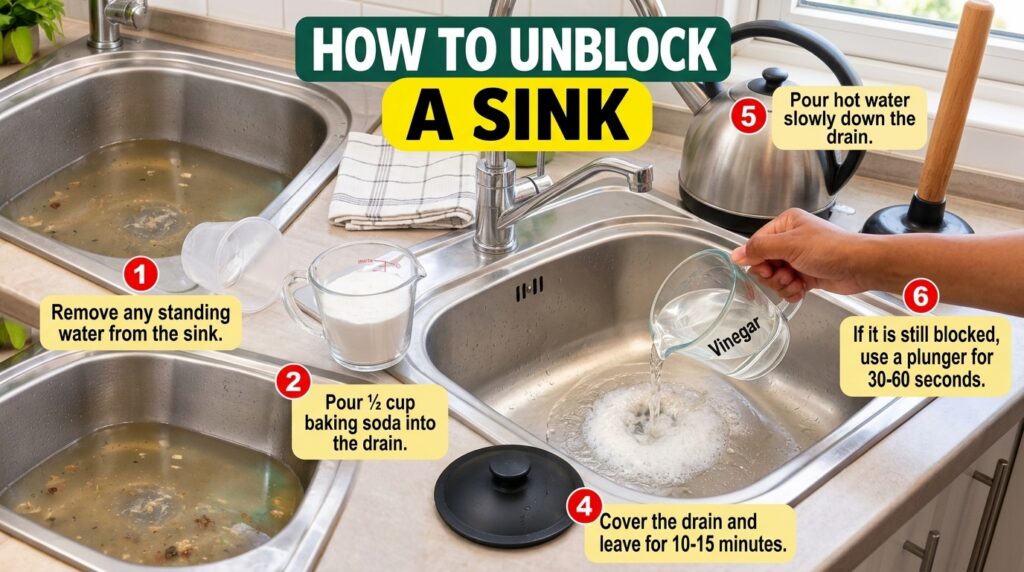
Remove Standing Water: If your sink has standing water, try to remove as much of it as possible. You can use a cup to scoop it out or a sponge to soak it up. This ensures the baking soda and vinegar can get directly to the clog.
-
Pour in Baking Soda: Carefully pour 1 cup of baking soda directly down the drain. Try to get as much of it into the drain opening as possible, rather than on the sink basin.
-
Follow with Vinegar: Immediately after the baking soda, pour 1 cup of white vinegar down the drain. You’ll likely hear a fizzing sound – this is the chemical reaction at work, creating a powerful scrubbing action that helps dislodge and break down the clog.
-
Cover and Wait: Quickly cover the drain with a stopper or a wet rag. This helps to contain the reaction and force it deeper into the pipe, where the clog resides. Let the mixture sit and work its magic for at least 30 minutes, or even better, an hour. For really tough clogs, you can let it sit overnight.
-
Flush with Hot Water: After the waiting period, remove the cover and slowly pour a kettle full of boiling hot water down the drain. The hot water will help to flush away the loosened clog and any remaining residue.
-
Test the Drain: Turn on the faucet to see if the water drains freely. If it’s still slow, you can repeat the baking soda, vinegar, and hot water steps. For more stubborn blockages, a plunger might also be used in conjunction with this method after the initial flush.
Why This Works: The Science Behind the Fizz
Baking soda (a base) and vinegar (an acid) react to produce carbon dioxide gas. This gas creates a fizzing action, which helps to dislodge physical blockages. The abrasive quality of the baking soda combined with the acidic properties of vinegar also aids in dissolving grease and grime. Following it up with hot water further helps to melt away any lingering greasy deposits and flush everything down the pipe.
Important Safety Notes
- Always use caution when handling boiling water to avoid burns.
- Never mix baking soda and vinegar with commercial drain cleaners, as this can create dangerous fumes.
- While effective for many clogs, this method is generally safe for most plumbing pipes, unlike harsh chemical drain cleaners that can damage older pipes over time.
When to Call a Plumber
While this DIY hack is incredibly effective for many common clogs, some situations warrant professional help. If you’ve tried this method a couple of times and the drain is still blocked, or if you notice water backing up in multiple fixtures, it could indicate a more serious blockage deeper in your plumbing system. In such cases, it’s best to contact a licensed plumber.
Keep Your Drains Flowing Freely
Regular maintenance can prevent most clogs from forming in the first place. Consider flushing your drains with hot water after washing dishes and using a drain strainer to catch food particles and hair. Incorporating this baking soda and vinegar treatment every few months can also help keep your pipes clear and free-flowing.
So, next time a clogged sink got you stumped, remember this budget-friendly, effective hack. Give it a try, and enjoy your freely flowing drains once again!