Are you tired of scrubbing tirelessly at stubborn grime, burnt-on food, and lingering stains that just won’t budge? Imagine a powerful cleaning solution made from everyday household items that can tackle the toughest messes in your home, delivering impressive before-and-after transformations. Look no further! This simple DIY cleaning paste is your secret weapon for a sparkling clean home, proving that you don’t need harsh chemicals or expensive products to achieve incredible results.
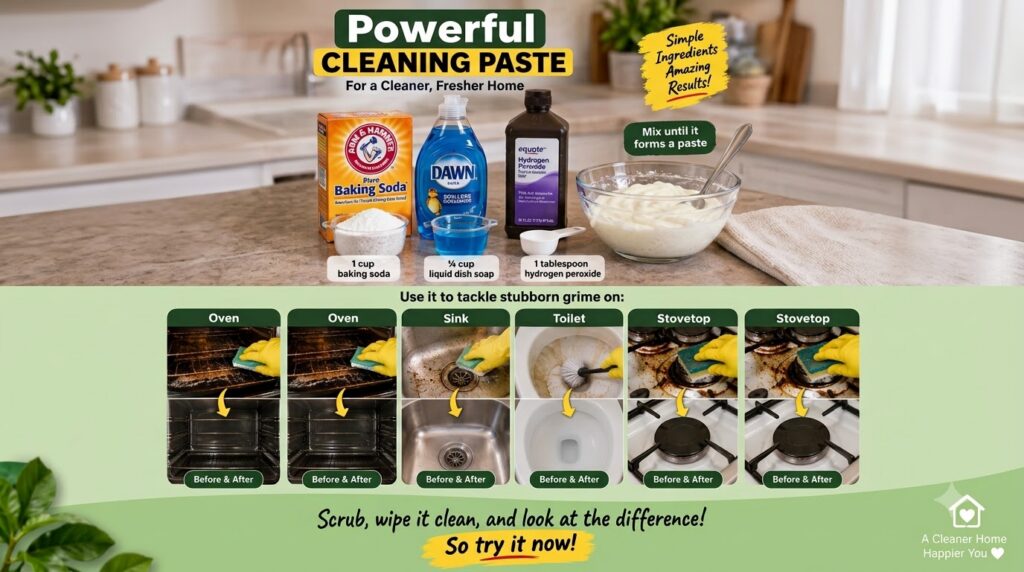
This remarkable cleaning paste harnesses the power of just three common ingredients: baking soda, liquid dish soap, and hydrogen peroxide. Together, they create a formidable force against dirt, grease, and grime, making it ideal for four of the most challenging areas in your home: burnt ovens, grubby sinks, stained toilet bowls, and splattered stovetops. Get ready to revolutionize your cleaning routine!
The Power Trio: Why These Ingredients Work
Understanding the science behind this cleaning paste will give you even more confidence in its effectiveness:
- Baking Soda (Sodium Bicarbonate): This mild abrasive acts as a gentle scourer, helping to lift and break down tough stains and burnt-on food without scratching surfaces. It’s also a natural deodorizer, absorbing odors while it cleans.
- Liquid Dish Soap: Dish soap is a degreaser extraordinaire. Its surfactants cut through grease and oil, allowing them to be easily rinsed away. It also helps the paste adhere to surfaces, extending its contact time with the grime.
- Hydrogen Peroxide (3%): A mild bleaching agent, hydrogen peroxide helps to disinfect and brighten surfaces. It’s particularly effective at breaking down organic stains and odors, and it provides a fizzing action when combined with baking soda, further loosening dirt.
Full Cleaning Paste Formula
Making this paste is incredibly simple, requiring just a few basic items you likely already have in your pantry and under your sink.
What You’ll Need:
- 1 cup baking soda
- ¼ cup liquid dish soap
- 1 tablespoon 3% hydrogen peroxide
- Optional: 1–2 teaspoons warm water (only if needed to loosen the texture)
- A mixing bowl and spoon
How to Mix It:
- Add the 1 cup baking soda to a clean bowl.
- Pour in ¼ cup liquid dish soap.
- Add 1 tablespoon of 3% hydrogen peroxide.
- Mix slowly with a spoon until it forms a thick, creamy paste.
The ideal texture for your paste should be:
- Spreadable, allowing for easy application.
- Thick enough to cling to vertical surfaces without dripping.
- Not runny, which would diminish its cleaning power.
- Not overly foamy, which indicates too much liquid.
If you find your paste is too thick, add 1 teaspoon of warm water at a time until you achieve the right consistency. It’s best to make only a small batch and use it fresh for optimal effectiveness.
Targeting Tough Household Messes
Always remember to test a small, hidden area first before applying the paste broadly, as finishes and coatings can react differently. Once you’re sure it’s safe for your surface, you’re ready to tackle these common cleaning challenges:
1. Burnt Oven Grime
Oven cleaning is often dreaded, but this paste makes it surprisingly manageable. For burnt-on food and grease, this paste is a game-changer.
How to Use It:
- Scoop out a generous amount of paste and apply it directly to the burnt areas inside your oven.
- Spread it evenly to cover all the grime.
- Let the paste sit for at least 30 minutes, or for very tough stains, leave it overnight. The longer it sits, the more it can break down the grime.
- After the dwell time, use a non-scratch scourer or brush to scrub away the loosened grime.
- Wipe clean with a damp cloth, rinsing the cloth frequently, until all residue is gone.
2. Grubby Sinks
From stainless steel to porcelain, sinks can quickly accumulate stains, soap scum, and water spots. This paste will leave them sparkling.
How to Use It:
- Apply the paste directly to the stained areas of your sink.
- Use a soft sponge or cloth to gently scrub the surface in circular motions.
- For tough stains around the drain or faucet, let the paste sit for 10-15 minutes.
- Rinse thoroughly with warm water, wiping away any remaining paste.
- Buff with a dry cloth for a streak-free shine.
3. Toilet Bowl Stains
Hard water rings and discoloration in the toilet bowl are no match for this powerful mixture.
How to Use It:
- Flush the toilet to wet the bowl.
- Apply the paste directly to the stains around the water line and below. You can use a spoon or a gloved hand to spread it.
- Let the paste sit for at least 20-30 minutes, or longer for more severe stains.
- Use a toilet brush to scrub the paste and stains away.
- Flush the toilet to rinse the bowl thoroughly.
4. Stovetop Splatters
Grease, food splatters, and burnt-on messes on your stovetop can be challenging to remove. This paste cuts through them with ease.
How to Use It:
- Ensure your stovetop is cool to the touch.
- Apply the paste liberally over the greasy or stained areas.
- Allow it to sit for 15-20 minutes, giving the ingredients time to work.
- Using a non-scratch scrub pad or sponge, gently scrub the surface in small circles.
- Wipe clean with a damp cloth, rinsing as needed, until all residue and grime are removed.
Safety & Best Practices
- Ventilation: While the ingredients are natural, ensure good ventilation when cleaning, especially in enclosed spaces.
- Gloves: Wear gloves to protect your hands, particularly if you have sensitive skin.
- Storage: This paste is best used fresh. Do not store large batches, as the hydrogen peroxide can lose its potency over time once mixed, and the paste can dry out.
- Surface Suitability: Avoid using on delicate surfaces like unsealed natural stone (marble, granite), unsealed grout, or certain types of wood, as baking soda’s abrasive quality or peroxide’s brightening effect could cause damage. Always patch test!
Unlock a Cleaner Home Today!
With this powerful DIY cleaning paste, you have an affordable, effective, and relatively natural solution to some of your home’s most challenging messes. Say goodbye to harsh chemicals and endless scrubbing, and hello to a sparkling clean oven, gleaming sink, spotless toilet, and pristine stovetop. Give this hack a try and discover how simple ingredients can truly deliver amazing results.
What’s your toughest cleaning challenge? Share it in the comments below!