Did you know that some of the best nutrients for your houseplants might already be sitting in your kitchen waste bin? Instead of tossing them, you can transform everyday kitchen scraps into powerful, organic fertilizers that will help your beloved indoor plants thrive. It’s a fantastic way to reduce waste, save money, and give your plants a natural boost!
DIY Kitchen Waste Fertilizers for Happy Houseplants
Let’s dive into some common kitchen scraps and how you can repurpose them to create nutrient-rich feeds for your green companions.
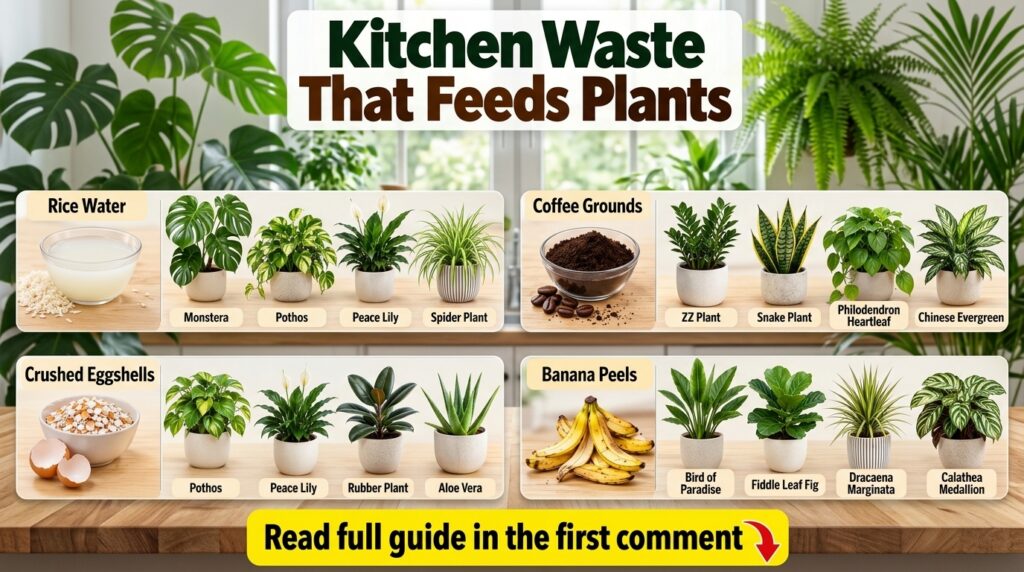
1. Rice Water
The cloudy water left over after rinsing rice or cooking it without salt can be a fantastic plant tonic. It’s rich in starches, B vitamins, and essential minerals like potassium and phosphorus. These nutrients can help stimulate root growth and promote overall plant health.
- How to Use: Let the rice water cool down if it was hot. Dilute it with an equal part of plain water, especially for sensitive plants. Use this diluted water to irrigate your plants once every 2-4 weeks.
- Best For: Most houseplants, particularly those needing a gentle nutrient boost.
2. Coffee Grounds
Coffee grounds are a treasure trove of nitrogen, which is vital for leafy green growth. They also contain calcium, magnesium, potassium, and phosphorus. Their slightly acidic nature can be particularly beneficial for acid-loving plants.
- How to Use: Ensure the coffee grounds are completely dry to prevent mold growth. Sprinkle a thin layer directly onto the soil surface around your plants. You can also mix a small amount into the top inch or two of potting soil. Use sparingly, no more than once a month, as too much can alter soil pH significantly.
- Best For: Ferns, African Violets, and other acid-loving plants. Use with caution for plants that prefer alkaline soil.
3. Crushed Eggshells
Eggshells are an excellent source of calcium carbonate, which is crucial for strong cell walls in plants. Calcium helps plants develop strong stems and roots and can prevent blossom end rot in fruiting plants (though more common for outdoor vegetables, it’s a good general nutrient).
- How to Use: Wash eggshells thoroughly and let them dry completely. Crush them into a fine powder (a blender or food processor works wonders). Sprinkle the powdered eggshells around the base of your plants or mix them into the topsoil. Since calcium takes time to break down, apply every 2-3 months.
- Best For: Most houseplants.
4. Banana Peels
Don’t toss those banana peels! They are packed with potassium, phosphorus, and magnesium – nutrients essential for flowering, fruiting, and overall plant vigor. Potassium, in particular, helps plants develop strong immunity and aids in water regulation.
- How to Use:
- Direct Bury: Cut a banana peel into small pieces and bury them a few inches deep in the soil around your plant, ensuring they are not touching the stem.
- Banana Peel Tea: Soak chopped banana peels in water for a few days (e.g., 1-2 peels in a quart of water). Strain the liquid and use it to water your plants. Dilute if the solution seems too strong.
- Best For: Flowering plants like Peace Lilies, Orchids, and other plants that benefit from potassium.
Important Tips for Using Kitchen Waste Fertilizers
- Moderation is Key: While these are natural, over-fertilizing can still harm your plants. Always start with smaller amounts and observe how your plants react.
- Pest Control: Fresh organic matter can attract pests like fruit flies. Ensure coffee grounds are dry, eggshells are cleaned, and consider burying banana peels deeper or using banana tea to avoid surface pests.
- Composting: If you’re unsure about direct application, consider starting a small worm bin or compost pile. Composted kitchen waste provides a well-balanced, rich fertilizer that’s safe for almost all plants.
- Observe Your Plants: Every plant is unique. Pay attention to changes in growth, leaf color, or overall health to adjust your feeding routine as needed.
Repurposing kitchen waste for your houseplants is a simple yet effective way to practice sustainable gardening and provide your plants with vital nutrients. It’s a win-win for your plants, your wallet, and the environment!
Have you tried any of these DIY fertilizers, or do you have other kitchen waste hacks for your garden? Share your tips and experiences in the comments below!