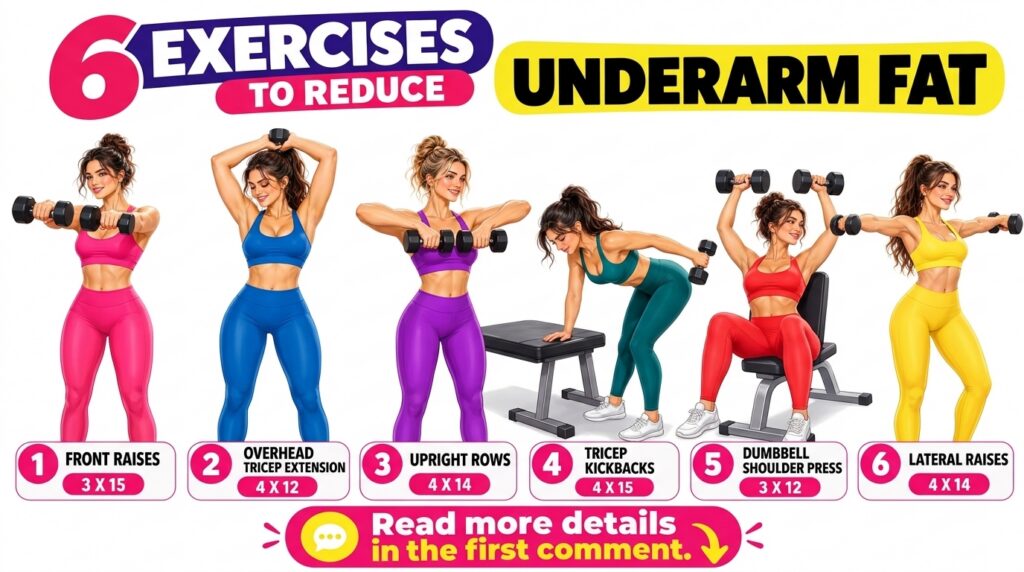
Many of us strive for strong, sculpted arms and a confident upper body. While it’s important to remember that spot reduction of fat isn’t truly possible, incorporating targeted strength exercises can certainly help to tone and define the muscles in your arms and surrounding areas, contributing to a more streamlined appearance.
This guide breaks down six simple yet effective dumbbell exercises that you can do to build strength, improve muscle definition, and feel stronger in your upper body, including the often-discussed underarm area. Focus on correct form and consistent reps to see real progress and build lasting confidence!
1. Dumbbell Bicep Curls
Bicep curls are a classic for a reason. They directly target the biceps, helping to build strength and definition in the front of your upper arm.
How to Perform:
- Stand tall with your feet shoulder-width apart, a dumbbell in each hand, palms facing forward.
- Keeping your elbows close to your torso, curl the weights up towards your shoulders, squeezing your biceps at the top.
- Slowly lower the weights back to the starting position with control.
Tips for Success:
Avoid swinging your body to lift the weights. Focus on a controlled movement, engaging only your arm muscles. Breathe out as you lift and in as you lower.
2. Triceps Kickbacks
Triceps kickbacks are excellent for isolating and strengthening the triceps, the muscle on the back of your upper arm, which plays a significant role in the appearance of the underarm area.
How to Perform:
- Hold a dumbbell in each hand. Hinge forward slightly at your hips, keeping your back straight and core engaged. Your upper arms should be parallel to your torso, and elbows bent at 90 degrees.
- Extend your forearms straight back, squeezing your triceps at the top. Your upper arms should remain still.
- Slowly return to the starting position.
Tips for Success:
Keep your elbows tucked in and avoid letting them drop as you extend the weights. A lighter weight with strict form is more effective here.
3. Overhead Triceps Extension
This exercise further targets the triceps, providing a great stretch and contraction that can help with arm definition.
How to Perform:
- Stand or sit with a single dumbbell held with both hands above your head, arms extended.
- Keeping your elbows close to your head, slowly lower the dumbbell behind your head by bending your elbows.
- Extend your arms back up to the starting position, squeezing your triceps.
Tips for Success:
Ensure your core is engaged to protect your lower back and prevent arching. Don’t let your elbows flare out too wide.
4. Lateral Raises
Lateral raises work the deltoid muscles, specifically the lateral head of the shoulders, contributing to broader, more defined shoulders and an overall sculpted upper body.
How to Perform:
- Stand with a dumbbell in each hand, arms at your sides, palms facing your body.
- Keeping a slight bend in your elbows, raise the weights out to your sides until your arms are parallel to the floor, forming a ‘T’ shape.
- Slowly lower the weights back to the starting position with control.
Tips for Success:
Avoid shrugging your shoulders or using momentum. Focus on controlling the movement with your shoulder muscles. Imagine pouring water out of a pitcher at the top of the movement for better engagement.
5. Bent-Over Rows
Bent-over rows are a compound exercise that targets your back muscles (lats), biceps, and shoulders, improving posture and overall upper body strength, which complements arm toning efforts.
How to Perform:
- Stand with feet hip-width apart, a dumbbell in each hand, palms facing your body. Hinge forward at your hips, keeping your back straight and knees slightly bent, so your torso is almost parallel to the floor.
- Let the dumbbells hang straight down. Pull the dumbbells up towards your chest, squeezing your shoulder blades together.
- Slowly lower the weights back to the starting position.
Tips for Success:
Maintain a flat back throughout the movement. Avoid rounding your spine. Focus on pulling with your back muscles rather than just your arms.
6. Dumbbell Chest Press
The dumbbell chest press works your chest, shoulders, and triceps, offering a comprehensive upper body push that helps to define the entire area, including the perimeter of the underarms.
How to Perform:
- Lie on a flat bench or the floor with a dumbbell in each hand, palms facing each other or slightly forward. Bend your knees if on the floor, keeping feet flat.
- Position the dumbbells at chest level, just outside your shoulders, with elbows bent at about a 45-degree angle to your body.
- Press the dumbbells straight up towards the ceiling until your arms are fully extended, but not locked.
- Slowly lower the weights back to the starting position with control.
Tips for Success:
Control the weights throughout the entire movement. Don’t let them crash together at the top, and maintain tension in your chest muscles.
The Importance of Consistency and Proper Form
To achieve the best results, consistency is key. Aim to perform these exercises 2-3 times per week, allowing your muscles adequate rest in between sessions. Proper form is crucial not only for targeting the correct muscles effectively but also for preventing injury. If you’re unsure about your form, consider consulting a fitness professional.
Remember that while these exercises may help to tone and strengthen your muscles, overall body fat reduction through a balanced diet and cardiovascular activity will contribute to seeing more defined results. Building a strong, healthy body is a journey, not a sprint!
Beyond the Weights: Holistic Wellness
Incorporating these exercises into your routine is a fantastic step towards a stronger upper body. However, true wellness extends beyond just physical activity. A balanced diet rich in whole foods, adequate hydration, sufficient sleep, and stress management all play vital roles in supporting your fitness goals and overall health.
Disclaimer: This article is for informational purposes only and is not intended to be a substitute for professional medical advice, diagnosis, or treatment. Always seek the advice of your physician or other qualified health provider with any questions you may have regarding a medical condition.