Tired of stubborn kitchen grease and grime that seems impossible to conquer? Before you reach for harsh chemicals, look no further than your pantry! Two everyday heroes, baking soda and vinegar, can combine forces to tackle some of the toughest kitchen messes, leaving your space sparkling clean and fresh.
This natural cleaning hack isn’t just effective; it’s also budget-friendly and environmentally conscious. Forget the overwhelming fumes and embrace a simpler, yet powerful, approach to a spotless kitchen.
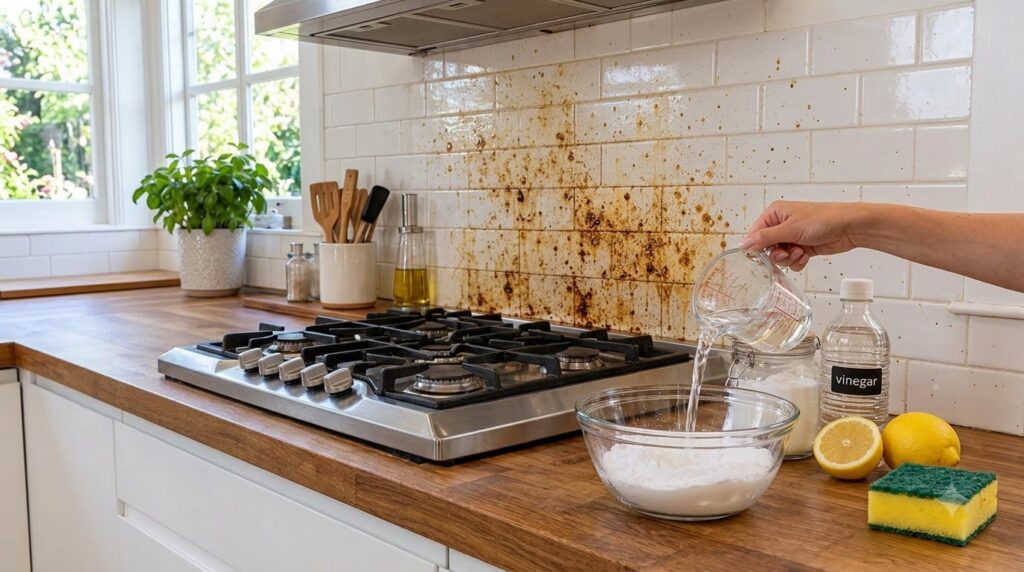
Why Baking Soda and Vinegar Work Wonders
The magic behind this dynamic duo lies in their individual properties and the exciting reaction they create when combined:
- Baking Soda (Sodium Bicarbonate): This mild abrasive helps to gently scrub away stuck-on food and grease without scratching surfaces. It’s also a fantastic natural deodorizer, absorbing unpleasant smells rather than just masking them.
- Vinegar (Acetic Acid): White vinegar is an acidic powerhouse that excels at cutting through grease, dissolving mineral deposits (like hard water stains), and acting as a natural disinfectant.
- The Fizz Factor: When baking soda (a base) meets vinegar (an acid), they produce a chemical reaction that releases carbon dioxide gas. This creates a fizzing action that physically helps to lift and loosen dirt, grime, and food particles from surfaces, making them easier to wipe away.
Your DIY Kitchen Cleaning Power Duo: Ingredients & Tools
You likely already have everything you need for this effective cleaning solution.
What You’ll Need:
- 1/2 cup baking soda
- 1/4 cup white vinegar (you might need more depending on the task)
- Warm water (optional, for rinsing or making a paste)
- A small bowl for mixing
- Scrub brush or non-scratch sponge
- Clean cloths or paper towels
- Spray bottle (optional, for direct vinegar application)
Step-by-Step Guide to a Sparkling Kitchen
Here’s how to harness the power of baking soda and vinegar for various kitchen cleaning tasks:
1. For Stovetops and Countertops:
- Sprinkle: Lightly sprinkle baking soda directly onto greasy stovetops, countertops, or any sticky areas.
- Spray: Fill a spray bottle with white vinegar and liberally spray it over the baking soda. Watch the fizzing action begin!
- Wait: Let the mixture sit for 5-10 minutes. The fizzing will loosen the grime.
- Scrub: Use a damp sponge or scrub brush to gently scrub the softened grime away.
- Wipe Clean: Finish by wiping the surface with a clean, damp cloth, then dry thoroughly.
2. For Sinks and Drains:
- Pour & Sprinkle: Pour 1/2 cup of baking soda down the drain, followed by 1/2 cup of white vinegar.
- Fizz & Wait: The mixture will fizz vigorously. Cover the drain (if possible) to contain the reaction and let it sit for 15-30 minutes. This helps deodorize and break down minor clogs.
- Flush: Flush the drain with hot water.
- Clean Basin: For the sink basin itself, create a paste with baking soda and a little water. Scrub the sink with the paste, then spray with vinegar for an extra clean and fizz. Rinse well.
3. For Microwaves:
- Paste Power: Mix baking soda with a tiny bit of water to form a thick paste.
- Apply: Apply the paste to any stuck-on food splatters inside the microwave.
- Dwell Time: Let it sit for 5-10 minutes.
- Wipe Away: Use a damp cloth to easily wipe away the softened food and paste. For extra shine, finish with a light vinegar spray and wipe.
4. For Backsplashes and Tile Grout:
- Paste Perfection: Create a slightly thicker paste of baking soda and water.
- Apply to Grout: Using an old toothbrush or small brush, apply the paste directly onto the grout lines and any splattered areas on the backsplash.
- Spray & Scrub: Spray vinegar over the paste and let it fizz. Scrub gently with the brush.
- Rinse: Wipe thoroughly with a damp cloth to remove all residue.
Tips for Best Results & Safety Notes
- Test First: Always test any new cleaning solution on an inconspicuous spot, especially on delicate or porous surfaces like natural stone, to ensure no discoloration or damage occurs.
- Don’t Store Mixed: Never store baking soda and vinegar mixed in a sealed container. The gas produced can build up pressure and cause the container to burst. Mix them fresh for each use.
- Ventilate: While natural, it’s always good practice to ensure good ventilation when cleaning.
- Hot Water Boost: For tougher grease, a hot water rinse after the baking soda and vinegar treatment can be very effective.
- Avoid on Certain Surfaces: While great for many areas, avoid using vinegar on natural stone (like granite or marble) as its acidity can etch the surface over time.
Embrace the simplicity and effectiveness of baking soda and vinegar for a cleaner, fresher kitchen. This powerful pair proves that sometimes, the best cleaning solutions are the ones already hiding in your cupboards. Happy cleaning!