There’s a special kind of magic in watching something new grow from a piece of something old. For rose lovers, propagating your favorite varieties means extending their beauty, sharing them with friends, and creating new life in your garden without breaking the bank. And what if we told you there’s a simple, natural secret to boosting your rose cuttings’ success? Enter the humble aloe vera plant!
Here at Garden – L. Quyên, we’re all about making gardening accessible and enjoyable for everyone. That’s why we’re diving into the wonderful world of rose propagation, focusing on how you can use the incredible properties of aloe vera to give your rose cuttings the best possible start. Get ready to turn a single rose into many, filling your garden with even more fragrant blooms!
Why Propagate Roses?
Propagating roses isn’t just a fun gardening experiment; it comes with a host of benefits:
- Expand Your Garden for Free: Got a rose you adore? Make more of it without buying new plants.
- Share the Beauty: Propagate cuttings to share with fellow gardening enthusiasts, spreading the joy (and fragrance!).
- Preserve Sentimental Favorites: If you have a rose with special meaning, propagation ensures its legacy lives on.
- Learn a New Skill: It’s incredibly rewarding to watch your efforts blossom into new life.
The Natural Power of Aloe Vera for Rooting
While commercial rooting hormones are effective, nature offers its own powerful alternatives. Aloe vera, a plant renowned for its healing properties, is also an excellent natural rooting aid. Here’s why:
- Natural Rooting Hormones: Aloe vera contains auxins, natural plant hormones that stimulate root growth.
- Anti-fungal and Anti-bacterial Properties: Its gel helps protect cuttings from fungal infections and bacteria that can cause rot, especially in moist environments.
- Immune Booster: It strengthens the plant’s natural defenses, helping the cutting adapt to its new environment.
Using aloe vera means you’re giving your cuttings a gentle, chemical-free boost, promoting healthier root development.
Step-by-Step Guide to Propagating Roses with Aloe Vera
Ready to get started? Follow these simple steps to propagate your roses using aloe vera.
What You’ll Need:
- A healthy rose bush
- Sharp pruning shears or a clean, sharp knife
- A fresh aloe vera leaf
- Potting mix (well-draining, suitable for roses or seed starting)
- Small pots or a seed tray
- Clear plastic bags or domes (to create a mini-greenhouse)
- Optional: A rooting mat for warmth
Step 1: Selecting the Right Stem
Choosing the right stem is crucial for successful propagation. Look for:
- Healthy, Disease-Free Stems: Avoid any stems with signs of pests or disease.
- Pencil-Thick Stems: Choose stems that are about the thickness of a pencil and have recently finished flowering or are about to flower.
- Semi-Hardwood: The best stems are ‘semi-hardwood,’ meaning they’re not too green and flexible, nor too old and woody. They should snap cleanly when bent, rather than just bending.
Step 2: Preparing Your Cuttings
Once you’ve selected your stems, it’s time to prepare them:
- Cut a section of the chosen stem about 6-8 inches long.
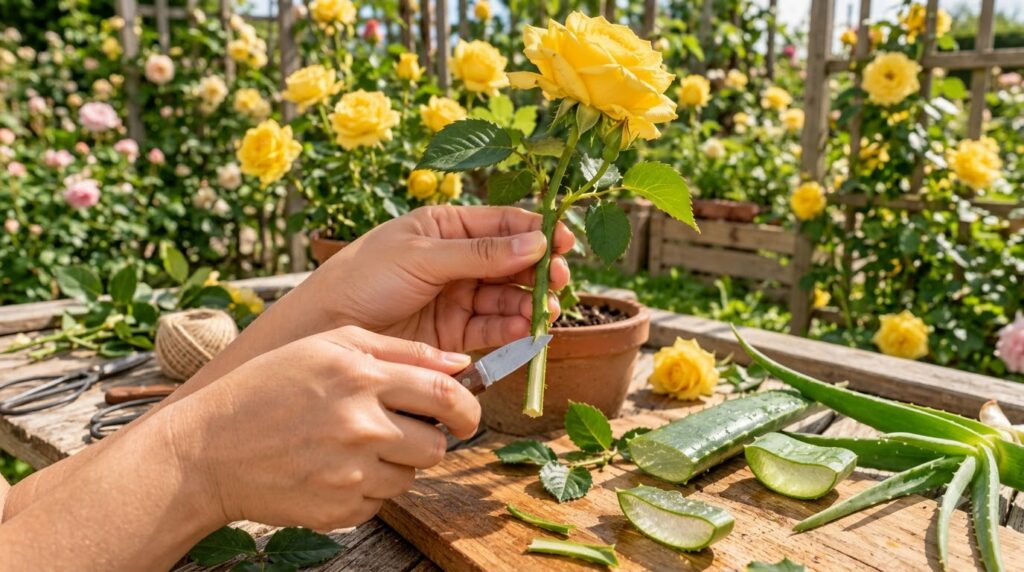
- Make a clean cut just below a ‘node’ (where a leaf attaches to the stem) at the bottom end.
- Make another cut at a 45-degree angle just above a node at the top end. This helps you remember which way is up!
- Remove all but the top two sets of leaves to reduce moisture loss. If the remaining leaves are very large, you can cut them in half.
- Gently scrape a small section of the bark off the bottom inch of the cutting. This exposes more cambium tissue, where new roots will form.
Step 3: Applying the Aloe Vera Rooting Gel
This is where the magic happens:
- Take a fresh aloe vera leaf and cut it open to expose the clear gel.
- Dip the bottom cut end of your rose cutting directly into the aloe vera gel. Ensure it’s thoroughly coated. You can also rub the gel directly onto the scraped part of the stem.
- Let the gel dry on the cutting for a few minutes before planting.
Step 4: Planting Your Cuttings
Now, it’s time to plant your prepared cuttings:
- Fill your pots or seed tray with a well-draining potting mix. A mix of peat moss, perlite, and sand works well.
- Make a small hole in the center of the potting mix with a pencil or stick. This prevents rubbing off the aloe vera gel when inserting the cutting.
- Carefully insert the rose cutting into the hole, ensuring at least two nodes are buried beneath the soil surface.
- Gently firm the soil around the base of the cutting.
- Water thoroughly until water drains from the bottom of the pot.
Step 5: Essential Aftercare for Success
After planting, consistent care is key to rooting success:
- Create a Humid Environment: Cover the pots with clear plastic bags or a dome to create a mini-greenhouse effect. This maintains high humidity, which is vital for cuttings that don’t have roots yet. Ensure the plastic doesn’t touch the leaves.
- Light: Place your cuttings in a warm location with bright, indirect light. Avoid direct scorching sunlight.
- Watering: Keep the soil consistently moist but not waterlogged. Check daily and mist the leaves occasionally if you notice them drying out.
- Patience: Rose cuttings can take several weeks, sometimes even months, to root. You’ll know they’re rooting when you see new leaf growth. Gently tugging on the cutting (very gently!) and feeling resistance is another sign.
- Acclimatization: Once rooted, gradually expose the new plants to less humidity by poking holes in the plastic cover or removing it for a few hours each day before transplanting them to a larger pot or your garden.
Troubleshooting Common Rose Propagation Challenges
Gardening can sometimes present challenges, but don’t despair if things don’t go perfectly right away:
- Cuttings Wilting: This often indicates a lack of humidity or insufficient watering. Ensure your mini-greenhouse is sealed and the soil is consistently moist.
- Blackening Stems: This is usually a sign of fungal infection or rot. Ensure good air circulation and avoid overwatering. Aloe vera helps prevent this, but very wet conditions can still cause issues.
- No Rooting After Weeks: Patience is key! Some varieties take longer. Ensure consistent warmth and light, and review your cutting preparation steps.
Propagating roses with aloe vera is a rewarding and sustainable way to expand your rose collection. With a little care and patience, you’ll soon be enjoying new blooms from your very own propagated plants.
Have you tried propagating roses with aloe vera? We’d love to hear about your experiences and see your successes! Share your tips and photos in the comments below. Happy gardening, L. Quyên community!