There’s nothing quite like a generous scoop of warm, fluffy, and creamy mashed potatoes to bring comfort to any meal. Whether you’re planning a holiday feast, a cozy Sunday dinner, or simply craving a satisfying side dish, classic mashed potatoes are always a welcome addition. This recipe will guide you through creating the perfect batch – smooth, rich, and utterly delicious.
Forget bland or lumpy potatoes; we’re focusing on simple techniques and quality ingredients to achieve that irresistible texture and flavor. From choosing the right potato to the ultimate mashing method, we’ll ensure your homemade mashed potatoes are a showstopper every time. Get ready to impress your family and friends with this timeless comfort food!
Why You’ll Love This Recipe
- Simple Ingredients: You only need a few basic staples to create this delicious side dish.
- Pure Comfort Food: Mashed potatoes are the ultimate in comforting sides, perfect for any occasion.
- Incredibly Versatile: They pair wonderfully with a wide range of main courses, from roasted chicken to hearty stews.
- Customizable: Easily adapt the flavors with various additions like garlic, herbs, or cheese.
- Crowd-Pleaser: Everyone loves a good mashed potato, making it a guaranteed hit at gatherings.
- Beginner-Friendly: With clear instructions, even novice cooks can achieve perfect results.
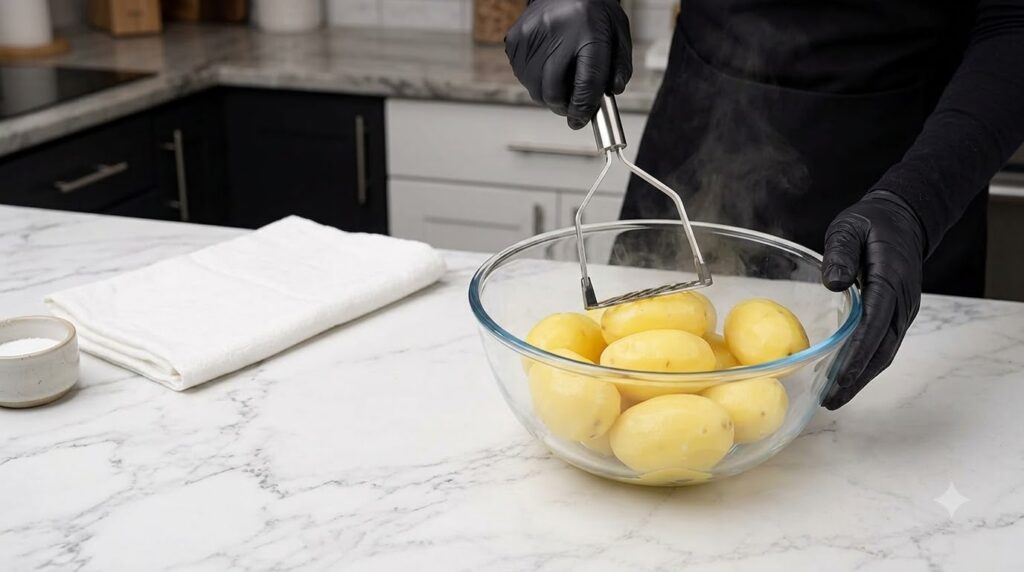
Ingredients
- 2 pounds (about 900 g) starchy potatoes, such as Russet or Yukon Gold
- 1/2 cup (120 ml) whole milk or half-and-half
- 1/4 cup (57 g) unsalted butter, cut into pieces
- 1 teaspoon (5 g) salt, or to taste
- 1/4 teaspoon black pepper, or to taste
- Optional: 1-2 cloves garlic, minced (for garlic mashed potatoes)
Ingredient Notes
- Potatoes: Starchy potatoes like Russets or Yukon Golds are ideal for mashing. Russets result in a fluffy, drier mash, while Yukon Golds offer a naturally creamy, buttery texture. Avoid waxy potatoes as they can become gummy when mashed.
- Dairy: Whole milk or half-and-half provides richness and creaminess. You can use heavy cream for an even more decadent result or a lower-fat milk for a lighter version, adjusting the amount as needed. Make sure your dairy is warm before adding it to prevent cooling down the potatoes.
- Butter: Unsalted butter allows you to control the salt level. It adds essential flavor and silkiness.
- Salt & Pepper: These are crucial for enhancing the potato’s natural flavor. Always taste and adjust seasoning at the end.
Equipment You’ll Need
- Large pot or Dutch oven
- Colander
- Potato peeler
- Potato masher, ricer, or food mill
- Large mixing bowl
- Measuring cups and spoons
- Wooden spoon or spatula
How to Make Creamy Mashed Potatoes
Follow these steps for perfectly creamy and fluffy mashed potatoes every time:
-
Prepare the Potatoes
Wash and peel the potatoes. Cut them into roughly equal-sized 1.5-inch (4 cm) cubes. This ensures they cook evenly. Place the cubed potatoes in a large pot and cover them with cold water by about an inch (2.5 cm). Add a generous pinch of salt to the water (this seasons the potatoes from the inside out).
-
Boil Until Tender
Bring the water to a boil over high heat, then reduce the heat to medium-low and simmer gently. Cook for 15-20 minutes, or until the potatoes are fork-tender. You should be able to easily pierce them with a fork without resistance. Do not overcook, or they will become waterlogged.
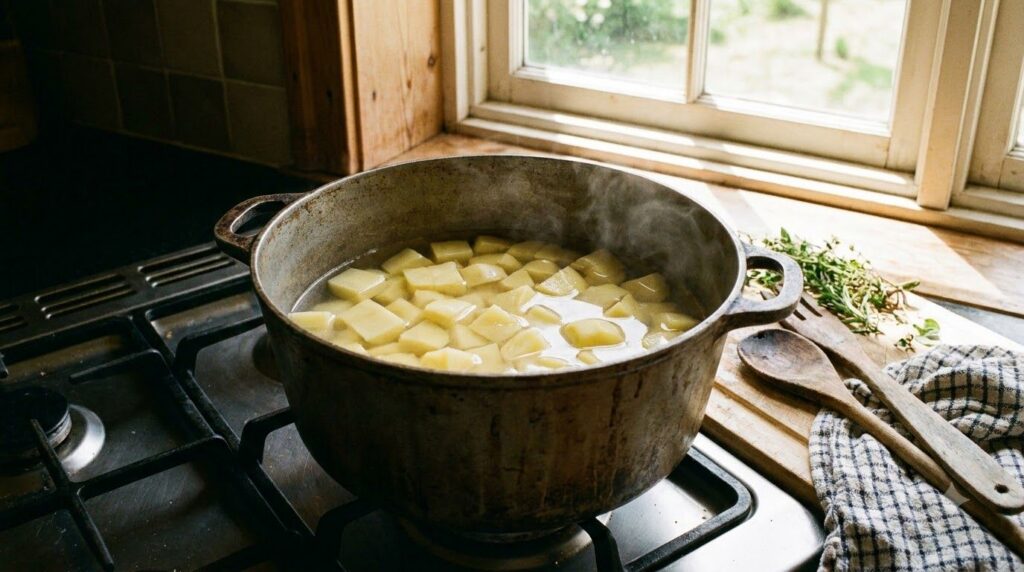
Boil the potato cubes until they are perfectly tender. -
Drain and Dry
Once tender, carefully drain the potatoes thoroughly using a colander. Return the drained potatoes to the empty hot pot. Place the pot back on the stove over very low heat for 1-2 minutes, shaking occasionally. This step helps to evaporate any excess moisture, which is crucial for fluffy mashed potatoes.
-
Warm Dairy and Butter
While the potatoes are drying, gently warm the milk (or half-and-half) and butter in a small saucepan over low heat until the butter is melted and the mixture is warm but not boiling. If adding minced garlic, you can simmer it gently with the milk and butter for a few minutes to infuse the flavor.
-
Mash the Potatoes
Remove the pot of dried potatoes from the heat. Add the warm butter and milk mixture directly to the potatoes. Using a potato masher, food mill, or ricer, mash the potatoes until they are smooth and free of lumps. Be careful not to over-mash, as this can activate the starch and lead to gummy potatoes.
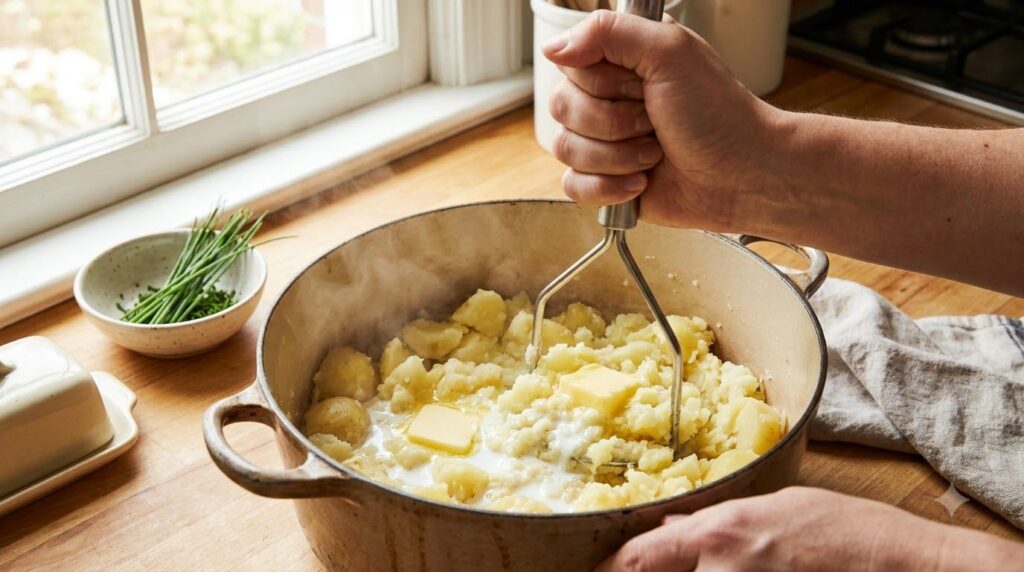
Mash gently until smooth, then stir in the warm dairy and butter. -
Season and Serve
Stir in the salt and pepper. Taste and adjust the seasoning as needed. You might want to add more salt or a little more butter for extra richness. Serve immediately while hot.
Pro Tips for the Best Results
- Choose the Right Potato: As mentioned, starchy varieties like Russets or Yukon Golds are your best friends for mashing.
- Start with Cold Water: Always put potatoes in cold water and bring it to a boil. This ensures they cook evenly from the outside in.
- Salt the Water: Salting the cooking water seasons the potatoes deeply, resulting in a more flavorful mash.
- Don’t Overcook: Overcooked potatoes absorb too much water, leading to a watery and bland mash. Cook just until fork-tender.
- Drain Thoroughly: Excess water is the enemy of fluffy mashed potatoes. Returning them to a warm pot to dry briefly makes a huge difference.
- Warm Your Dairy and Butter: Adding cold ingredients to hot potatoes will cool them down quickly and make them harder to incorporate smoothly.
- Don’t Over-Mash: Overworking the potatoes with a stand mixer or food processor can break down starches, leading to a gluey, gummy texture. A simple masher or ricer is best.
- Taste and Adjust: Always taste your mashed potatoes before serving and adjust salt, pepper, or other seasonings as needed.
Common Mistakes to Avoid
- Using Waxy Potatoes: These have a higher moisture content and will give you a gluey, dense mash. Stick to starchy varieties.
- Cutting Unevenly: If potato pieces are different sizes, some will be undercooked while others are overcooked and waterlogged.
- Not Draining Enough: Watery potatoes make for watery mashed potatoes. Make sure they are thoroughly dry after boiling.
- Adding Cold Ingredients: Cold milk and butter will cool down your potatoes, making them harder to mash smoothly and affecting the final temperature.
- Over-Mashing: Using a blender or food processor, or mashing too vigorously, can turn your potatoes into a gummy mess.
- Under-Seasoning: Potatoes are bland without proper seasoning. Don’t be shy with salt and pepper!
Variations & Substitutions
- Garlic Mashed Potatoes: Add 2-3 minced garlic cloves to the warm milk and butter mixture and let it simmer for a few minutes before adding to the potatoes.
- Herb Mashed Potatoes: Stir in 1-2 tablespoons of fresh chopped herbs like chives, parsley, rosemary, or thyme at the end.
- Cheesy Mashed Potatoes: Fold in 1/2 cup (about 50 g) shredded cheddar, Parmesan, or Gruyère cheese after mashing.
- Cream Cheese or Sour Cream: For extra tang and creaminess, add 2-4 ounces (56-113 g) of softened cream cheese or 1/4 cup (60 g) sour cream along with the butter and milk.
- Brown Butter Mashed Potatoes: Brown the butter in a saucepan until nutty before adding the milk for a deeper, richer flavor.
- Vegan Mashed Potatoes: Substitute unsweetened plant-based milk (like almond or oat milk) and vegan butter.
Serving Suggestions
Mashed potatoes are the ultimate versatile side dish. They’re perfect for:
- Holiday Meals: A staple alongside roasted turkey, ham, or prime rib for Thanksgiving, Christmas, or Easter.
- Comfort Food Dinners: Pair them with pot roast, meatloaf, roasted chicken, or crispy pork chops.
- Hearty Stews and Gravies: They’re excellent for soaking up rich gravies and sauces.
- As a Topping: Use them as a savory topping for shepherd’s pie or cottage pie.
- With Vegetables: Serve alongside roasted asparagus, green beans, or a fresh salad for a balanced meal.
Storage & Reheating
- Refrigerator Storage: Leftover mashed potatoes can be stored in an airtight container in the refrigerator for up to 3-4 days.
- Freezer Suitability: Mashed potatoes can be frozen! Allow them to cool completely, then transfer to a freezer-safe bag or container, removing as much air as possible. They can be frozen for up to 2-3 months. Thaw overnight in the refrigerator before reheating.
- Reheating Method:
- Stovetop: Transfer the mashed potatoes to a saucepan over low heat. Add a splash of milk or cream and a small pat of butter. Stir gently until heated through and creamy again.
- Microwave: Place a serving in a microwave-safe bowl. Add a tablespoon of milk or cream, cover, and heat in 30-60 second intervals, stirring in between, until hot.
- Oven: For larger quantities, place in an oven-safe dish, cover with foil, and reheat at 300°F (150°C) for 20-30 minutes, or until heated through.
- Maintain Best Texture: When reheating, adding a little extra milk, cream, or butter helps to restore their creamy texture and prevent them from drying out.
FAQ
Q: Can I make mashed potatoes ahead of time?
A: Yes, you can! Prepare them as directed, then let them cool slightly. Store in an airtight container in the refrigerator for up to 2 days. Reheat gently with a splash of warm milk or cream.
Q: Why are my mashed potatoes gummy?
A: Gummy potatoes are usually a result of over-mashing. When potatoes are over-processed, their starches break down and become glue-like. Use a potato masher, ricer, or food mill, and stop as soon as they’re smooth.
Q: What kind of potatoes are best for mashing?
A: Starchy potatoes like Russets (Idaho) or Yukon Golds are recommended because they break down easily and absorb butter and cream well, resulting in a fluffy or creamy texture.
Q: Can I use a hand mixer for mashed potatoes?
A: While some people do, a hand mixer can easily lead to over-mashing and gummy potatoes. If you use one, use it on the lowest speed for a very short duration, just until smooth, and avoid overworking them.
Q: How do I make my mashed potatoes extra fluffy?
A: The key to fluffy mashed potatoes is using a starchy potato (like Russet), drying them thoroughly after boiling, and not over-mashing. A potato ricer can also help achieve an incredibly light and fluffy texture.
Q: My mashed potatoes are too dry. What can I do?
A: If your mashed potatoes are too dry, simply stir in an extra tablespoon or two of warm milk, cream, or melted butter until they reach your desired consistency. Do this gently to avoid over-mashing.
Q: Can I add raw garlic directly to the potatoes?
A: It’s best to cook the garlic first, either by simmering it with the milk and butter or by roasting it separately, to mellow its flavor and ensure it blends smoothly into the potatoes without a harsh raw taste.
Recipe Card
Creamy & Fluffy Classic Mashed Potatoes
Short Description: Indulge in the ultimate comfort food with this easy recipe for creamy and fluffy classic mashed potatoes, perfect for any meal.
Prep Time: 15 minutes
Cook Time: 20-25 minutes
Total Time: 35-40 minutes
Servings: 6-8
Course: Side Dish
Cuisine: American
Cooking Method: Boiling, Mashing
Ingredients:
- 2 pounds (about 900 g) starchy potatoes (Russet or Yukon Gold)
- 1/2 cup (120 ml) whole milk or half-and-half
- 1/4 cup (57 g) unsalted butter, cut into pieces
- 1 teaspoon (5 g) salt, or to taste
- 1/4 teaspoon black pepper, or to taste
- Optional: 1-2 cloves garlic, minced
Instructions:
- Prepare Potatoes: Wash, peel, and cut potatoes into 1.5-inch (4 cm) cubes. Place in a large pot, cover with cold water by 1 inch (2.5 cm), and add a pinch of salt.
- Boil Potatoes: Bring to a boil, then reduce heat and simmer for 15-20 minutes until fork-tender.
- Drain & Dry: Drain thoroughly. Return to the hot pot over low heat for 1-2 minutes, shaking to evaporate excess moisture.
- Warm Dairy & Butter: In a small saucepan, warm milk and butter until butter melts. If using, add minced garlic and simmer briefly.
- Mash: Add warm dairy mixture to potatoes. Mash with a potato masher, ricer, or food mill until smooth. Do not over-mash.
- Season & Serve: Stir in salt and pepper. Taste and adjust seasoning. Serve hot.
Notes:
For best results, always use starchy potatoes and warm your dairy. Avoid over-mashing to prevent a gummy texture. Taste and adjust seasonings as needed before serving.
Storage:
Store leftovers in an airtight container in the refrigerator for 3-4 days. Reheat gently on the stovetop or in the microwave with a splash of milk or butter to restore creaminess.
Nutrition:
Nutrition information is an estimate and may vary depending on the ingredients and brands used.

